---
title: [OR] [C4] Identifying Team Composition
description: [OR] [C4] Identifying Team Composition
image: https://blog.bcm-institute.org/hubfs/Composition%20of%20the%20OR%20Team%20Graphic%20Folder/Composition%20of%20the%20Operational%20Resilience%20Team%20Morepost/%5BOR%5D%20%5BC4%5D%20Identify%20Team%20Composition.jpg
---
.
[](http://www.bcm-institute.org/)
- [Home](https://www.bcm-institute.org/)
- [About Us](https://www.bcm-institute.org/about-us-3/)
- [A President’s Perspective](https://www.bcm-institute.org/about-us/a-presidents-perspective/)
- [Our History](https://www.bcm-institute.org/about-us/our-history/)
- [Our Advisory Council](https://www.bcm-institute.org/about-us/our-advisory-council/)
- [Customers’ Testimonials](https://www.bcm-institute.org/about-us/customers-testimonials/)
- [Credential Verification](https://www.bcm-institute.org/about-us/credential-verification/)
- [Courses](https://blog.bcm-institute.org/blog/course-fees-for-blended-learning-courses-master-catalog)
- [ISO 22301 Business Continuity Management System Audit](https://blog.bcm-institute.org/audit/business-continuity-management-audit-courses)
- [ISO 22301 Business Continuity Management](https://blog.bcm-institute.org/bcm/business-continuity-management-courses)
- [Crisis Communication](https://blog.bcm-institute.org/crisis-communication/crisis-communication-courses)
- [Crisis Management](https://blog.bcm-institute.org/en/crisis-management/courses)
- [IT Disaster Recovery](https://blog.bcm-institute.org/it-disaster-recovery/courses)
- [Operational Resilience](https://blog.bcm-institute.org/operational-resilience/courses)
- [Operational Resilience Audit](https://blog.bcm-institute.org/operational-resilience-audit/courses)
- [Certification](https://blog.bcm-institute.org/certification/types-of-certifications-offered)
- [ISO 22301 BCMS Audit Certification](https://blog.bcm-institute.org/certification/business-continuity-management-audit-certification)
- [ISO22301 Business Continuity Management Certification](https://blog.bcm-institute.org/bcm/business-continuity-management-certification)
- [Crisis Communication Certification](https://blog.bcm-institute.org/crisis-communication/crisis-communication-certification)
- [Crisis Management Certification](https://blog.bcm-institute.org/en/crisis-management/crisis-management-certification)
- [IT Disaster Recovery Planning Certification](https://blog.bcm-institute.org/it-disaster-recovery/it-disaster-recovery-certification)
- [Operational Resilience Certification](https://blog.bcm-institute.org/operational-resilience/operational-resilience-certification)
- [Operational Resilience Audit Certification](https://blog.bcm-institute.org/operational-resilience-audit)
- [Seminars](https://blog.bcm-institute.org/meet-the-expert/mte-webinar-mainpage)
- [Store](https://www.bcm-institute.org/store-2/)
- [Contact Us](http://www.bcm-institute.org/about-us/contact-us/)
-
-
###### Building Operational Resilience in Financial Institutions: A Practical Guide to Governance, Team Structure and Sustainable Implementation
# \[OR\] \[C4\] Identifying Team Composition
### [](https://cta-redirect.hubspot.com/cta/redirect/3893111/b5d033a3-bb82-4c7e-8ac5-273df38e1a2b)
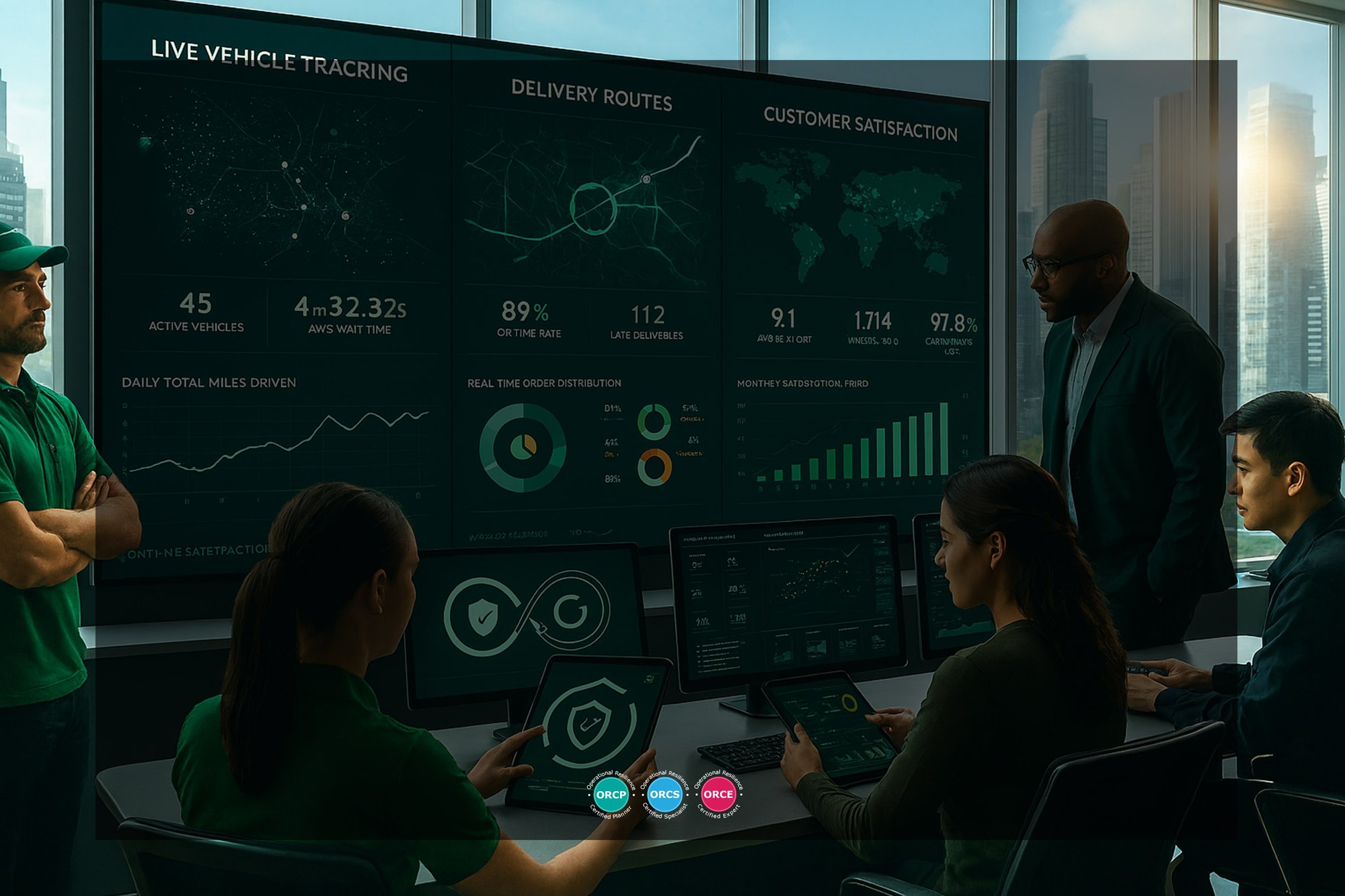
With the mandate defined and governance architecture established, the next critical step is identifying the **right team composition**.
Operational resilience (OR) is not sustained by committees alone. It requires a multidisciplinary team with the authority, technical capability, and cross-functional influence to coordinate resilience across the institution.
Unlike traditional control functions, operational resilience integrates business, risk, operations, and technology expertise around **critical business services (CBS)**. Therefore, team composition must be deliberate—not incidental.
[Moh Heng Goh](https://blog.bcm-institute.org/ebook-or/author/moh-heng-goh) Mar 9, 2026
###### Operational Resilience Certified Planner-Specialist-Expert
### [](https://cta-redirect.hubspot.com/cta/redirect/3893111/4711044f-0754-47c7-86ef-22321d1fb52a)
### Chapter 4
### [](https://cta-redirect.hubspot.com/cta/redirect/3893111/001cc2c4-8182-4f0f-8922-aa31f225398b)
### Identifying Team Composition
#### **From Governance to Capability**
With the mandate defined and governance architecture established, the next critical[](https://cta-redirect.hubspot.com/cta/redirect/3893111/fb33ba44-a1e9-4af8-898f-078e173401d9) step is identifying the **right team composition**.
Operational resilience (OR) is not sustained by committees alone. It requires a multidisciplinary team with the authority, technical capability, and cross-functional influence to coordinate resilience across the institution.
Unlike traditional control functions, operational resilience integrates business, risk, operations, and technology expertise around **critical business services (CBS)**. Therefore, team composition must be deliberate—not incidental.
#### **Designing Around Capabilities, Not Titles**
A common mistake in financial institutions is assigning OR responsibility to an existing function without evaluating whether the required capabilities exist.
Rather than asking:
“Which department should own operational resilience?”
Leadership should ask:
“What capabilities are required to deliver end-to-end service resilience?”
The OR team should be structured around capability domains:
- Service mapping and dependency analysis
- Impact tolerance design
- Severe scenario testing
- Data analytics and reporting
- Third-party risk coordination
- Governance and regulatory liaison
Team composition should reflect these capabilities.
#### **Core Roles Within the Operational Resilience Team**
While size and structure depend on institutional complexity, a typical OR function includes the following core roles:
##### **Head of Operational Resilience (OR Lead)**
**Primary Responsibilities:**
- Own the OR framework
- Advise the executive sponsor
- Present to the OR Committee and Board
- Coordinate cross-functional stakeholders
- Ensure regulatory alignment
**Required Competencies:**
- Strong governance experience
- Cross-functional leadership
- Risk and operational knowledge
- Senior stakeholder engagement capability
The OR Lead must have institutional credibility and authority to challenge assumptions.
##### **Service Mapping Lead**
**Primary Responsibilities:**
- Map end-to-end CBS
- Identify dependencies (people, process, technology, third parties, facilities)
- Maintain service inventory
**Required Competencies:**
- Process mapping
- Systems architecture understanding
- Operational workflow analysis
- Documentation discipline
This role is critical to identifying systemic vulnerabilities.
##### **Scenario Testing and Stress Testing Lead**
**Primary Responsibilities:**
- Design severe but plausible scenarios
- Facilitate testing workshops
- Coordinate simulation exercises
- Analyse outcomes and recommend remediation
**Required Competencies:**
- Scenario design methodology
- Risk quantification
- Facilitation skills
- Crisis simulation experience
Testing moves OR from theoretical mapping to practical validation.
##### **Data and Reporting Analyst**
**Primary Responsibilities:**
- Develop resilience dashboards
- Track impact tolerances
- Monitor remediation progress
- Prepare committee reporting packs
**Required Competencies:**
- Data analytics
- Dashboard development
- Management information systems
- Attention to detail
Operational resilience governance depends on measurable indicators.
##### **Third-Party and Dependency Coordinator**
**Primary Responsibilities:**
- Align OR mapping with vendor risk assessments
- Identify concentration risks
- Monitor critical service providers
- Coordinate resilience requirements in contracts
Given increasing outsourcing and cloud adoption, this role is increasingly essential.
#### **Extended Stakeholder Representation**
Operational resilience is enterprise-wide. The OR core team must engage extended stakeholders, including:
- Enterprise Risk Management
- Business Continuity Management
- IT Disaster Recovery
- Cybersecurity
- Operations
- Compliance
- Legal
- Human Resources (for people dependency risks)
The OR function governs and integrates but does not replace these functions.
#### **Full-Time vs. Hybrid Resourcing Model**
Financial institutions typically adopt one of three models:
**1. Centralised Full-Time Model**
A dedicated OR team with full-time resources.
**Suitable for:**
Large, complex, or systemically important institutions.
**2. Hub-and-Spoke Model**
Small central OR team supported by designated OR champions within each business unit.
**Suitable for:**
Mid-sized institutions balancing efficiency and coverage.
**3. Embedded Model**
OR responsibilities embedded within Risk or Operations with shared accountability.
**Suitable for:**
Smaller institutions with limited resources.
Most mature institutions adopt a hybrid model to ensure central governance with distributed execution.
#### **Competency Framework for Team Selection**
When identifying team members, institutions should assess:
| **Competency Area** | **Key Attributes** |
| --- | --- |
| Governance | Policy drafting, Board reporting |
| Analytical Skills | Dependency analysis, impact modelling |
| Communication | Cross-functional facilitation |
| Technical Knowledge | IT infrastructure understanding |
| Risk Awareness | Quantitative and qualitative risk assessment |
| Strategic Thinking | Alignment with business objectives |
Operational resilience requires both technical understanding and strategic influence.
#### **Positioning Within the Three Lines Model**
Team composition must align with governance structure:
**First Line**
Business service owners are accountable for service delivery.
**Second Line**
Operational Resilience team is overseeing the framework and challenge.
**Third Line**
Internal Audit provides independent assurance.
The OR team typically operates within the second line but must collaborate closely with the first line.
#### **Authority and Independence Considerations**
For the OR team to function effectively:
- It must have authority to request data across departments.
- It must be empowered to challenge recovery assumptions.
- It must have direct access to executive sponsorship.
Without formal authority, the team risks becoming a coordination function without influence.
#### **Common Team Composition Challenges**
During team formation, financial institutions often face:
**Role Ambiguity**
Overlap between BCM, ITDR, and OR responsibilities.
**Insufficient Seniority**
Junior-level appointments lacking cross-department influence.
**Resource Constraints**
OR treated as a secondary assignment rather than a primary responsibility.
**Skills Gap**
Limited internal expertise in impact tolerance modelling and scenario design.
Proactive planning and executive backing are essential to overcome these challenges.
#### **Phased Team Development**
Institutions do not need to build a full-scale team immediately. A phased approach may include:
**Phase 1: Foundation**
- Appoint OR Lead
- Establish governance
- Identify the initial CBS
**Phase 2: Capability Build**
- Recruit or assign service mapping and testing specialists
- Develop dashboards
**Phase 3: Maturity**
- Expand scenario testing
- Enhance third-party integration
- Introduce advanced analytics
Phased scaling ensures sustainability.
#### **Indicators of Effective Team Composition**
An effective OR team demonstrates:
- Clear role definitions
- Defined RACI structure
- Balanced technical and governance expertise
- Strong executive access
- Cross-functional trust
- Regular scenario testing execution
The team should function as an integrator—not an isolated unit.
[](https://cta-redirect.hubspot.com/cta/redirect/3893111/9f00129b-47f5-4a92-8db4-88b9bc250036)
Operational resilience cannot be delivered by policy documents alone. It requires a structured team with:
- Clear accountability
- Cross-functional capability
- Analytical depth
- Governance discipline
- Executive support
Identifying the right team composition transforms operational resilience from a regulatory requirement into a sustainable organisational capability.
**Key Insight:**
The strength of operational resilience lies not in the number of committees formed, but in the capability, authority, and coordination power of the team tasked with protecting the institution’s critical business services.
| ###### Building Operational Resilience in Financial Institutions: A Practical Guide to Governance, Team Structure and Sustainable Implementation | | | |
| --- | --- | --- | --- |
| **C1** | **C2** | **C3** | **C4** |
| [](https://cta-redirect.hubspot.com/cta/redirect/3893111/c407ce76-af4e-4a5f-b2ef-4fd4ac78c752) | [](https://cta-redirect.hubspot.com/cta/redirect/3893111/7d6ee786-b477-4188-889e-6b39821b8b10) | [](https://cta-redirect.hubspot.com/cta/redirect/3893111/1ce14511-a61d-47f6-b25b-818dcac6ec30) | [](https://cta-redirect.hubspot.com/cta/redirect/3893111/fb33ba44-a1e9-4af8-898f-078e173401d9) |
| [](https://cta-redirect.hubspot.com/cta/redirect/3893111/42db70eb-6dd9-405e-85aa-0d4252a93eb3) | [](https://cta-redirect.hubspot.com/cta/redirect/3893111/f60830e7-8706-4b2b-840e-fe0b9ec9a269) | [](https://cta-redirect.hubspot.com/cta/redirect/3893111/969b1b4a-4636-4f1b-b7f7-234190851bdb) | [](https://cta-redirect.hubspot.com/cta/redirect/3893111/9c2c9bc6-23e4-4764-891f-76dafd8687e6) |
[](https://cta-redirect.hubspot.com/cta/redirect/3893111/084e620a-46c5-419a-82ed-6a681d15c0b6)[](https://cta-redirect.hubspot.com/cta/redirect/3893111/13a448f1-f09c-42da-a57e-0988e41658c5)Gain Competency: For organisations looking to accelerate their journey, BCM Institute’s training and certification programs, including the OR-5000 Operational Resilience Expert Implementer course, provide in-depth insights and practical toolkits for effectively embedding this model.
---
#### More Information About Operational Resilience Course OR-5000 \[OR-5\] or OR-300 \[OR-3\]
To learn more about the course and schedule, click the buttons below for the OR-300 Operational Resilience Implementer \[OR-3\] course and the OR-5000 Operational Resilience Expert Implementer \[OR-5\] course.
| [](https://cta-redirect.hubspot.com/cta/redirect/3893111/3530eccb-515d-401e-afc2-3469e26d7fbf) | [](https://cta-redirect.hubspot.com/cta/redirect/3893111/fdd4fa9c-ed69-40c1-925f-4eb6a1c5c255) | [](https://cta-redirect.hubspot.com/cta/redirect/3893111/77a34b84-0a6d-44f8-b8d6-6ab04cdf5edd) |
| --- | --- | --- |
| [](https://cta-redirect.hubspot.com/cta/redirect/3893111/6e5c0cda-39b9-4bbd-b3d4-4cf46a790b14) | [](https://cta-redirect.hubspot.com/cta/redirect/3893111/a68a08aa-36d3-4216-9551-202c9fde06ea) | [![ \[BL-OR\] \[3-4-5\] View Schedule](https://no-cache.hubspot.com/cta/default/3893111/d0d733a1-16c0-4b68-a26d-adbfd4fc6069.png)](https://cta-redirect.hubspot.com/cta/redirect/3893111/d0d733a1-16c0-4b68-a26d-adbfd4fc6069) |
| [![\[BL-OR\] \[3\] FAQ OR-300](https://no-cache.hubspot.com/cta/default/3893111/f20c71b4-f5e8-4aa5-8056-c374ca33a091.png)](https://cta-redirect.hubspot.com/cta/redirect/3893111/f20c71b4-f5e8-4aa5-8056-c374ca33a091) | If you have any questions, click to contact us.[![Email to Sales Team \[BCM Institute\]](https://no-cache.hubspot.com/cta/default/3893111/3c53daeb-2836-4843-b0e0-645baee2ab9e.png)](https://cta-redirect.hubspot.com/cta/redirect/3893111/3c53daeb-2836-4843-b0e0-645baee2ab9e) | [](https://cta-redirect.hubspot.com/cta/redirect/3893111/7f2718a4-ea80-4f84-a319-dc2d4df37a46) |
| [](https://cta-redirect.hubspot.com/cta/redirect/3893111/74b1e556-8cd2-4a74-8821-db1804534955) | [](https://cta-redirect.hubspot.com/cta/redirect/3893111/f2bd8eb1-32d2-4732-9267-ea53223cf58f) | [](https://cta-redirect.hubspot.com/cta/redirect/3893111/084e620a-46c5-419a-82ed-6a681d15c0b6) |
#### **Comments**

---

---

---

---


All rights reserved. Copyright 2026
```json
{
"@context" : "https://schema.org",
"@type" : "BlogPosting",
"author" : {
"@type" : "Person",
"name" : "Moh Heng Goh",
"url" : "https://blog.bcm-institute.org/ebook-or/author/moh-heng-goh"
},
"dateModified" : "2026-03-11T06:37:43.616Z",
"datePublished" : "2026-03-09T05:24:18.000Z",
"headline" : "[OR] [C4] Identifying Team Composition",
"mainEntityOfPage" : {
"@id" : "https://blog.bcm-institute.org/ebook-or/or-c4-identifying-team-composition",
"@type" : "WebPage"
},
"publisher" : {
"@type" : "Organization",
"logo" : {
"@type" : "ImageObject",
"url" : "https://blog.bcm-institute.org/hubfs/BCMI%20Logo.png"
},
"name" : "BCMI Pte Ltd"
}
}
```