
![x [OR] [AmB] Legal Disclaimer Banner](https://no-cache.hubspot.com/cta/default/3893111/c17ea734-ce39-46d1-9b00-ce39367ccfc1.png)

Sustaining Operational Resilience: The Five Stages of the “Sustain” Phase
Introduction
![[OR] [AmB] [P3] [S1-S5] [C14] Five Stages of the Sustain Phase](https://no-cache.hubspot.com/cta/default/3893111/4d2a8252-c383-4cd7-82bb-2c64bf0143a6.png) Operational resilience is not a one-time effort but an ongoing process that requires continuous reinforcement and adaptation.
Operational resilience is not a one-time effort but an ongoing process that requires continuous reinforcement and adaptation.
In AmBank Malaysia’s Operational Resilience Planning Methodology, the “Sustain” phase plays a crucial role in embedding resilience into the bank’s culture and ensuring its long-term effectiveness.
 This phase consists of five key stages:
- Introduce Cultural Change
- Develop Communication Strategy
- Implement Training and Awareness
- Provide Self-Assessment
- Conduct an Independent Quality Review
Each stage contributes to sustaining operational resilience by fostering a resilient mindset, equipping employees with the necessary knowledge, and continuously improving resilience practices.
The following sections outline the implementation process for each stage with related examples.
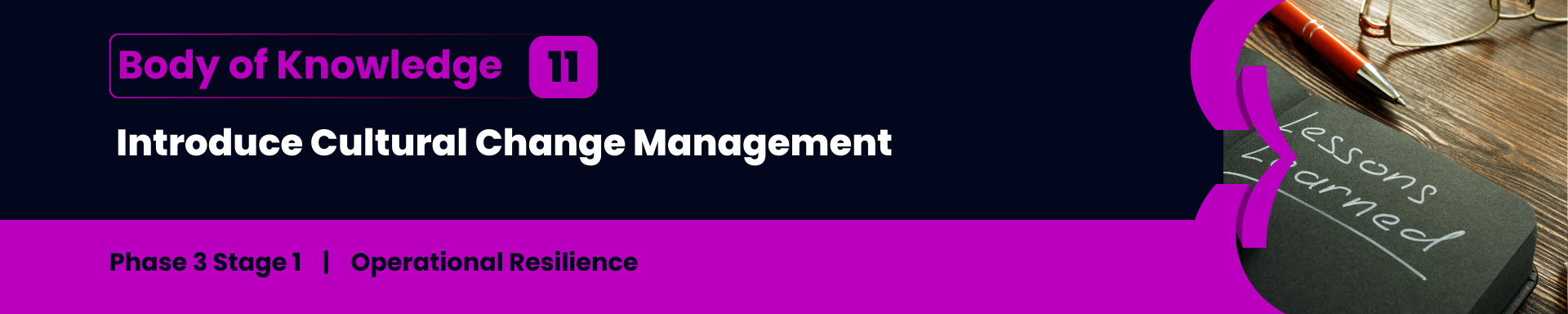 Stage 1: Introduce Cultural Change
[Sustain Phase – Stage 1]
Implementation Process:
- Establish a resilience-first mindset across all levels of the organisation.
- Integrate resilience principles into corporate values, policies, and decision-making processes.
- Secure senior management buy-in to champion resilience initiatives.
- Encourage a proactive approach to risk management rather than a reactive one.
Example:
AmBank Malaysia launched a “Resilience Culture Program” where senior leaders actively promote operational resilience through internal communications, town hall meetings, and inclusion in key performance indicators (KPIs).
By embedding resilience into business-as-usual activities, employees at all levels understand that resilience is not just a compliance requirement but a core organisational value.
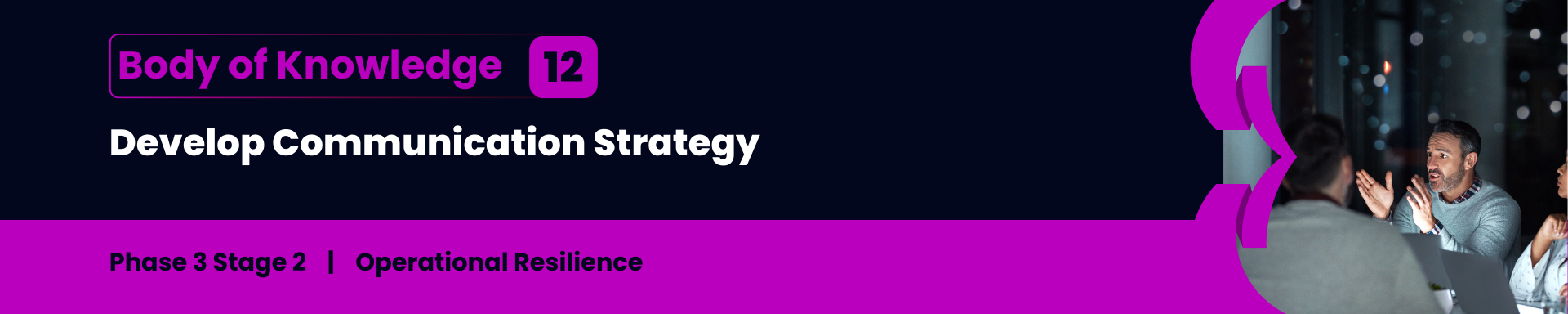 Stage 2: Develop Communication Strategy
[Sustain Phase – Stage 2]
Implementation Process:
- Design a clear internal communication plan to keep employees informed about resilience objectives and expectations.
- Use multiple channels (emails, intranet, newsletters, workshops) to disseminate resilience-related updates.
- Establish a feedback mechanism where employees can raise concerns and suggest improvements.
Example:
AmBank Malaysia introduced a Resilience Communication Hub, an internal platform where employees can access resilience-related policies, incident reports, and best practices.
The bank also implemented a “Resilience Champions Network” comprising key personnel across departments who facilitate discussions and relay feedback to the resilience management team.
 Stage 3: Implement Training and Awareness
[Sustain Phase – Stage 3]
Implementation Process:
- Conduct regular training sessions and workshops tailored to different job functions.
- Develop e-learning modules on operational resilience concepts, incident response, and crisis management.
- Simulate real-life disruptions to test employees’ understanding and preparedness.
- Ensure new employees receive resilience onboarding training as part of their induction.
Example:
AmBank Malaysia conducts quarterly resilience simulation exercises, including cyberattack scenarios and business-disruption drills, to ensure employees understand their roles during a crisis.
The bank also offers an online certification program for employees to enhance their knowledge of resilience best practices.
Stage 4: Provide Self-Assessment
[Sustain Phase – Stage 4]
Implementation Process:
- Develop self-assessment tools that allow teams to evaluate their compliance with resilience policies.
- Encourage employees to conduct departmental resilience check-ins to identify gaps.
- Provide automated dashboards to track resilience progress and maturity.
Example:
AmBank Malaysia introduced a Resilience Maturity Self-Assessment Tool, where business units assess their resilience capabilities against predefined benchmarks.
This self-evaluation enables teams to take ownership of their resilience improvements and report findings to the resilience steering committee.
 Stage 5: Conduct an Independent Quality Review
[Sustain Phase – Stage 5]
Implementation Process:
- Engage external auditors or third-party experts to conduct periodic resilience reviews.
- Ensure compliance with regulatory guidelines, including Bank Negara Malaysia’s Operational Resilience Framework.
- Benchmark against industry best practices and international resilience standards (e.g., ISO 22316).
- Use review findings to refine resilience strategies and close identified gaps.
Example:
AmBank Malaysia conducts biannual independent resilience audits, partnering with external consultants to assess the effectiveness of its resilience framework.
These reviews help the bank identify vulnerabilities, enhance its policies, and demonstrate regulatory compliance.
![[Banner] [Summing] [OR] [E2] [C14] Five Stages of the _Sustain_ Phase](https://no-cache.hubspot.com/cta/default/3893111/5667aa64-e221-49b1-b02b-b4a00910c56b.png)
The “Sustain” phase of AmBank Malaysia’s Operational Resilience Planning Methodology ensures that resilience is deeply embedded within the bank’s operations and culture.
By introducing cultural change, developing a structured communication strategy, implementing training programs, enabling self-assessments, and conducting independent quality reviews, AmBank continuously strengthens its ability to withstand disruptions.
This proactive, structured approach enables AmBank Malaysia not only to comply with regulatory requirements but also to build a long-term competitive advantage in resilience and risk management.
Operational Resilience Framework: A Case Study of AmBank Malaysia |
|||
![[OR] [AmB] [P1 to P3] [C1] OR Planning Methodology](https://no-cache.hubspot.com/cta/default/3893111/4272283c-1b31-42b2-9ffb-6dec1486ef07.png) |
![[OR] [AmB] [P1] [S1-S5] [C2] Five Stages of the _Plan_ Phase](https://no-cache.hubspot.com/cta/default/3893111/7713cc8c-f0f2-4c0b-90ca-577cb08e33af.png) |
![[OR] [AmB] [P2] [S1-S5] [C8] Five Stages of the _Implement_ Phase](https://no-cache.hubspot.com/cta/default/3893111/28d33a62-1830-447f-85f9-0136fa6c0368.png) |
|
"Sustain" Phase of the Operational Resilience Planning Methodology |
|||||
|
![[OR] [AmB] [E2] [P3] [S1] [C15] Introducing Cultural Change Management](https://no-cache.hubspot.com/cta/default/3893111/7033fd7a-eee3-479b-bf38-d867340b153c.png) |
![[OR] [AmB] [E2] [P3] [S2] [C16] Developing a Communication Strategy](https://no-cache.hubspot.com/cta/default/3893111/598f89b8-9cbe-471d-901d-fbb2ec253384.png) |
![[OR] [AmB] [E2] [P3] [S3] C17] Implementing Training and Awareness](https://no-cache.hubspot.com/cta/default/3893111/88b8dbaa-5eca-4671-bb5e-547603764779.png) |
![[OR] [AmB] [E2] [P3] [S4] [C18] Providing Self-Assessment](https://no-cache.hubspot.com/cta/default/3893111/5f4010f0-0cb4-4632-a972-2b35baa47929.png) |
![[OR] [AmB] [E2] [P3] [S5] [C19] Conducting Independent Quality Reviews](https://no-cache.hubspot.com/cta/default/3893111/e7166bca-37ff-4e8e-a9ae-10a70e0d9e09.png) |
Gain Competency: For organisations looking to accelerate their journey, BCM Institute’s training and certification programs, including the OR-5000 Operational Resilience Expert Implementer course, provide in-depth insights and practical toolkits for effectively embedding this model.
More Information About OR-5000 [OR-5] or OR-300 [OR-3]
To learn more about the course and schedule, click the buttons below for the OR-300 Operational Resilience Implementer course and the OR-5000 Operational Resilience Expert Implementer course.


![[BL-OR] [3-4-5] View Schedule](https://no-cache.hubspot.com/cta/default/3893111/d0d733a1-16c0-4b68-a26d-adbfd4fc6069.png)
![[BL-OR] [3] FAQ OR-300](https://no-cache.hubspot.com/cta/default/3893111/f20c71b4-f5e8-4aa5-8056-c374ca33a091.png)
![Email to Sales Team [BCM Institute]](https://no-cache.hubspot.com/cta/default/3893111/3c53daeb-2836-4843-b0e0-645baee2ab9e.png)