
Ensuring Your DR Plan Stays Ahead of the Curve (Maintain & Evolve)
Phase 7: Program Management
An IT disaster recovery (DR) plan protects your organisation against unforeseen disruptions. However, just like any shield, it requires regular maintenance to function optimally.
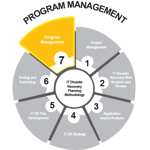
Phase 7: Program Management, or Program Management and Continuous Improvement (Maintain & Evolve), focuses on keeping your DR plan up-to-date and adaptable. This ensures your plan remains a dynamic and effective tool, ready to guide your team through any IT crisis.
Overview of Ensuring Your DR Plan Stays Ahead of the Curve
 The chapter emphasizes the importance of maintaining and updating your DR plan. This involves scheduling regular reviews, at least annually, to assess its effectiveness and ensure it reflects your evolving IT environment.
New systems, modified applications, and emerging threats necessitate adapting your recovery procedures to maintain their accuracy. The chapter also highlights the value of incorporating learnings from DR drills and real-world disasters.
These debriefing sessions expose weaknesses in your plan, allowing you to update procedures and address any identified gaps.
![ITDR [PM] P7 Progam Management](https://blog.bcm-institute.org/hs-fs/hubfs/ITDR%20%5BPM%5D%20P7%20Progam%20Management.jpg?width=380&height=380&name=ITDR%20%5BPM%5D%20P7%20Progam%20Management.jpg) Moving beyond plan maintenance, the chapter stresses the importance of promoting awareness and training. An effective DR plan relies on everyone understanding their roles and responsibilities during a disaster.
Moving beyond plan maintenance, the chapter stresses the importance of promoting awareness and training. An effective DR plan relies on everyone understanding their roles and responsibilities during a disaster.
This phase emphasizes providing ongoing training to relevant personnel, ensuring they are familiar with their assigned tasks and procedures.
Furthermore, broader awareness campaigns can educate all employees about the importance of disaster preparedness and their role in minimizing disruption. Regular DR drills test your plan and serve as valuable training exercises, allowing team members to practice their response skills.
Finally, the chapter underlines the importance of staying informed about industry trends and best practices. The cybersecurity landscape constantly evolves, with new threats and DR solutions being developed. By subscribing to industry publications, attending conferences, and actively participating in online forums, you can stay updated on the latest developments and incorporate best practices into your DR plan. This continuous improvement ensures your organization remains prepared for any IT disaster and safeguards your critical data and business continuity.
Maintain and Update the DR Plan
The IT landscape constantly evolves, and your DR plan needs to grow. Here's how to ensure your plan stays current:
- Schedule Regular Reviews. Do not relegate your DR plan to a shelf. Schedule regular reviews, at least annually, to assess its effectiveness. This review should involve key stakeholders from your DR team.
- Adapt to Change. As your IT environment changes, with new systems being added or existing ones modified, your DR plan must also adapt. Review your plan to reflect these changes and ensure recovery procedures remain accurate.
Incorporate Learnings: Debriefing sessions after DR drills and, unfortunately, even real-world disasters offer valuable insights. Use these learnings to identify weaknesses in your plan and update procedures accordingly. - Evolving Threats. The world of cybersecurity is constantly in an arms race. Regularly revisit your risk assessment to identify new threats and ensure your DR plan addresses them.
Promote Awareness and Training
An effective DR plan relies on everyone understanding their roles and responsibilities during a disaster. This phase emphasizes the importance of promoting ongoing awareness and training programs:
- Train Relevant Personnel. Ensure all personnel identified in your DR plan receive regular training. This training should familiarize them with their assigned tasks and procedures during a disaster recovery.
- Promote Awareness. Don't limit training to just those directly involved in recovery. Consider broader awareness campaigns to educate all employees about the importance of disaster preparedness and their role in minimizing disruption.
- Regular Testing. Regular DR drills (covered in Phase 6) test your plan and serve as valuable training opportunities. By actively participating in these drills, team members become more familiar with their roles and improve their response skills.
Monitor Industry Trends and Best Practices
The IT DR landscape constantly evolves, with new threats and best practices being developed. This phase highlights the importance of staying informed:
- Industry News and Publications. Subscribe to industry publications or attend relevant conferences to stay updated on the latest cybersecurity threats and emerging DR solutions.
- Best Practice Sharing. Industry associations and online forums often share best practices for IT DR planning and implementation. Actively participate in these communities to learn from others' experiences.
- Continuous Improvement. View maintaining your DR plan as an ongoing improvement process. Learning from various sources can continuously enhance your organization's disaster preparedness posture.
Summing Up ...
Following the guidance in Phase 7 ensures your DR plan remains a dynamic and effective tool.
Regular reviews, ongoing training, and staying informed about industry trends ensure your organization is prepared to face any IT disaster and minimize downtime, safeguarding critical data and business continuity.


More Information About IT DR Training Course
Contact our colleagues to know more about our IT DR program and when the next course is scheduled. They are the DR-3 or DR-300 IT Disaster Recovery Implementer and the DR-5 or DR-5000 IT Disaster Recovery Expert Implementer.


![Register [BL-DR-3]*](https://no-cache.hubspot.com/cta/default/3893111/15b32c57-3105-4c0c-96fc-92ce68950f81.png)
![FAQ [BL-DR] [5] DRP-5000](https://no-cache.hubspot.com/cta/default/3893111/e1e30273-3d46-4a5b-9f9d-11d9457a377a.png)
![Email to Sales Team [BCM Institute]](https://no-cache.hubspot.com/cta/default/3893111/3c53daeb-2836-4843-b0e0-645baee2ab9e.png)


