
![[BL-OR] [3] [5] Module 3](https://no-cache.hubspot.com/cta/default/3893111/4510b0b3-e9dd-4a6e-9133-f6d1423768fe.png)


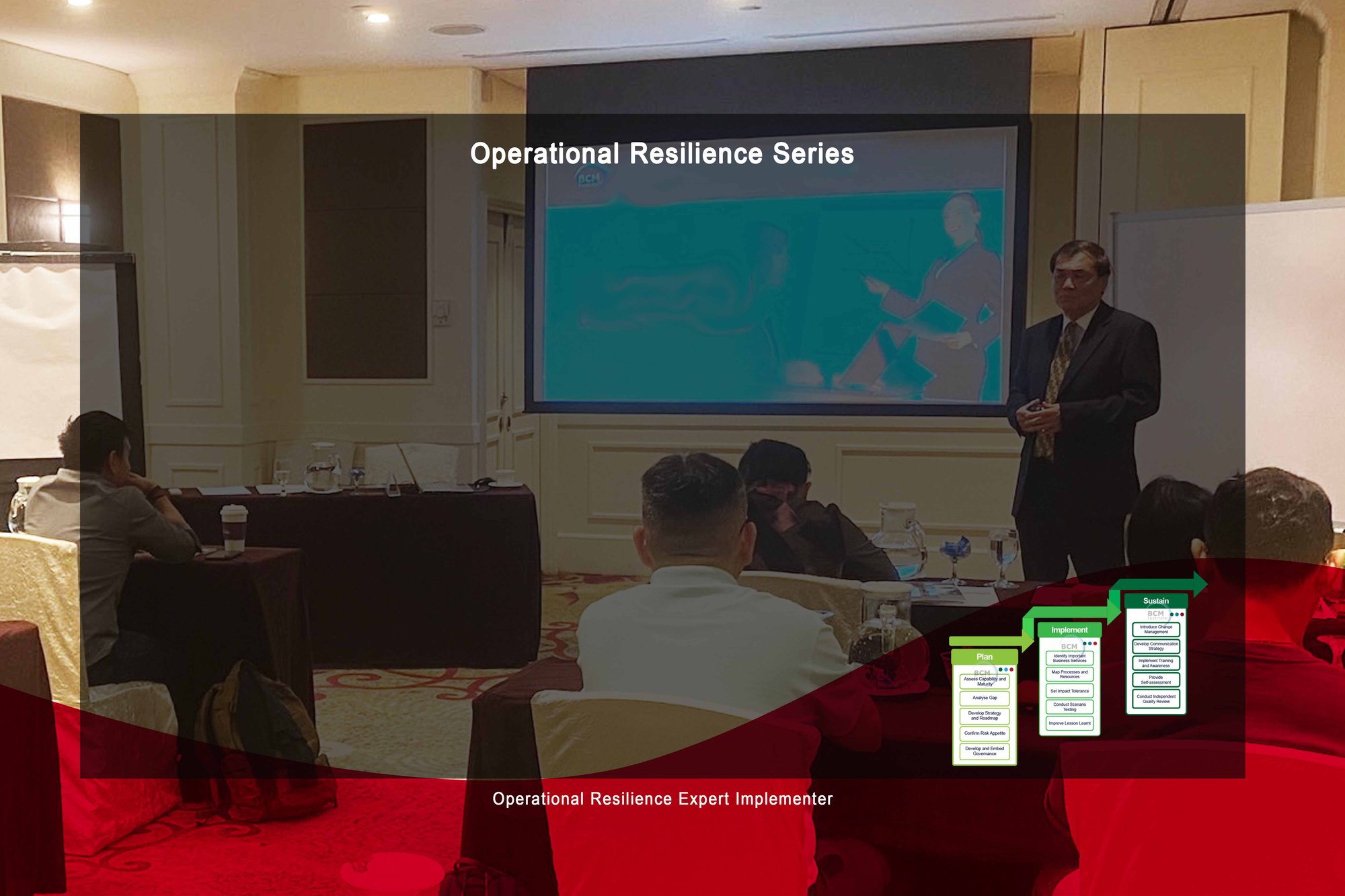
 The Operational Resilience (OR) planning methodology "Implement" phase initiation or first stage involves thoroughly examining the organization's capability and maturity levels in operational resilience processes. A three-phase approach is adopted for the assessment, focusing on developing the maturity of processes.
The measurement of the implementation and performance of OR processes provides a snapshot of the organization's operational resilience. This maturity assessment can target specific units, departments, or the entire organization.
Assessing capability and maturity is a pivotal aspect of the implementation process. The discussion introduces a structured three-phase approach for OR capability and maturity assessment.
 This approach systematically evaluates functional capabilities and suitability across various organizational domains, including governance, organizational design, technology, processes, roles, and responsibilities.
The three phases, Assess, Analyse, and Address, form the core framework for this comprehensive evaluation.
The first phase, Assess, thoroughly examines existing strengths and weaknesses in each area. The subsequent phase, Analyse, focuses on identifying critical parameters for improvement based on the assessment findings—finally, the Address phase centres around developing and implementing strategies to rectify identified weaknesses, fostering improvement.
Assess Capability and Maturity in Operational Resilience
 The capability and maturity assessment is foundational in initiating an operational resilience (OR) project. Understanding the organisation's capabilities and maturity levels is crucial for developing a comprehensive OR program. This involves evaluating personnel knowledge and technical competencies from ground-level staff to senior management. Additionally, the assessment considers the buy-in from key stakeholders, including financial support and regulatory drivers.
In this phase, the organization evaluates its readiness by examining various dimensions such as strategy, objective setting, governance, and cultural awareness of risk management. The maturity model becomes a guiding framework, allowing organizations to pinpoint their current position on the resilience journey. Engaging with Senior Management and stakeholders through interviews and surveys helps gain insights into individual perspectives, aligning these insights with the end-to-end flow of critical processes.
The assessment extends beyond quantitative measures, recognizing the human element in the evaluation. This involves understanding that biases may exist in individual viewpoints, emphasizing the importance of engaging stakeholders directly. Organizations can foster a culture of resilience by embedding Operational Resilience practices into daily business operations, such as by including mandatory training in e-learning portals. This cultural integration is crucial for ensuring that the OR program adds tangible value to the organization and aligns with the strategic objectives of key stakeholders. Overall, the assessment phase is a vital compass for organizations, guiding them towards a resilient future.
Navigating the Assessment Process: An Insider’s Perspective
The assessment process involves a multi-faceted approach that includes surveying individuals, conducting interviews, and reviewing existing frameworks and policies. Engaging with various departments ensures a holistic understanding of the organization's resilience landscape. While surveys provide structured questions, interviews offer a more nuanced view, uncovering biases and individual perspectives.
One practical strategy is to align the assessment with existing business processes. For example, integrating resilience considerations into the approval process for new products ensures that resilience becomes an inherent part of decision-making. The emphasis on practical integration extends to mandatory training, using e-learning portals to reinforce key resilience concepts.
The assessment is an ongoing journey; organizations often find themselves at different maturity levels. The realistic acknowledgement of these levels and a commitment to continuous improvement are central to successful resilience initiatives. By weaving Operational Resilience into the fabric of daily operations, organizations can instil a proactive culture that meets regulatory requirements and adds intrinsic value to the business.
Three-Phase Approach of OR Capability and Maturity Assessment
The Operational Resilience (OR) journey is structured into three key phases: Assess, Analyse, and Address, each contributing to a comprehensive understanding of organizational capabilities and maturity.
Phase 1: Assess
 Objective: Evaluate the current state of functional capabilities and suitability across various areas within the organization.
Key Areas of Assessment
- Governance
- Organizational design
- Technology
- Process
- Roles
- Responsibilities
Process
- Conduct a thorough evaluation of each area to understand the existing strengths and weaknesses.
- Gather data and insights to assess the organization's current functionality.
Phase 2: Analyse
 Objective: Identify critical parameters for improvement based on the assessment.
Process
- Utilize scorecards and radar charts to capture and communicate assessment findings.
- Collaborate with the Operational Readiness (OR) team leader to pinpoint the most crucial areas for immediate attention.
Phase 3: Address
 Objective: Develop and implement strategies to address identified weaknesses and foster improvement.
Process
- Convene senior management and business heads to address weaknesses collectively.
- Use brainstorming techniques to generate ideas for improvement.
- Compile broad action ideas and use decision tree diagrams for further refinement.
- Organize actionable items into a Gantt chart to create a structured improvement roadmap.
Overall Approach
This three-phase approach aims to assess organizational capabilities and maturity comprehensively. The organization can enhance its effectiveness, efficiency, and customer satisfaction by systematically analysing and addressing weaknesses. Implementing recommended strategies will better position the organization to achieve its mission and vision.
The initial "Assess" phase evaluates functional capabilities across governance, organizational design, technology, processes, roles, and responsibilities. A thorough examination of strengths and weaknesses is conducted, gathering data to comprehend the organization's current functionality.
Moving to the "Analyse" phase, the objective is to identify critical parameters for improvement based on the assessment. Scorecards and radar charts capture and communicate assessment findings, collaborating with the Operational Readiness (OR) team leader to prioritize crucial areas for immediate attention.
The final "Address" phase involves developing and implementing strategies to rectify identified weaknesses. Senior management and business heads come together to address weaknesses through brainstorming collectively. Action ideas are compiled and refined using decision tree diagrams, and a Gantt chart is employed to create a structured improvement roadmap.
Phase Two emphasises the challenges and urgency of resource acquisition as the OR journey progresses. Engaging senior management, aligning critical business services globally, and addressing regulatory compliance deadlines become focal points. Governance and education are crucial pillars, emphasizing the need for clear committee charters, mandates, and continual stakeholder education.
Analysis and Address (Phase Two) highlights the importance of strategic communication, education, and effective governance structures. Stakeholder involvement is crucial, focusing on embedding operational resilience principles into the organizational DNA. A risk-based approach is discussed, concentrating efforts on high-risk areas and prioritizing action plans.
Addressing Identified Gaps further explores how gaps and areas for improvement serve as foundations for discussions led by business and function heads. Ownership of action plans, ongoing monitoring, and a risk-based approach guide the prioritization of action plans. The conclusion underscores the importance of continuous improvement within people, processes, technology, and governance.
Continuous improvement is framed within four pillars: people, processes, technology, and governance, with senior management holding accountability for the entire operational resilience program. Reporting becomes a comprehensive endeavour, focusing on issues and showcasing successes, highlighting the value brought to the organization.
The presentation concludes by hinting at the following steps, urging the audience to read through a section related to the missing link, and emphasizing the practical application of key principles discussed during the sharing session. Overall, the three-phase approach provides a structured and systematic way to assess, analyze, and address organizational capabilities and maturity in Operational Resilience.


Find out more about Blended Learning OR-300 [BL-OR-3] and OR-5000 [BL-OR-5]
To learn more about the course and schedule, click the buttons below for the OR-3 Blended Learning OR-300 Operational Resilience Implementer course and the OR-5 Blended Learning OR-5000 Operational Resilience Expert Implementer course.


![[BL-OR] [3-4-5] View Schedule](https://no-cache.hubspot.com/cta/default/3893111/d0d733a1-16c0-4b68-a26d-adbfd4fc6069.png)
![[BL-OR] [3] FAQ OR-300](https://no-cache.hubspot.com/cta/default/3893111/f20c71b4-f5e8-4aa5-8056-c374ca33a091.png)
![Email to Sales Team [BCM Institute]](https://no-cache.hubspot.com/cta/default/3893111/3c53daeb-2836-4843-b0e0-645baee2ab9e.png)


