


Introduction
Chapter 4 set a recovery time objective (RTO) for each Sub-Critical Business Function (Sub-CBF) of CBF-2 Critical Care at Eastern General Hospital (EGH). Those RTOs can be met only if the technology behind each process recovers in time. This chapter identifies the IT systems, applications and special equipment that each Sub-CBF depends on, and sets a recovery point objective (RPO) and a system recovery time objective (system RTO) for them.
Critical care is one of the most technology-dependent parts of a hospital. Monitors, ventilators, infusion pumps, the electronic medical record and the laboratory system all affect treatment. Identifying these dependencies in the business impact analysis (BIA) lets the business continuity management (BCM) programme and the IT disaster recovery (ITDR) programme agree on what is restored first. The two programmes are linked: BCM states what the business needs, and ITDR describes how technology will meet that need.
Key Terms
- RPO: the point in time to which data must be recovered, which defines the acceptable data loss.
- System RTO: the time within which the supporting system must be restored. It must be shorter than or equal to the business RTO in Chapter 4, otherwise the process cannot recover in time.
- Special equipment: devices and resources, such as battery-backed ventilators or point-of-care analysers, that are not IT systems but are essential to the process.
System names are generic and indicative, because EGH has not published its technology choices. The Smart Hospital Roadmap described on the EGH website suggests a connected environment, and the names should be replaced with actual systems when they are selected.
IT Systems and Equipment Table
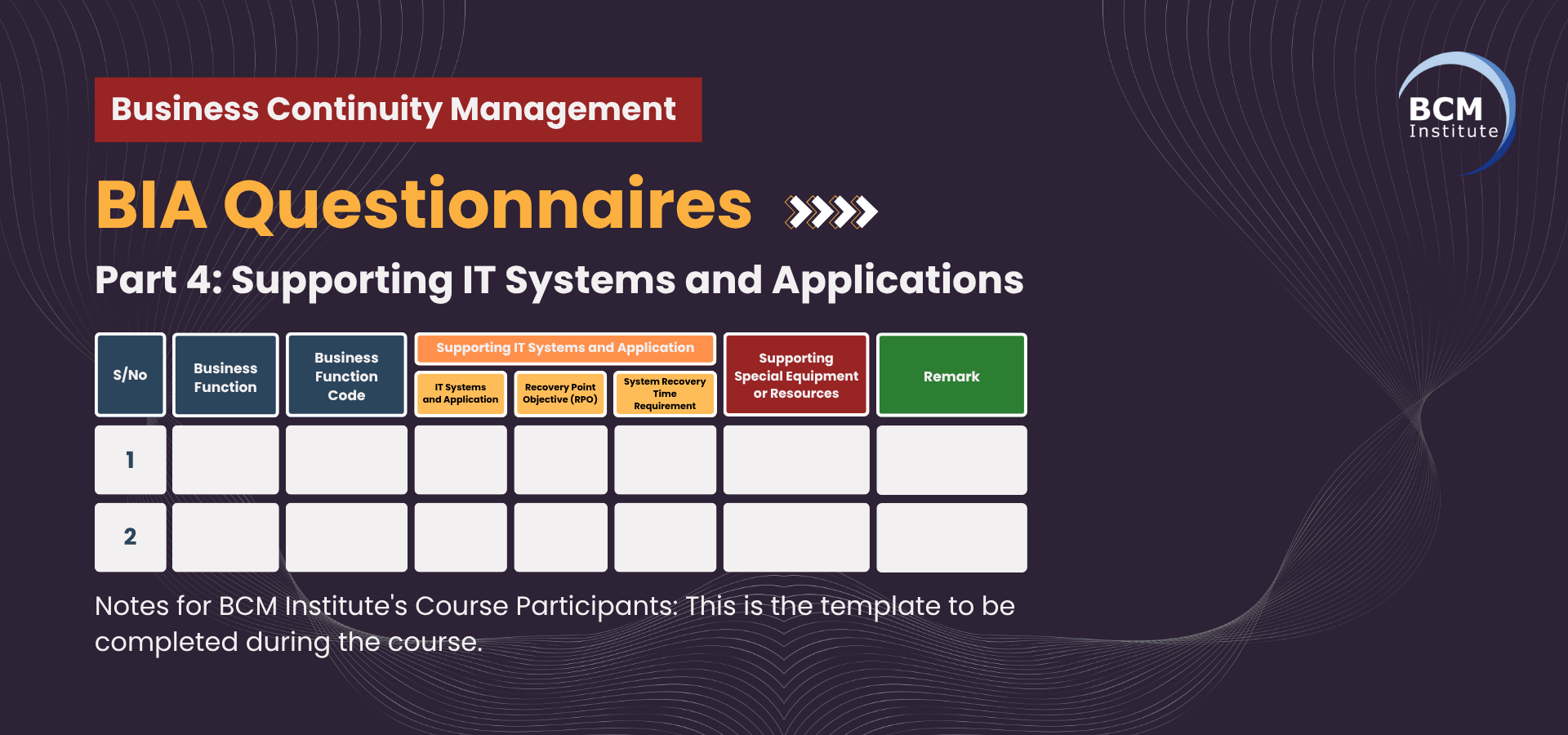
Table 5: Supporting IT Systems and Applications for CBF-2 Critical Care (Intensive Care and High Dependency)
| Sub-CBF Code | Sub-Critical Business Function | Supporting IT Systems and Applications | Recovery Point Objective (RPO) | System Recovery Time Objective (System RTO) | Supporting Special Equipment / Resources | Remarks |
|---|---|---|---|---|---|---|
| CBF-2.1 | Critical Care Admission, Triage and Bed Allocation | Electronic medical record (bed management module); hospital command dashboard | 15 minutes | 1 hour | Bed status boards; ward phones | Manual bed board and phone calls keep admission decisions moving while the system is restored. |
| CBF-2.2 | Continuous Physiological Monitoring and Escalation | Bedside monitor network and central station; early warning score module | Real-time | 15 minutes | Standalone bedside monitors with battery; spare portable monitors; uninterruptible power supply | Monitors must keep working if the network fails. The central display can be rebuilt from device memory. |
| CBF-2.3 | Mechanical Ventilation and Airway Management | Ventilator management and alarm log; medical gas alarm panel | Real-time (device settings) | 15 minutes | Ventilators with battery; manual resuscitation bags; oxygen cylinders; suction; medical air | Ventilation does not depend on the network. Priority is gas supply and power; logs follow later. |
| CBF-2.4 | Haemodynamic and Organ Support | Electronic medical record (haemodynamic charting); smart pump drug library | Real-time | 30 minutes | Infusion pumps with battery; spare pumps; arterial pressure transducers | Pumps run on stored libraries. Pressure lines and pumps need a spare pool at all times. |
| CBF-2.5 | Renal Replacement Therapy | Renal replacement machine data; electronic medical record (fluid balance); laboratory system | 15 minutes | 4 hours | Continuous renal replacement machines; intermittent dialysis access; filter sets and fluids; water treatment | Machines hold their own settings. A reserve of consumables and a link to the renal unit are the key controls. |
| CBF-2.6 | Critical Care Medication and Infusion Management | Electronic prescribing and administration record; pharmacy system; smart pump integration | 15 minutes | 30 minutes | Barcode scanners; paper drug charts; pump library tablets | Paper drug charts are the fallback. Pump integration is restored after the prescribing record. |
| CBF-2.7 | Bedside Nursing Care and Infection Prevention Bundles | Nursing documentation module; infection surveillance system | 1 hour | 1 hour | Tablet devices; bundle checklists on paper; hand hygiene supplies | Care continues on paper. Bundle records are entered afterwards, and infection surveillance can wait. |
| CBF-2.8 | Critical Care Diagnostics and Results Review | Laboratory information system; radiology information system and picture archive; point-of-care testing devices | 15 minutes | 2 hours | Blood gas analysers; portable radiograph and ultrasound; barcode label printers | Point-of-care devices keep critical results flowing when the central laboratory is down. |
| CBF-2.9 | Critical Patient Transfer (Intrahospital and Interhospital) | Patient transfer tracker; electronic medical record; ambulance coordination platform | 1 hour | 2 hours | Transport ventilator, monitor and emergency bag; mobile phones; lift priority key | Transport kit must be ready at all times. Paper transfer forms are the backup. |
| CBF-2.10 | Family Communication, Consent and End-of-Life Support | Electronic medical record (family contact and consent module); hospital messaging | 1 hour | 8 hours | Phones; consent forms in paper; quiet rooms | Paper consent forms and a call list keep family contact going. Messaging can be restored later. |
| CBF-2.11 | Patient Identification and Critical Care Documentation | Electronic medical record; patient identification and wristband printing; document scanner | Real-time (identity); 15 minutes (clinical) | 4 hours | Wristband printers; paper chart packs; high-speed scanners | Pre-printed wristbands and paper chart packs allow care to continue. Scanning supports reconciliation. |
| CBF-2.12 | Critical Care Staff Deployment, Surge and Escalation | Roster and staffing system; hospital paging and mobile phones; command dashboard | 1 hour | 1 hour | Mobile phones; paper roster and call list; two-way radios | Staff lists must be printed and updated monthly. Paging is the fallback if the system is down. |
Observations
Three patterns stand out. First, the processes with the shortest RTOs, namely monitoring, ventilation, haemodynamic support and infusions, depend on bedside devices and not on central systems. Their protection is battery power, spares and manual backup, not a data centre. Second, the electronic medical record appears in most rows. It is the single largest dependency, and its downtime procedures must be exercised. Third, the system RTOs for the medicines and monitoring rows are as short as the business RTOs, which means that high availability design is needed and not just backup.

Supporting systems enable the delivery of CBF-2 by carrying the information that clinicians act on. Identifying them in the BIA prevents the common mistake of setting a business RTO that the technology cannot meet. The RPO and system RTO give the ITDR team clear targets, and the special equipment list ensures that devices, spares and power are included in the Business Continuity Plan.
Understanding technology dependencies strengthens resilience because it shows where a single failure can reach the bedside. EGH should confirm each RPO and system RTO with the digital and biomedical engineering teams, and test the manual fallback in each row at least once a year.
Continue reading: Chapter 6, Inter-dependencies for CBF-2, maps the internal and external parties that each Sub-CBF depends on, and the direction of each dependency.