---
title: [BCM] [SPD] [E2] [C1] Business Continuity Management Planning Methodology
description: [BCM] [MSF] [E2] [C1] Business Continuity Management Planning Methodology
image: https://blog.bcm-institute.org/hubfs/SPD%20Graphic%20Folder/SPD%20E2%20Morepost/%5BBCM%5D%20%5BSPD%5D%20%5BE2%5D%20%5BC1%5D%20Business%20Continuity%20Management%20Planning%20Methodology.jpg
---
.
[](http://www.bcm-institute.org/)
- [Home](https://www.bcm-institute.org/)
- [About Us](https://www.bcm-institute.org/about-us-3/)
- [A President’s Perspective](https://www.bcm-institute.org/about-us/a-presidents-perspective/)
- [Our History](https://www.bcm-institute.org/about-us/our-history/)
- [Our Advisory Council](https://www.bcm-institute.org/about-us/our-advisory-council/)
- [Customers’ Testimonials](https://www.bcm-institute.org/about-us/customers-testimonials/)
- [Credential Verification](https://www.bcm-institute.org/about-us/credential-verification/)
- [Courses](https://blog.bcm-institute.org/blog/course-fees-for-blended-learning-courses-master-catalog)
- [ISO 22301 Business Continuity Management System Audit](https://blog.bcm-institute.org/audit/business-continuity-management-audit-courses)
- [ISO 22301 Business Continuity Management](https://blog.bcm-institute.org/bcm/business-continuity-management-courses)
- [Crisis Communication](https://blog.bcm-institute.org/crisis-communication/crisis-communication-courses)
- [Crisis Management](https://blog.bcm-institute.org/en/crisis-management/courses)
- [IT Disaster Recovery](https://blog.bcm-institute.org/it-disaster-recovery/courses)
- [Operational Resilience](https://blog.bcm-institute.org/operational-resilience/courses)
- [Operational Resilience Audit](https://blog.bcm-institute.org/operational-resilience-audit/courses)
- [Certification](https://blog.bcm-institute.org/certification/types-of-certifications-offered)
- [ISO 22301 BCMS Audit Certification](https://blog.bcm-institute.org/certification/business-continuity-management-audit-certification)
- [ISO22301 Business Continuity Management Certification](https://blog.bcm-institute.org/bcm/business-continuity-management-certification)
- [Crisis Communication Certification](https://blog.bcm-institute.org/crisis-communication/crisis-communication-certification)
- [Crisis Management Certification](https://blog.bcm-institute.org/en/crisis-management/crisis-management-certification)
- [IT Disaster Recovery Planning Certification](https://blog.bcm-institute.org/it-disaster-recovery/it-disaster-recovery-certification)
- [Operational Resilience Certification](https://blog.bcm-institute.org/operational-resilience/operational-resilience-certification)
- [Operational Resilience Audit Certification](https://blog.bcm-institute.org/operational-resilience-audit)
- [Seminars](https://blog.bcm-institute.org/meet-the-expert/mte-webinar-mainpage)
- [Store](https://www.bcm-institute.org/store-2/)
- [Contact Us](http://www.bcm-institute.org/about-us/contact-us/)
-
-
##### Resilient Support: Implementing Business Continuity Management at SPD

# \[BCM\] \[SPD\] \[E2\] \[C1\] Business Continuity Management Planning Methodology
[](https://cta-redirect.hubspot.com/cta/redirect/3893111/7bad9e96-bd43-4e89-ada5-bb0793c72e97)
Business Continuity Management (BCM) provides a structured approach for preparing an organisation to respond to disruption, continue priority activities at acceptable levels and recover affected operations within appropriate[![\[BCM\] \[SPD\] \[E2\] \[C1\] Business Continuity Management Planning Methodology](https://no-cache.hubspot.com/cta/default/3893111/df910783-a5f4-4926-96b9-77c177b2501a.png)](https://cta-redirect.hubspot.com/cta/redirect/3893111/df910783-a5f4-4926-96b9-77c177b2501a) timeframes.
For **SPD**, also known as **SPD**, BCM is particularly important because disruption to its operations can directly affect persons with disabilities, children receiving early intervention, adults and seniors receiving rehabilitation or care, persons participating in employment and vocational programmes, caregivers, families and community partners.
[![x eBook Cover \[BCM\] \[SPD\] \[E2\] \[2D\]](https://no-cache.hubspot.com/cta/default/3893111/5b231d6a-c770-4c0f-8029-99ea35d26e8b.png)](https://cta-redirect.hubspot.com/cta/redirect/3893111/5b231d6a-c770-4c0f-8029-99ea35d26e8b)SPD provides a range of services supporting persons with disabilities across different life stages.
These include early intervention, rehabilitation, day activity services, employment and vocational support, assistive technology, specialised case management, community support and other disability-related programmes.
Business continuity for SPD should therefore not be viewed as simply restoring offices, facilities, or information systems.
[](https://cta-redirect.hubspot.com/cta/redirect/3893111/68f13ffe-b808-44ec-9a28-7304d89f5889)
[Dr Goh Moh Heng](https://blog.bcm-institute.org/ebook/author/dr-goh-moh-heng) Sep 17, 2026
###### Business Continuity Management Certified Planner-Specialist-Expert
[](https://cta-redirect.hubspot.com/cta/redirect/3893111/dbe9de42-ec8a-403d-92cf-134a99184bb6)
### eBook 2: Chapter 1
### [](https://cta-redirect.hubspot.com/cta/redirect/3893111/68f13ffe-b808-44ec-9a28-7304d89f5889)
### Business Continuity Management Planning Methodology for the SPD
#### Introduction
Business Continuity Management (BCM) provides a structured approach for preparing an organisation to respond to disruption, continue priority activities at acceptable levels and recover affected operations within appropriate timeframes.[![\[BCM\] \[SPD\] \[E2\] \[C1\] Business Continuity Management Planning Methodology](https://no-cache.hubspot.com/cta/default/3893111/df910783-a5f4-4926-96b9-77c177b2501a.png)](https://cta-redirect.hubspot.com/cta/redirect/3893111/df910783-a5f4-4926-96b9-77c177b2501a)
For **SPD**, also known as **SPD**, BCM is particularly important because disruption to its operations can directly affect persons with disabilities, children receiving early intervention, adults and seniors receiving rehabilitation or care, persons participating in employment and vocational programmes, caregivers, families and community partners.
SPD provides a range of services supporting persons with disabilities across different life stages.
These include early intervention, rehabilitation, day activity services, employment and vocational support, assistive technology, specialised case management, community support and other disability-related programmes.
[![x eBook Cover \[BCM\] \[SPD\] \[E2\] \[2D\]](https://no-cache.hubspot.com/cta/default/3893111/5b231d6a-c770-4c0f-8029-99ea35d26e8b.png)](https://cta-redirect.hubspot.com/cta/redirect/3893111/5b231d6a-c770-4c0f-8029-99ea35d26e8b)Business continuity for SPD should therefore not be viewed as simply restoring offices, facilities, or information systems.
The central continuity question is:
***How can SPD continue delivering its most critical services to clients when normal operating arrangements are disrupted?***
To answer this question systematically, SPD requires a consistent BCM Planning Methodology.
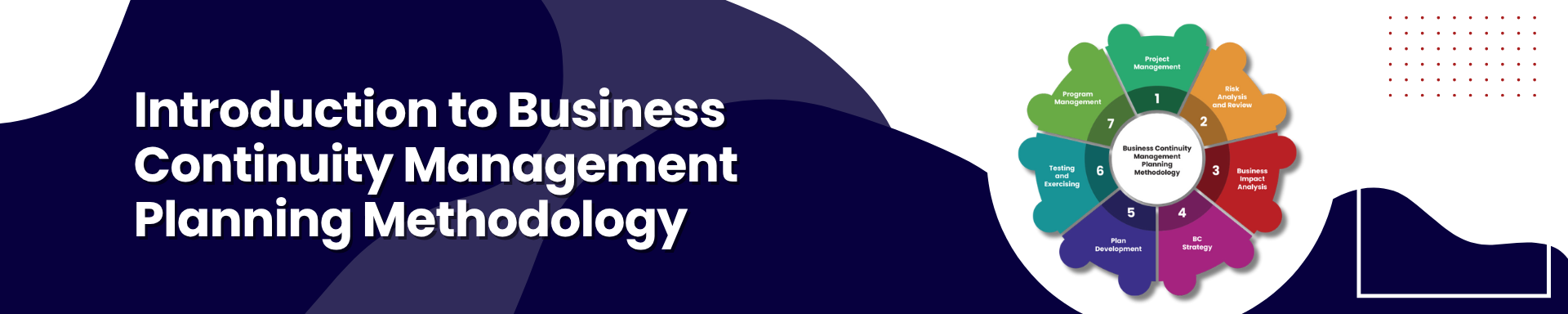
This chapter establishes a seven-phase BCM Planning Methodology comprising:
1. Project Management (PM)
2. Risk Analysis and Review (RAR)
3. Business Impact Analysis (BIA)
4. Business Continuity Strategy (BCS)
5. Plan Development (PD)
6. Testing and Exercising (TE)
7. Program Management (PgM)
The methodology provides an implementation pathway that converts organisational understanding into practical continuity and recovery capability.
### The Seven-Phase BCM Planning Methodology for SPD
[](https://cta-redirect.hubspot.com/cta/redirect/3893111/1b8c561d-08fa-49f8-934a-dae59bce8a92)A BCM methodology provides a common framework for implementing continuity consistently across SPD.
Without a structured methodology, individual departments or service centres may develop continuity arrangements independently, using different assumptions, recovery terminology, priorities, and planning approaches.
This can create fragmented plans that may not work together during an organisation-wide disruption.
These seven phases are interconnected.
Outputs from one phase become important inputs to subsequent phases.
#### **SPD-Specific BCM Requirement**
A central requirement for SPD's BCM programme should be:
**SPD shall establish, implement, maintain and continually improve business continuity arrangements that enable its identified Critical Business Functions to continue or be recovered within their approved continuity and recovery requirements, with particular consideration given to the safety, wellbeing, accessibility and support needs of persons with disabilities and other vulnerable service users.**
This requirement has several practical implications.
SPD's BCM arrangements should consider:
- vulnerability and support needs of affected clients;
- accessibility of alternative service locations;
- availability of trained and specialist personnel;
- continuity of rehabilitation, therapy and early-intervention services;
- caregiver dependencies;
- availability of critical client and case information;
- accessible communications;
- specialised equipment and assistive technology;
- client transportation;
- critical ICT systems;
- service partners and suppliers;
- cross-centre recovery capability; and
- Escalation where reduced service capacity could affect client well-being.
The BCM methodology should therefore remain **client-centred and service-centred**, rather than becoming primarily an administrative compliance exercise.
#### **Overview of the Seven-Phase BCM Planning Methodology**
| Phase | BCM Phase | Primary Purpose | Principal Output |
| --- | --- | --- | --- |
| 1 | Project Management (PM) | Establish and organise the BCM implementation | BCM Project Plan |
| 2 | Risk Analysis and Review (RAR) | Identify and assess threats that could disrupt operations | Risk Assessment |
| 3 | Business Impact Analysis (BIA) | Determine criticality, impact and recovery requirements | BIA Report |
| 4 | Business Continuity Strategy (BCS) | Determine how critical functions will continue and recover | BC Strategies |
| 5 | Plan Development (PD) | Document response and recovery actions | BC Plans and Recovery Procedures |
| 6 | Testing and Exercising (TE) | Validate continuity arrangements | Exercise and Test Reports |
| 7 | Program Management (PgM) | Maintain, review and improve BCM | Ongoing BCMS Programme |
The methodology progresses from **establishing the programme** to **understanding risk**, then to **determining priorities**, **developing solutions**, **documenting procedures**, **validating capability** and finally **maintaining the programme**.
#### **[](https://cta-redirect.hubspot.com/cta/redirect/3893111/6a36f258-76ba-49d2-9dae-bbb8dc227461)Phase 1: Project Management (PM)**
##### **Purpose**
Project Management establishes the foundation for implementing BCM within SPD.
Before conducting a detailed BIA, risk assessment or continuity planning, SPD should establish clear governance, scope, responsibilities, resources and implementation milestones.
The PM phase answers:
**How will SPD organise and manage BCM implementation?**
##### **Key Activities**
SPD should:
- obtain management commitment;
- establish the BCM project scope;
- appoint a project sponsor;
- designate a BCM Coordinator;
- establish the BCM project team;
- identify CBF Owners and service representatives;
- define roles and responsibilities;
- establish implementation milestones;
- determine resources and budget;
- establish reporting arrangements;
- develop communication and engagement plans; and
- obtain approval to proceed.
A typical implementation structure could be:
**SPD Senior Management**
↓
**BCM Sponsor / Steering Committee**
↓
**BCM Coordinator**
↓
**CBF Owners**
↓
**Service / Process Owners**
↓
**Supporting Functions**
Supporting functions may include ICT, Human Resources, Facilities, Finance, Procurement, Communications and relevant frontline service teams.
##### **SPD Example**
Suppose SPD is commencing a BCM implementation for its rehabilitation and therapy services.
The PM phase would establish:
- the rehabilitation services included within scope;
- participating centres;
- responsible service owners;
- therapists and operational representatives participating in the project;
- supporting ICT and facilities personnel;
- implementation milestones;
- documentation requirements; and
- management approval arrangements.
This ensures that subsequent BCM activities are coordinated rather than undertaken independently.
[](https://cta-redirect.hubspot.com/cta/redirect/3893111/c2dfdab1-7ab0-4a8b-bd31-7876fd39633e)
#### **Phase 2: Risk Analysis and Review (RAR)**
##### **Purpose**
Risk Analysis and Review identifies threats that could cause disruption and evaluates whether existing controls adequately address those risks.
The RAR phase answers:
**What could disrupt SPD's critical operations?**
##### **Threat Categories**
SPD should consider threats affecting:
##### **People**
Examples include:
- infectious disease;
- specialist workforce shortages;
- simultaneous employee absence;
- industrial or transport disruption affecting employee availability.
##### **Premises**
Examples include:
- fire;
- flooding;
- building damage;
- security incidents;
- utility failure;
- denial of access.
##### **Technology**
Examples include:
- ICT system failure;
- ransomware;
- telecommunications failure;
- network outage;
- cloud-service disruption;
- cyber incidents.
##### **Equipment**
Examples include:
- rehabilitation equipment failure;
- assistive-technology failure;
- specialised equipment shortages.
##### **Suppliers**
Examples include:
- transport provider failure;
- technology supplier outage;
- critical equipment supplier disruption;
- outsourced service interruption.
##### **External Environment**
Examples include:
- severe weather;
- haze;
- infectious disease outbreaks;
- major transport disruption;
- widespread infrastructure disruption.
##### **RAR Process**
**Identify Threat**
↓
**Identify Vulnerability**
↓
**Review Existing Controls**
↓
**Assess Likelihood**
↓
**Assess Consequence**
↓
**Determine Risk Level**
↓
**Identify Additional Treatment**
##### **SPD Example**
Consider prolonged loss of access to an SPD centre.
The immediate threat may differ—fire, structural damage, security restriction or utilities failure—but the operational consequence is similar:
##### **SPD Centre Unavailable**
↓
**Staff Cannot Use Normal Workplace**
↓
**Clients Cannot Attend Normal Location**
↓
**Normal Service Delivery Is Interrupted**
Existing controls and additional treatments could include alternative SPD locations, remote work for appropriate activities, alternative service-delivery arrangements and client/caregiver communication procedures.
[](https://cta-redirect.hubspot.com/cta/redirect/3893111/a1b4b4e2-f0aa-44df-a197-431397a7927c)
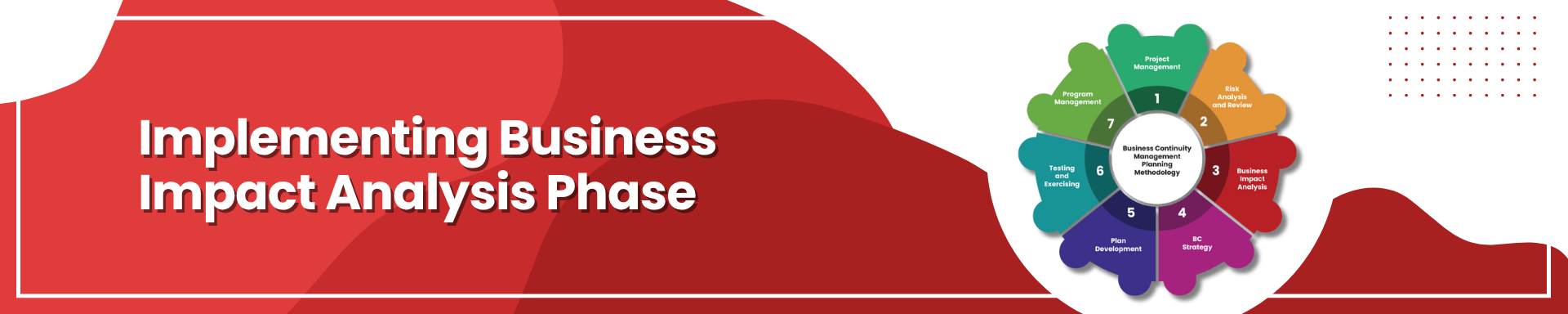
#### **Phase 3: Business Impact Analysis (BIA)**
##### **Purpose**
The BIA determines the consequences of disruption over time and establishes continuity and recovery priorities.
The BIA answers:
##### **Which SPD functions must be recovered first, by when, and with what minimum resources?**
This distinction is important:
**RAR asks:** What could disrupt SPD?
**BIA asks:** What happens if a service is disrupted?
##### **BIA Activities**
For each Critical Business Function, SPD should determine:
- function description;
- responsible owner;
- Sub-CBFs and critical processes;
- clients and stakeholders affected;
- impact of disruption;
- how impact changes over time;
- Maximum Tolerable Period of Disruption;
- prioritised timeframe for resumption;
- minimum acceptable service level;
- minimum staffing;
- premises requirements;
- ICT requirements;
- information and vital records;
- equipment requirements;
- transport requirements;
- supplier dependencies;
- internal dependencies; and
- external dependencies.
##### **SPD Example**
Consider:
##### **CBF-3 — Rehabilitation and Therapy Services**
A disruption might initially postpone appointments.
As the disruption continues, consequences may increase for clients requiring regular therapeutic intervention.
The BIA would determine:
**Service Disrupted**
↓
**Assess Client Impact Over Time**
↓
**Determine Maximum Acceptable Interruption**
↓
**Establish Priority for Resumption**
↓
**Determine Minimum Service Level**
↓
**Identify Therapists, Facilities, Equipment and Information Required**
The BIA provides the requirements against which continuity strategies are developed.
[](https://cta-redirect.hubspot.com/cta/redirect/3893111/fac23b58-f744-480a-b86b-13a824a53308)
#### **Phase 4: Business Continuity Strategy (BCS)**
##### **Purpose**
Business Continuity Strategy determines how SPD will meet the recovery requirements established by the BIA.
The BCS phase answers:
***How will SPD continue or recover its Critical Business Functions?***
**Strategy Categories**
SPD should develop strategies addressing:
##### **People**
Examples include:
- cross-training;
- succession arrangements;
- alternate teams;
- cross-deployment;
- remote working where appropriate;
- temporary workforce arrangements.
##### **Premises**
Examples include:
- alternative SPD locations;
- reciprocal use of available facilities;
- temporary facilities;
- remote service delivery;
- work-from-home arrangements for suitable functions.
##### **Technology**
Examples include:
- backup systems;
- alternative connectivity;
- cloud resilience;
- disaster recovery;
- alternate communication channels.
##### **Information**
Examples include:
- secure backups;
- emergency access to critical client information;
- manual records;
- alternative access procedures.
##### **Equipment**
Examples include:
- spare equipment;
- equipment relocation;
- alternative suppliers;
- shared resources between centres.
##### **Suppliers**
Examples include:
- alternative suppliers;
- contingency contracts;
- minimum stock levels;
- supplier continuity requirements.
##### **Transport**
Examples include:
- alternative accessible transport providers;
- modified routes;
- prioritisation of clients;
- alternative service locations.
##### **SPD Example**
Suppose an SPD rehabilitation centre becomes unavailable.
Potential strategies could include:
**Normal Centre Unavailable**
↓
**Prioritise Clients According to Need**
↓
**Transfer Selected Services to Another SPD Location**
↓
**Redeploy Available Therapists**
↓
**Provide Suitable Services Remotely Where Appropriate**
↓
**Arrange Alternative Accessible Transport**
↓
**Restore Minimum Service Capacity**
↓
**Progressively Restore Normal Service**
The selected strategy should be practical, affordable and capable of meeting the BIA requirements.
[](https://cta-redirect.hubspot.com/cta/redirect/3893111/8be70e4c-1b23-4b38-bf36-5bd899b28e17)
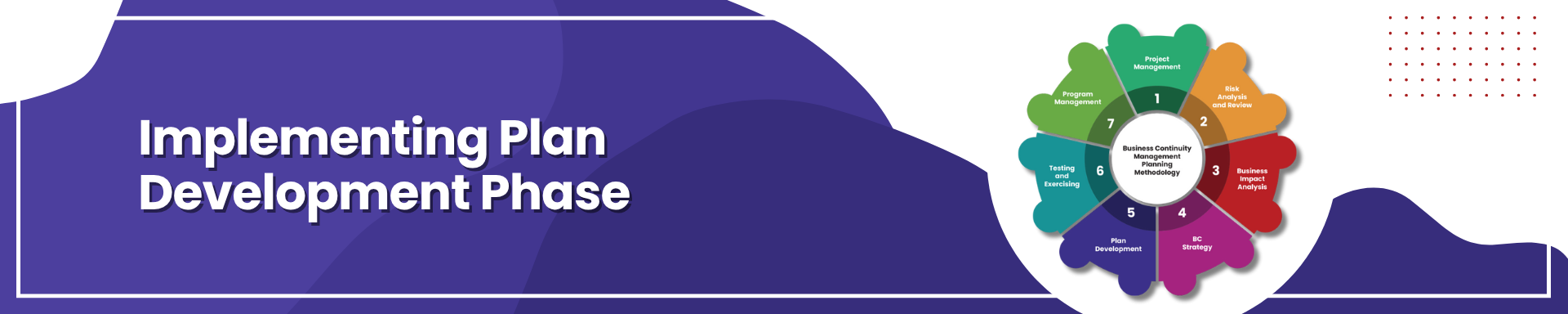
#### **Phase 5: Plan Development (PD)**
##### **Purpose**
Plan Development converts approved continuity strategies into documented response and recovery procedures.
PD answers:
**What exactly should SPD personnel do when disruption occurs?**
Plans should be concise, accessible and usable under pressure.
**Plan Structure**
An SPD Business Continuity Plan may include:
- purpose and scope;
- activation criteria;
- authority to activate;
- escalation procedures;
- roles and responsibilities;
- contact information;
- initial response actions;
- damage and impact assessment;
- client prioritisation;
- continuity procedures;
- alternative-location arrangements;
- ICT contingency procedures;
- supplier escalation;
- communications;
- recovery actions;
- return-to-normal procedures; and
- incident records.
##### **Recovery Procedure**
A useful recovery sequence is:
**Incident Detected**
↓
**Assess Situation**
↓
**Escalate**
↓
**Activate Appropriate Plan**
↓
**Identify Affected CBFs**
↓
**Prioritise Clients and Services**
↓
**Activate Continuity Strategy**
↓
**Restore Minimum Service Level**
↓
**Increase Recovery Capacity**
↓
**Return to Normal Operations**
##### **SPD Example**
For a Day Activity Centre disruption, the recovery procedure could specify who:
- confirms the centre cannot operate;
- informs management;
- contacts employees;
- communicates with caregivers;
- identifies higher-need clients;
- determines alternative service arrangements;
- coordinates accessible transport;
- retrieves required client information;
- manages alternative premises; and
- authorises return to normal operations.
The plan turns the strategy into an executable procedure.
[](https://cta-redirect.hubspot.com/cta/redirect/3893111/05ab08af-9acb-430c-8a4d-030a6a0e0fe2)
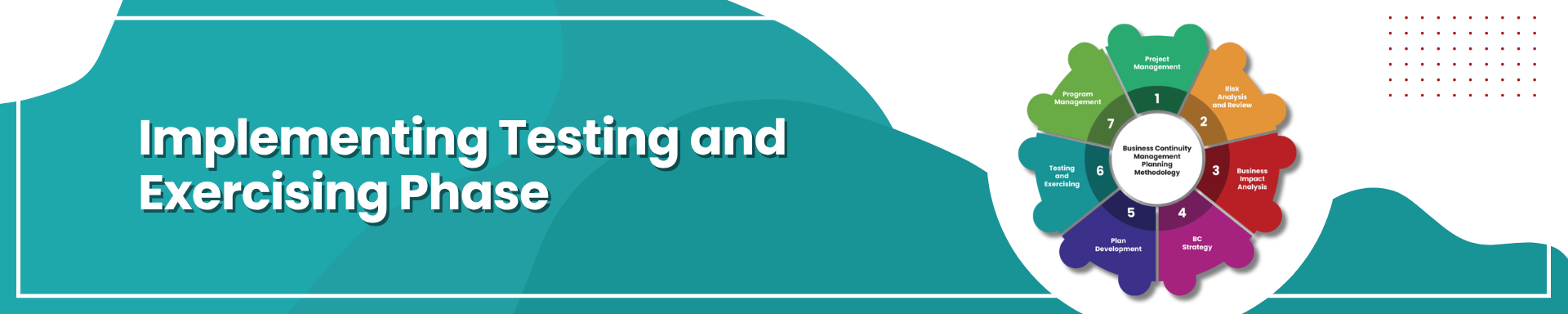
#### **Phase 6: Testing and Exercising (TE)**
##### **Purpose**
A Business Continuity Plan is not reliable just because it is documented.
Testing and Exercising validates whether SPD's arrangements work.
TE answers:
**Can SPD actually execute its continuity arrangements under disruptive conditions?**
##### **Types of Exercises**
SPD can use:
**Call-Tree Test**
Validate staff contact and notification arrangements.
**Walkthrough**
Review the plan systematically with relevant personnel.
**Tabletop Exercise**
Present a disruption scenario and require participants to discuss decisions and actions.
**Simulation Exercise**
Introduce scenario developments and operational injects requiring participants to respond dynamically.
**Technical Recovery Test**
Validate ICT recovery and backup arrangements.
**Alternative-Site Test**
Validate whether selected functions can actually operate from an alternative location.
##### **SPD Scenario Example**
A tabletop exercise could simulate:
**A major water leak makes an SPD centre inaccessible for five working days. ICT systems remain operational, but rehabilitation rooms, therapy equipment and normal client access are unavailable.**
Participants could be required to determine:
- which services are affected;
- which clients require priority;
- whether another SPD location can absorb demand;
- how therapists will be redeployed;
- how client records will be accessed;
- whether remote service delivery is suitable;
- how caregivers will be informed;
- how transport arrangements will change; and
- when the Business Continuity Plan should be activated.
##### **Exercise Cycle**
**Plan Exercise**
↓
**Develop Scenario**
↓
**Conduct Exercise**
↓
**Observe Performance**
↓
**Record Findings**
↓
**Identify Corrective Actions**
↓
**Update Plans and Strategies**
↓
**Retest**
Exercises should produce evidence of capability and opportunities for improvement.
[](https://cta-redirect.hubspot.com/cta/redirect/3893111/2c2fa354-3d59-4e3e-ab4c-d1e1d1ac521c)
#### **Phase 7: Programme Management (PgM)**
##### **Purpose**
BCM does not end when plans are complete.
Program Management ensures that SPD's BCMS remains current, effective and integrated into normal management.
PgM answers:
**How will SPD sustain and continually improve its BCM capability?**
##### **Program Management Activities**
SPD should establish arrangements for:
- BCM governance;
- management review;
- policy maintenance;
- periodic BIA review;
- periodic risk review;
- strategy review;
- plan maintenance;
- training and awareness;
- exercise scheduling;
- corrective-action tracking;
- internal review;
- audit;
- document control;
- performance monitoring; and
- continual improvement.
##### **Change Management**
BCM documents should be reviewed when significant organisational change occurs.
Examples include:
**New Service**
→ Review BIA and continuity requirements
**New SPD Centre**
→ Review alternative-site and interdependency arrangements
**New ICT System**
→ Review technology recovery requirements
**New Supplier**
→ Review third-party dependencies
**Major Workforce Change**
→ Review minimum staffing assumptions
**Service Expansion**
→ Review recovery capacity
**Incident or Exercise**
→ Incorporate lessons learned
This ensures that the BCMS reflects how SPD actually operates.
#### **Integration Across the Seven Phases**
Although presented sequentially, the seven phases operate as an integrated BCM lifecycle.
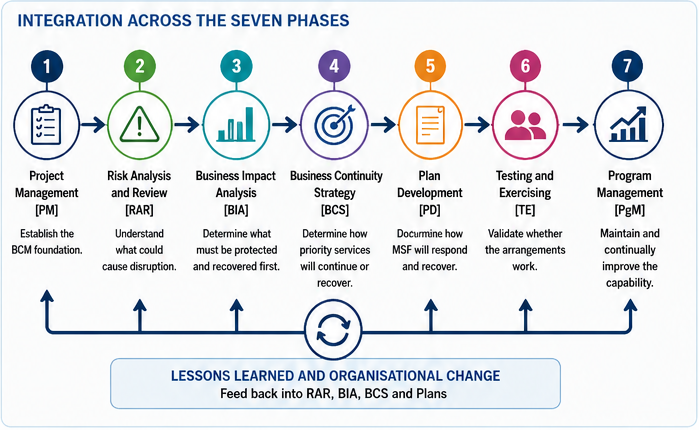
This feedback mechanism is fundamental. BCM should not become a collection of static plans. It should operate as an adaptive management capability.
##### **Applying the Methodology to SPD's Critical Business Functions**
The seven phases should ultimately be applied to SPD's validated CBFs.
The working CBF catalogue includes:
| **Code** | **Critical Business Function** |
| --- | --- |
| **CBF-1** | Early Intervention Services for Children |
| **CBF-2** | Day Activity and Disability Support Services |
| **CBF-3** | Rehabilitation and Therapy Services |
| **CBF-4** | Senior Care and Day Rehabilitation Services |
| **CBF-5** | Specialised Case Management and Client Support |
| **CBF-6** | Employment and Vocational Support Services |
| **CBF-7** | Assistive Technology Assessment and Support |
| **CBF-8** | Enabling Services and Community Support |
| **CBF-9** | Critical Client Information and Case Records Availability |
| **CBF-10** | Critical Digital and ICT Services Supporting Service Delivery |
| **CBF-11** | Critical Client Transport and Service Access Support |
Each CBF should move through the methodology systematically:
##### **CBF Identified**
↓
**Threats Assessed**
↓
**Business Impact Analysed**
↓
**Recovery Requirements Established**
↓
**Continuity Strategies Developed**
↓
**Recovery Procedures Documented**
↓
**Arrangements Exercised**
↓
**Capability Maintained and Improved**
This provides consistency across SPD's BCM implementation.
#### **Integrating Client Needs into the Methodology**
A distinctive consideration for SPD is incorporating client vulnerability and accessibility throughout all seven phases.
This should not be addressed only during Plan Development.
| | **SPD Client-Centred Consideration** |
| --- | --- |
| **PM** | Include frontline service representatives in BCM implementation |
| **RAR** | Consider threats affecting client safety, accessibility and service availability |
| **BIA** | Assess consequences of disruption on clients and caregivers |
| **BCS** | Ensure alternative solutions remain accessible and appropriate |
| **PD** | Include client prioritisation and caregiver communication |
| **TE** | Exercise scenarios involving realistic client and accessibility requirements |
| **PgM** | Incorporate service changes, feedback and lessons into BCM |
For example, an alternative facility is not a viable continuity strategy merely because space is available.
SPD should determine whether the facility is:
- physically accessible;
- suitable for the intended client group;
- equipped appropriately;
- reachable through accessible transport;
- supported by trained employees;
- capable of protecting client privacy; and
- capable of delivering the required minimum service level.
This illustrates why continuity solutions must be evaluated from the perspective of actual service delivery.
#### **BCM Documentation Structure**
The seven-phase methodology should produce a controlled set of BCM documentation.
A possible hierarchy is:
**BCM Policy**
↓
**BCM Framework / Methodology**
↓
**Project Management Documentation**
↓
**Risk Analysis and Review**
↓
**Business Impact Analysis**
↓
**Business Continuity Strategies**
↓
**Business Continuity Plans**
↓
**CBF Recovery Procedures**
↓
**Testing and Exercising Records**
↓
**Program Management and Improvement Records**
This structure provides traceability from management policy through to operational recovery procedures.
For example:
**BIA Requirement**
→ service must resume within the approved timeframe
↓
**BCS**
alternative SPD location selected
↓
**PD**
procedure documents transfer arrangements
↓
**TE**
exercise validates whether transfer can occur
↓
**PgM**
findings are corrected, and arrangements improved.
#### **Roles and Responsibilities Across the Methodology**
Effective implementation requires participation from different organisational levels.
| **Role** | **Primary BCM Responsibility** |
| --- | --- |
| **Senior Management** | Provide direction, authority and resources |
| **BCM Steering Committee** | Oversee implementation and major BCM decisions |
| **BCM Coordinator** | Coordinate the methodology and maintain the BCMS |
| **CBF Owners** | Establish business requirements and approve continuity arrangements |
| **Service / Process Owners** | Provide operational knowledge and develop procedures |
| **ICT** | Support technology resilience and disaster recovery |
| **Human Resources** | Support workforce continuity |
| **Facilities** | Support premises and alternative-site continuity |
| **Procurement / Suppliers** | Address critical third-party dependencies |
| **Communications** | Support stakeholder and crisis communications |
| **Employees** | Understand and perform assigned continuity responsibilities |
This reinforces an important principle:
**The BCM Coordinator manages the process, but the business and service owners own their continuity requirements.**
#### **Expected Outcome of the BCM Planning Methodology**
Successful implementation of the seven phases should enable SPD to move from:
##### **Reactive Response**
*"We will decide what to do when something happens."*
*to:*
##### **Planned Continuity**
"We understand what is critical, know our recovery requirements, have established strategies and have documented what to do."
and ultimately toward:
##### **Demonstrated Resilience**
"We have exercised our arrangements, understand our limitations and continually improve our ability to continue supporting clients during disruption."
The desired outcome is therefore not simply a collection of BCM documents.
It is an **organisational capability to continue priority services under adverse conditions**.
### [![x \[Banner\] \[Summing\] \[OR\] \[E2\] \[C1\] Overview of Operational Resilience Planning Methodology](https://no-cache.hubspot.com/cta/default/3893111/0c551e82-cf06-432c-8498-1d3c9bb2dece.png)](https://cta-redirect.hubspot.com/cta/redirect/3893111/0c551e82-cf06-432c-8498-1d3c9bb2dece)
The seven-phase BCM Planning Methodology provides SPD with a systematic framework to implement and sustain Business Continuity Management.
The methodology begins with **Project Management**, establishing governance, scope and implementation arrangements.
- **Risk Analysis and Review** identifies threats and vulnerabilities that could disrupt SPD.
- **Business Impact Analysis** determines the consequences of disruption and establishes continuity and recovery priorities.
- **Business Continuity Strategy** identifies practical solutions for meeting those requirements.
- **Plan Development** converts the strategies into executable response and recovery procedures.
- **Testing and Exercising** determines whether the arrangements can actually work under realistic disruptive conditions.
- **Program Management** ensures that the BCMS remains current, effective and continually improving.
The complete implementation pathway is therefore:
**PM — Project Management**
↓
**RAR — Risk Analysis and Review**
↓
**BIA — Business Impact Analysis**
↓
**BCS — Business Continuity Strategy**
↓
**PD — Plan Development**
↓
**TE — Testing and Exercising**
↓
**PgM — Program Management**
For SPD, however, measure successful BCM implementation by more than whether plans exist.
The central consideration throughout the methodology should remain:
##### **Can SPD continue supporting the people who depend on its critical services when normal operations are disrupted?**
This requires continuity arrangements that recognise client vulnerability, accessibility, specialist workforce requirements, critical information, technology, equipment, transportation, caregivers and external service dependencies.
By systematically applying the seven-phase methodology to its Critical Business Functions, SPD can establish a structured and sustainable BCMS aligned with the principles and requirements of ISO 22301 while supporting its broader responsibility to maintain essential services for persons with disabilities and the communities it serves.
This methodology provides the implementation foundation for the remaining chapters of **Implementing Business Continuity Management for SPD**, where each phase can be developed into the detailed analyses, strategies, procedures, exercises and management activities required to establish an effective and continually improving BCM capability.
[](https://cta-redirect.hubspot.com/cta/redirect/3893111/3aefb2d2-3110-47c1-ad4f-d3e6e5381066)
[](https://cta-redirect.hubspot.com/cta/redirect/3893111/959a4367-6193-4326-848e-799bd16b0bb3)
| **eBook 2: Implementing Business Continuity Management** | | | | |
| --- | --- | --- | --- | --- |
| **C1** | **C2** | **C3** | **C4** | **C5** |
| [![\[BCM\] \[SPD\] \[E2\] \[C1\] Business Continuity Management Planning Methodology](https://no-cache.hubspot.com/cta/default/3893111/df910783-a5f4-4926-96b9-77c177b2501a.png)](https://cta-redirect.hubspot.com/cta/redirect/3893111/df910783-a5f4-4926-96b9-77c177b2501a) | [![\[BCM\] \[SPD\] \[E2\] \[C2\] Project Management](https://no-cache.hubspot.com/cta/default/3893111/3d7636b9-1d45-43d9-a440-91ebb7e18f7f.png)](https://cta-redirect.hubspot.com/cta/redirect/3893111/3d7636b9-1d45-43d9-a440-91ebb7e18f7f) | [![\[BCM\] \[SPD\] \[E2\] \[C3\] Risk Analysis and Review](https://no-cache.hubspot.com/cta/default/3893111/3ee93edc-129e-43ff-9cb8-a04e4d4fda55.png)](https://cta-redirect.hubspot.com/cta/redirect/3893111/3ee93edc-129e-43ff-9cb8-a04e4d4fda55) | [![\[BCM\] \[SPD\] \[E2\] \[C4\] Business Impact Analysis](https://no-cache.hubspot.com/cta/default/3893111/e760ee45-d051-478f-83fb-7f6508b48c65.png)](https://cta-redirect.hubspot.com/cta/redirect/3893111/e760ee45-d051-478f-83fb-7f6508b48c65) | [![\[BCM\] \[SPD\] \[E2\] \[C5\] Business Continuity Strategy](https://no-cache.hubspot.com/cta/default/3893111/c22c2744-c5a4-4b38-b073-bc973509804b.png)](https://cta-redirect.hubspot.com/cta/redirect/3893111/c22c2744-c5a4-4b38-b073-bc973509804b) |
| **C6** | **C7** | **C8** | **C9** | **C10** |
| [![\[BCM\] \[SPD\] \[E2\] \[C6\] BCM Plan Development](https://no-cache.hubspot.com/cta/default/3893111/84210594-4129-42d5-a999-fcf8fbb2a0cd.png)](https://cta-redirect.hubspot.com/cta/redirect/3893111/84210594-4129-42d5-a999-fcf8fbb2a0cd) | [![\[BCM\] \[SPD\] \[E2\] \[C7\] Testing and Exercising](https://no-cache.hubspot.com/cta/default/3893111/aa5e5195-1bc4-4b7c-ad4a-e2b558571b0d.png)](https://cta-redirect.hubspot.com/cta/redirect/3893111/aa5e5195-1bc4-4b7c-ad4a-e2b558571b0d) | [![\[BCM\] \[SPD\] \[E2\] \[C8\] Program Management](https://no-cache.hubspot.com/cta/default/3893111/74613208-3b6e-462b-a4af-5ac912e8663d.png)](https://cta-redirect.hubspot.com/cta/redirect/3893111/74613208-3b6e-462b-a4af-5ac912e8663d) | [![\[BCM\] \[SPD\] \[E2\] \[C9\] Summary](https://no-cache.hubspot.com/cta/default/3893111/ae1fbce5-f641-4da6-bd66-4c084f14ebe6.png)](https://cta-redirect.hubspot.com/cta/redirect/3893111/ae1fbce5-f641-4da6-bd66-4c084f14ebe6) | [![\[BCM\] \[SPD\] \[E2\] \[C10\] Back Cover](https://no-cache.hubspot.com/cta/default/3893111/685a632e-1c78-489f-b4e5-441f4bd189f0.png)](https://cta-redirect.hubspot.com/cta/redirect/3893111/685a632e-1c78-489f-b4e5-441f4bd189f0) |
| | | | | |
#### More Information About Business Continuity Management Courses
To learn more about the course and schedule, click the buttons below for BCM-300 Business Continuity Management Implementer \[BCM-3\] and BCM-5000 Business Continuity Management Expert Implementer \[BCM-5\].
| [](https://cta-redirect.hubspot.com/cta/redirect/3893111/f3922b80-e96a-46d6-8993-dc150a5de2d5) | [](https://cta-redirect.hubspot.com/cta/redirect/3893111/9ff8a3dc-e39a-465b-929f-72e232cdd5fb) | [![Register \[BL-B-3\]\*](https://no-cache.hubspot.com/cta/default/3893111/ac6cf073-4cdd-4541-91ed-889f731d5076.png)](https://cta-redirect.hubspot.com/cta/redirect/3893111/ac6cf073-4cdd-4541-91ed-889f731d5076) |
| --- | --- | --- |
| [](https://cta-redirect.hubspot.com/cta/redirect/3893111/21525c10-4003-4934-95fc-fe218174bc5b) | [](https://cta-redirect.hubspot.com/cta/redirect/3893111/46460171-c91a-4936-9bb2-8dc5928a0e02) | [](https://cta-redirect.hubspot.com/cta/redirect/3893111/1cb17ac7-50b2-4f88-bc4b-c7444e4b57b5) |
| [![FAQ \[BL-B-3\]](https://no-cache.hubspot.com/cta/default/3893111/b3824ba1-7aa1-4eb6-bef8-94f57121c5ae.png)](https://cta-redirect.hubspot.com/cta/redirect/3893111/b3824ba1-7aa1-4eb6-bef8-94f57121c5ae) | Please feel free to send us a note if you have any questions. [![Email to Sales Team \[BCM Institute\]](https://no-cache.hubspot.com/cta/default/3893111/3c53daeb-2836-4843-b0e0-645baee2ab9e.png)](https://cta-redirect.hubspot.com/cta/redirect/3893111/3c53daeb-2836-4843-b0e0-645baee2ab9e) | [](https://cta-redirect.hubspot.com/cta/redirect/3893111/9c199ae8-c470-4bb7-9612-73c7a084e94c) |
| [](https://cta-redirect.hubspot.com/cta/redirect/3893111/8999211a-2c51-4be7-bf49-c393f6c67974) | [](https://cta-redirect.hubspot.com/cta/redirect/3893111/5c1aa95d-f6dd-4067-a95c-5cc0c32d7ed8) | [](https://cta-redirect.hubspot.com/cta/redirect/3893111/086ab3b9-4d66-4a95-b2f7-1148e9803a9c) |
#### **Your Comments Here:**
### More Posts
[](https://cta-redirect.hubspot.com/cta/redirect/3893111/839787f4-a4fd-456f-accf-54c947026558)

All rights reserved. Copyright 2026
```json
{
"@context" : "https://schema.org",
"@type" : "BlogPosting",
"author" : {
"@type" : "Person",
"name" : "Dr Goh Moh Heng",
"url" : "https://blog.bcm-institute.org/ebook/author/dr-goh-moh-heng"
},
"dateModified" : "2026-09-22T11:49:27.554Z",
"datePublished" : "2026-09-17T08:09:31.000Z",
"headline" : "[BCM] [SPD] [E2] [C1] Business Continuity Management Planning Methodology",
"mainEntityOfPage" : {
"@id" : "https://blog.bcm-institute.org/ebook/bcm-spd-e2-c1-business-continuity-management-planning-methodology",
"@type" : "WebPage"
},
"publisher" : {
"@type" : "Organization",
"logo" : {
"@type" : "ImageObject",
"url" : "https://blog.bcm-institute.org/hubfs/BCMI%20Logo.png"
},
"name" : "BCMI Pte Ltd"
}
}
```