---
title: [BCM] [KKH] [E3] [C1] Starting Your BCM Implementation
description: [BCM] [KKH] [E3] [C1] Starting Your BCM Implementation
image: https://blog.bcm-institute.org/hubfs/KKH%20Graphic%20Folder/KKH%20E3%20Morepost/%5BBCM%5D%20%5BKKH%5D%20%5BE3%5D%20%5BC1%5D%20Starting%20Your%20BCM%20Implementation.jpg
---
. .
[](http://www.bcm-institute.org/)
- [Home](https://www.bcm-institute.org/)
- [About Us](https://www.bcm-institute.org/about-us-3/)
- [A President’s Perspective](https://www.bcm-institute.org/about-us/a-presidents-perspective/)
- [Our History](https://www.bcm-institute.org/about-us/our-history/)
- [Our Advisory Council](https://www.bcm-institute.org/about-us/our-advisory-council/)
- [Customers’ Testimonials](https://www.bcm-institute.org/about-us/customers-testimonials/)
- [Credential Verification](https://www.bcm-institute.org/about-us/credential-verification/)
- [Courses](https://blog.bcm-institute.org/blog/course-fees-for-blended-learning-courses-master-catalog)
- [ISO 22301 Business Continuity Management System Audit](https://blog.bcm-institute.org/audit/business-continuity-management-audit-courses)
- [ISO 22301 Business Continuity Management](https://blog.bcm-institute.org/bcm/business-continuity-management-courses)
- [Crisis Communication](https://blog.bcm-institute.org/crisis-communication/crisis-communication-courses)
- [Crisis Management](https://blog.bcm-institute.org/en/crisis-management/courses)
- [IT Disaster Recovery](https://blog.bcm-institute.org/it-disaster-recovery/courses)
- [Operational Resilience](https://blog.bcm-institute.org/operational-resilience/courses)
- [Operational Resilience Audit](https://blog.bcm-institute.org/operational-resilience-audit/courses)
- [Certification](https://blog.bcm-institute.org/certification/types-of-certifications-offered)
- [ISO 22301 BCMS Audit Certification](https://blog.bcm-institute.org/certification/business-continuity-management-audit-certification)
- [ISO22301 Business Continuity Management Certification](https://blog.bcm-institute.org/bcm/business-continuity-management-certification)
- [Crisis Communication Certification](https://blog.bcm-institute.org/crisis-communication/crisis-communication-certification)
- [Crisis Management Certification](https://blog.bcm-institute.org/en/crisis-management/crisis-management-certification)
- [IT Disaster Recovery Planning Certification](https://blog.bcm-institute.org/it-disaster-recovery/it-disaster-recovery-certification)
- [Operational Resilience Certification](https://blog.bcm-institute.org/operational-resilience/operational-resilience-certification)
- [Operational Resilience Audit Certification](https://blog.bcm-institute.org/operational-resilience-audit)
- [Seminars](https://blog.bcm-institute.org/meet-the-expert/mte-webinar-mainpage)
- [Store](https://www.bcm-institute.org/store-2/)
- [Contact Us](http://www.bcm-institute.org/about-us/contact-us/)
-
-
##### Implementing Business Continuity Management for KK Women's and Children's Hospital: An Enterprise Implementation Guide

# \[BCM\] \[KKH\] \[E3\] \[C1\] Starting Your BCM Implementation
[![\[BCM\] \[KKH\] \[Full Banner\] Implementing Business Continuity Management for KKH](https://no-cache.hubspot.com/cta/default/3893111/1f88d53c-b518-44bc-a9d0-ba7d040b5378.png)](https://cta-redirect.hubspot.com/cta/redirect/3893111/1f88d53c-b518-44bc-a9d0-ba7d040b5378)
This eBook, **"Starting Your BCM Implementation"**, is the third publication in the eBook series **"Implementing Business Continuity Management for KK Women's and Children's Hospital: An Enterprise Implementation Guide"**.
[![x eBook Cover \[BCM\] \[KKH\] \[E3\] \[2D\]](https://no-cache.hubspot.com/cta/default/3893111/50bc80d4-3a3b-4ac4-901a-784f67232865.png)](https://cta-redirect.hubspot.com/cta/redirect/3893111/50bc80d4-3a3b-4ac4-901a-784f67232865)While the first two eBooks provide the foundation and methodology for BCM implementation, this third eBook focuses on the actual execution of BCM activities.
It serves as a working guide and implementation workbook for BCM coordinators, department representatives, process owners, and members of the BCM project team responsible for developing and maintaining business continuity capabilities within KKH.
This eBook enables each business unit to systematically document, analyse, validate, and maintain the information required to develop a comprehensive Business Continuity Management System (BCMS).
[](https://cta-redirect.hubspot.com/cta/redirect/3893111/dc612b43-f678-4d9a-888e-8dced9d1b72b)
[Moh Heng Goh](https://blog.bcm-institute.org/ebook/author/moh-heng-goh) Aug 7, 2026
###### Business Continuity Management Certified Planner-Specialist-Expert
[](https://cta-redirect.hubspot.com/cta/redirect/3893111/ebe9ac30-955e-4fbd-bf62-318c559361dd)
### eBook 3: Chapter 1
[](https://cta-redirect.hubspot.com/cta/redirect/3893111/dc612b43-f678-4d9a-888e-8dced9d1b72b)
#### **Introduction**
[![\[BCM\] \[KKH\] \[E3\] \[C1\] Starting Your BCM Implementation](https://no-cache.hubspot.com/cta/default/3893111/ce63913e-c00e-4c5f-bfd5-5ce2ac883121.png)](https://cta-redirect.hubspot.com/cta/redirect/3893111/ce63913e-c00e-4c5f-bfd5-5ce2ac883121)Business Continuity Management (BCM) is no longer simply a compliance initiative or contingency planning exercise.
For a tertiary healthcare institution such as KK Women's and Children's Hospital (KKH), BCM forms an essential component of clinical governance, patient safety, organisational resilience, and operational excellence.
As Singapore's largest specialist hospital for women and children, KKH provides highly specialised healthcare services including emergency obstetric care, neonatal intensive care, paediatric emergency medicine, surgical services, diagnostic services, pharmacy, laboratory support, and numerous clinical and supporting services.
Many of these services operate continuously and cannot tolerate prolonged disruption without significant consequences for patients, healthcare professionals, regulators, and the wider healthcare ecosystem.
The objective of this eBook is to assist KKH in translating Business Continuity Management principles into practical implementation activities that comply with the requirements and intent of ISO 22301 Business Continuity Management Systems, while supporting the resilience expectations of Singapore's healthcare sector.
Unlike many BCM reference guides that explain concepts at a high level, this eBook focuses on the actual implementation activities required to complete a BCM project.
#### Purpose of this eBook
[![x eBook Cover \[BCM\] \[KKH\] \[E3\] \[2D\]](https://no-cache.hubspot.com/cta/default/3893111/50bc80d4-3a3b-4ac4-901a-784f67232865.png)](https://cta-redirect.hubspot.com/cta/redirect/3893111/50bc80d4-3a3b-4ac4-901a-784f67232865)
This eBook serves as the working implementation guide for the Business Continuity Management project.
Rather than discussing BCM theory, this volume documents the outputs produced during each phase of the BCM planning methodology.
It serves as both a project workbook and a future reference document that records the organisation's BCM planning decisions.
The implementation approach follows internationally recognised good practice and is aligned with the BCM Institute methodology used during certification programmes and competency-based training.
The completed templates become part of the organisation's BCM documentation and provide evidence that the BCM implementation has been conducted using a structured, repeatable and auditable approach.
Specifically, this eBook provides:
- A structured framework for BCM implementation.
- Templates and worksheets required for BCM data collection.
- Guidance for BCM coordinators and business unit representatives.
- Documentation standards aligned with ISO 22301.
- Inputs required for developing business continuity plans.
- A repository of BCM project deliverables and supporting information.
- Evidence to support future audits, reviews, exercises, and programme maintenance activities.
This eBook is intended to be used throughout the BCM project lifecycle and updated whenever significant
### **Overview of Implementation Phases and Templates**
#### **The Four Phases of BCM Planning**
The content of this eBook 3 "Starting Your BCM Implementation," drills down into the specific requirements for each phase of the BCM planning methodology.
The four phases of the BCM planning methodology are
- Risk analysis and review (RAR)
- Business impact analysis (BIA)
- Business continuity strategy (BCS)
- BC plan development (PD)
#### [](https://cta-redirect.hubspot.com/cta/redirect/3893111/c2dfdab1-7ab0-4a8b-bd31-7876fd39633e)
#### **Risk Analysis and Review (RAR)**
In the Risk Analysis and Review (RAR) phase, the content includes the completion of these three templates:
- **List of Threats \[RAR T1\]**
- **Treatment and Control \[RAR T2\]**
- **Risk Impact and Likelihood Assessment \[RAR T3\]**
#### [](https://cta-redirect.hubspot.com/cta/redirect/3893111/a1b4b4e2-f0aa-44df-a197-431397a7927c)
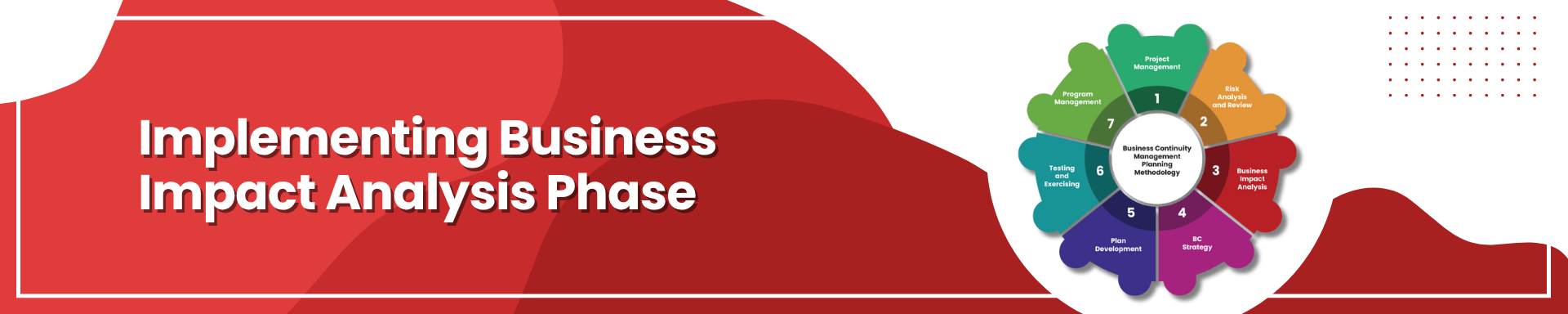
#### **Business Impact Analysis (BIA)**
During the business impact analysis (BIA) phase, six-part templates are completed for each critical business function.
- **Part 0**: Corporate MBCO & Product and Services **\[MBCO\] \[P&S\]**
- **Part 1**: Identification of Business Functions **\[BIAQ P1\]**
- **Part 2**: Impact Areas of Business Functions **\[BIAQ P2\]**
- **Part 3**: Impact Over Time of Business Functions **\[BIAQ P3\]**
- **Part 4**: Supporting IT Systems and Applications **\[BIAQ P4\]**
- **Part 5**: Inter-dependencies **\[BIAQ P5\]**
- **Part 6**: Vital Records **\[BIAQ P6\]**
Each section is completed for all of GRA’ critical business functions, providing granular insight into operational dependencies and recovery priorities.
#### [](https://cta-redirect.hubspot.com/cta/redirect/3893111/fac23b58-f744-480a-b86b-13a824a53308)
#### **Business Continuity Strategy (BCS)**
In the Business Continuity Strategy (BCS) phase, each critical business unit will have the following requirements presented:
- **Mitigation Strategies \[BCS T1\]**
- **Recovery Strategies and Justifications \[BCS T2\]**
- **Minimum Resources Required during a Disaster \[BCS T3\]**
#### [](https://cta-redirect.hubspot.com/cta/redirect/3893111/8be70e4c-1b23-4b38-bf36-5bd899b28e17)
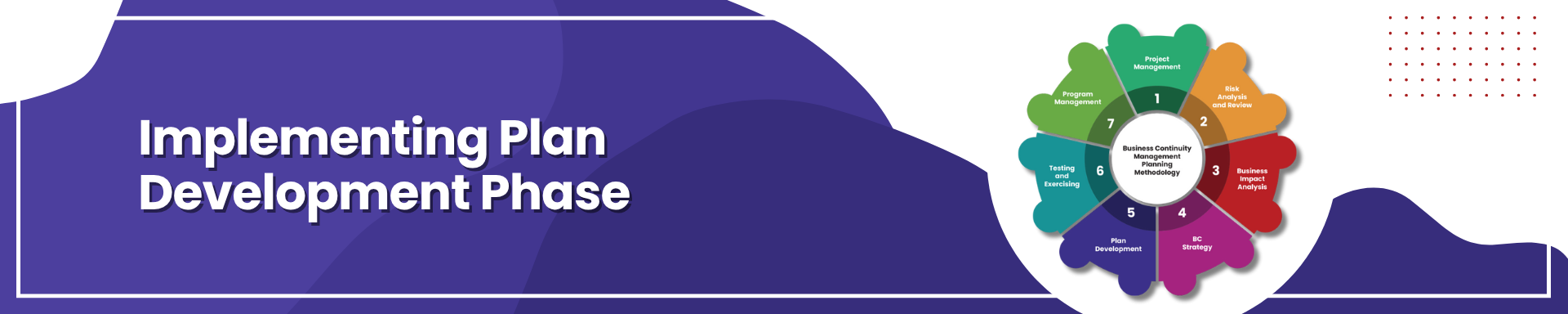
#### **Plan Development (PD)**
Once strategies are finalised, the BCM team develops and documents the **Business Continuity Plans** **\[PD\]** for each business function. This includes the:
- **Procedures and workflows** tailored to each Sub-CBF
- **Communication protocols**
- **Roles and responsibilities during disruption events**
#### [![Banner \[Summary\] \[BCM\] \[E1\] \[C10\] Identifying Critical Business Functions](https://no-cache.hubspot.com/cta/default/3893111/0e59113c-d17a-48a8-8c28-bb1bcf487857.png)](https://cta-redirect.hubspot.com/cta/redirect/3893111/0e59113c-d17a-48a8-8c28-bb1bcf487857)
#### **KKH’s Critical Business Functions (CBFs)**
Critical Business Functions (CBFs) have been identified for KKH and serve as the basis for Business Impact Analysis, BC Strategy Development, and Business Continuity Plan Development.[![\[BCM\] \[KKH\] \[E1\] \[C10\] Identifying Critical Business Functions](https://no-cache.hubspot.com/cta/default/3893111/0d1cbf1e-59f6-43c8-a15e-6b34233e632f.png)](https://cta-redirect.hubspot.com/cta/redirect/3893111/0d1cbf1e-59f6-43c8-a15e-6b34233e632f)
1 Emergency Obstetric Services
2 Labour and Delivery Services
3 Neonatal Intensive Care Services (NICU)
4 Paediatric Emergency Services
5 Paediatric Inpatient Services
6 Operating Theatre Services
7 Intensive Care Services
8 Pharmacy Services
9 Laboratory Diagnostic Services
10 Medical Imaging Services
11 Blood Bank and Transfusion Services
12 Electronic Medical Records (EMR) Management
13 Infection Prevention and Control
14 Sterile Supply Services
15 Medical Gas Supply Management
16 Clinical Engineering and Biomedical Equipment Support
17 Facilities and Engineering Operations
18 Information and Communication Technology (ICT) Services
19 Security and Emergency Response
20 Procurement and Supply Chain Management
Each Critical Business Function will subsequently undergo detailed Risk Analysis, Business Impact Analysis, Business Continuity Strategy development, and Business Continuity Plan preparation.
Together, these analyses ensure that KKH maintains continuity of essential clinical and supporting services during disruptive events while safeguarding patients, staff, and healthcare operations.
#### A Strategic Step Forward
This eBook is part of the value-added, complementary services provided by BCM Institute to organisations implementing or enhancing their Business Continuity Management programmes.
It supports organisations that participate in BCM Institute's training-led implementation approach while attending certification programmes, competency-based training courses, workshops, and consulting engagements.
The objective is to bridge the gap between BCM training and practical implementation by providing structured templates, implementation guidance, and practical deliverables that can be immediately applied within the organisation.
Through this approach, organisations such as the **KK Women's and Children's Hospital (KKH)** can accelerate BCM implementation, improve BCM maturity, strengthen organisational resilience, and establish a sustainable Business Continuity Management System aligned with ISO 22301 and industry best practices.
[](https://cta-redirect.hubspot.com/cta/redirect/3893111/dc612b43-f678-4d9a-888e-8dced9d1b72b)
#### Next Steps
Business continuity planning is most effective when supported by a structured and disciplined implementation process.
[![x eBook Cover \[BCM\] \[KKH\] \[E1\] \[2D\]](https://no-cache.hubspot.com/cta/default/3893111/89ff2234-56e5-4251-9fee-cd7a4d53ab9b.png)](https://cta-redirect.hubspot.com/cta/redirect/3893111/89ff2234-56e5-4251-9fee-cd7a4d53ab9b)[![x eBook Cover \[BCM\] \[KKH\] \[E2\] \[2D\]](https://no-cache.hubspot.com/cta/default/3893111/c6d749ab-2282-476a-8630-ca4d587b9570.png)](https://cta-redirect.hubspot.com/cta/redirect/3893111/c6d749ab-2282-476a-8630-ca4d587b9570)This eBook translates BCM concepts and methodology into practical implementation activities that enable the **KK Women's and Children's Hospital (KKH)** to identify risks, understand business impacts, develop recovery strategies, and establish actionable business continuity plans.
Together with eBook 1, Understanding Your Organisation, and eBook 2, Implementing BCM Planning Methodology, this eBook provides the practical foundation required to build, maintain, and continually improve Business Continuity Management capabilities across the **KK Women's and Children's Hospital (KKH)**.
The chapters that follow contain the detailed templates, instructions, and implementation guidance necessary to complete the Risk Analysis and Review, Business Impact Analysis, Business Continuity Strategy, and Plan Development phases of the BCM Planning Methodology.
[![\[BCM\] \[KKH\] \[3/4 Banner\] Implementing Business Continuity Management for KKH](https://no-cache.hubspot.com/cta/default/3893111/141669d3-f654-4e57-9ccd-2d2ab49f536d.png)](https://cta-redirect.hubspot.com/cta/redirect/3893111/141669d3-f654-4e57-9ccd-2d2ab49f536d)
| **eBook 3: Starting Your BCM Implementation** | | | | | | |
| --- | --- | --- | --- | --- | --- | --- |
| **MBCO** | **P&S** | **RAR T1** | **RAR T2** | **RAR T3** | **BCS T1** | **eBook 1** |
| [![BCM\] \[KKH\] \[E3\] \[BIA\] MBCO Corporate MBCO](https://no-cache.hubspot.com/cta/default/3893111/55ac38bc-d349-4faf-a6dc-cbc3d3f5431b.png)](https://cta-redirect.hubspot.com/cta/redirect/3893111/55ac38bc-d349-4faf-a6dc-cbc3d3f5431b) | [![BCM\] \[KKH\] \[E3\] \[BIA\] \[PS\] Key Product and Services](https://no-cache.hubspot.com/cta/default/3893111/b28ee275-3bf7-4832-a3a0-0bcca82d2522.png)](https://cta-redirect.hubspot.com/cta/redirect/3893111/b28ee275-3bf7-4832-a3a0-0bcca82d2522) | [![BCM\] \[KKH\] \[E3\] \[RAR\] \[T1\] List of Threats](https://no-cache.hubspot.com/cta/default/3893111/684e108e-12b3-4872-99e4-6b61ce39596e.png)](https://cta-redirect.hubspot.com/cta/redirect/3893111/684e108e-12b3-4872-99e4-6b61ce39596e) | [![BCM\] \[KKH\] \[E3\] \[RAR\] \[T2\] Treatment and Control](https://no-cache.hubspot.com/cta/default/3893111/6c690eb5-e7da-4206-ac6b-fb88a8966a69.png)](https://cta-redirect.hubspot.com/cta/redirect/3893111/6c690eb5-e7da-4206-ac6b-fb88a8966a69) | [![BCM\] \[KKH\] \[E3\] \[RAR\] \[T3\] Risk Impact and Likelihood Assessment](https://no-cache.hubspot.com/cta/default/3893111/a9730f15-ebd1-4e30-b308-6d574be794a1.png)](https://cta-redirect.hubspot.com/cta/redirect/3893111/a9730f15-ebd1-4e30-b308-6d574be794a1) | [![BCM\] \[KKH\] \[E3\] \[BCS\] \[T1\] Mitigation Strategies and Justification](https://no-cache.hubspot.com/cta/default/3893111/28b77d9a-b16b-44e7-9abf-965d3db4f803.png)](https://cta-redirect.hubspot.com/cta/redirect/3893111/28b77d9a-b16b-44e7-9abf-965d3db4f803) | [![x eBook Cover \[BCM\] \[KKH\] \[E1\] \[2D\]](https://no-cache.hubspot.com/cta/default/3893111/89ff2234-56e5-4251-9fee-cd7a4d53ab9b.png)](https://cta-redirect.hubspot.com/cta/redirect/3893111/89ff2234-56e5-4251-9fee-cd7a4d53ab9b) |
| **CBF 1: Emergency Obstetric Services** | | | | | | |
| **DP** | **BIAQ P1** | **BIAQ P2** | **BIAQ P3** | **BIAQ P4** | **BIAQ P5** | **eBook 2** |
| [![\[BCM\] \[KKH\] \[E3\] \[BIA\] \[DP\] \[CBF\] \[1\] Emergency Obstetric Services](https://no-cache.hubspot.com/cta/default/3893111/e497eed8-773b-4e86-bbf8-8e9c3032365b.png)](https://cta-redirect.hubspot.com/cta/redirect/3893111/e497eed8-773b-4e86-bbf8-8e9c3032365b) | [![\[BCM\] \[KKH\] \[E3\] \[BIA\] \[T1\] \[CBF\] \[1\] Emergency Obstetric Services](https://no-cache.hubspot.com/cta/default/3893111/7bda08a6-461a-4c89-8806-4d6d1216e9f4.png)](https://cta-redirect.hubspot.com/cta/redirect/3893111/7bda08a6-461a-4c89-8806-4d6d1216e9f4) | [![\[BCM\] \[KKH\] \[E3\] \[BIA\] \[T2\] \[CBF\] \[1\] Emergency Obstetric Services](https://no-cache.hubspot.com/cta/default/3893111/0724500a-3544-46b8-af30-f31b292e5eb9.png)](https://cta-redirect.hubspot.com/cta/redirect/3893111/0724500a-3544-46b8-af30-f31b292e5eb9) | [![\[BCM\] \[KKH\] \[E3\] \[BIA\] \[T3\] \[CBF\] \[1\] Emergency Obstetric Services](https://no-cache.hubspot.com/cta/default/3893111/dc455c8b-0db4-45c4-8f33-e81d69d35344.png)](https://cta-redirect.hubspot.com/cta/redirect/3893111/dc455c8b-0db4-45c4-8f33-e81d69d35344) | [![\[BCM\] \[KKH\] \[E3\] \[BIA\] \[T4\] \[CBF\] \[1\] Emergency Obstetric Services](https://no-cache.hubspot.com/cta/default/3893111/f4e64c69-124b-40a8-b224-dded90e5631b.png)](https://cta-redirect.hubspot.com/cta/redirect/3893111/f4e64c69-124b-40a8-b224-dded90e5631b) | [![\[BCM\] \[KKH\] \[E3\] \[BIA\] \[T5\] \[CBF\] \[1\] Emergency Obstetric Services](https://no-cache.hubspot.com/cta/default/3893111/f6eaac47-7206-4cba-b6f4-b58245fa9111.png)](https://cta-redirect.hubspot.com/cta/redirect/3893111/f6eaac47-7206-4cba-b6f4-b58245fa9111) | [![x eBook Cover \[BCM\] \[KKH\] \[E2\] \[2D\]](https://no-cache.hubspot.com/cta/default/3893111/c6d749ab-2282-476a-8630-ca4d587b9570.png)](https://cta-redirect.hubspot.com/cta/redirect/3893111/c6d749ab-2282-476a-8630-ca4d587b9570) |
| **BIAQ P6** | **BCS T2** | **BCS T3** | **PD** | | **CBF** | **eBook 3** |
| [![\[BCM\] \[KKH\] \[E3\] \[BIA\] \[T6\] \[CBF\] \[1\] Emergency Obstetric Services](https://no-cache.hubspot.com/cta/default/3893111/5aa80ea6-6214-44b6-92a2-4156d7d4cfe5.png)](https://cta-redirect.hubspot.com/cta/redirect/3893111/5aa80ea6-6214-44b6-92a2-4156d7d4cfe5) | [![\[BCM\] \[KKH\] \[E3\] \[BCS\] \[T2\] \[CBF\] \[1\] Emergency Obstetric Services](https://no-cache.hubspot.com/cta/default/3893111/8d32e264-3e43-4d37-be2a-1382e798c916.png)](https://cta-redirect.hubspot.com/cta/redirect/3893111/8d32e264-3e43-4d37-be2a-1382e798c916) | [![\[BCM\] \[KKH\] \[E3\] \[BCS\] \[T3\] \[CBF\] \[1\] Emergency Obstetric Services](https://no-cache.hubspot.com/cta/default/3893111/b53ff102-21b1-4f31-b47e-5b721028ee65.png)](https://cta-redirect.hubspot.com/cta/redirect/3893111/b53ff102-21b1-4f31-b47e-5b721028ee65) | [![\[BCM\] \[KKH\] \[E3\] \[PD\] \[CBF\] \[1\] Emergency Obstetric Services](https://no-cache.hubspot.com/cta/default/3893111/f9da91f2-6ad8-4c19-b25f-ef7b136c8a04.png)](https://cta-redirect.hubspot.com/cta/redirect/3893111/f9da91f2-6ad8-4c19-b25f-ef7b136c8a04) | | [![\[BCM\] \[KKH\] \[E1\] \[C10\] Identifying Critical Business Functions](https://no-cache.hubspot.com/cta/default/3893111/0d1cbf1e-59f6-43c8-a15e-6b34233e632f.png)](https://cta-redirect.hubspot.com/cta/redirect/3893111/0d1cbf1e-59f6-43c8-a15e-6b34233e632f) | [![x eBook Cover \[BCM\] \[KKH\] \[E3\] \[2D\]](https://no-cache.hubspot.com/cta/default/3893111/50bc80d4-3a3b-4ac4-901a-784f67232865.png)](https://cta-redirect.hubspot.com/cta/redirect/3893111/50bc80d4-3a3b-4ac4-901a-784f67232865) |
#### More Information About Business Continuity Management Courses
[](https://cta-redirect.hubspot.com/cta/redirect/3893111/c010f0fd-7ba6-4f60-b63b-38efafac8ca5)[](https://cta-redirect.hubspot.com/cta/redirect/3893111/354ef907-cf2c-4148-aa47-577a930e76c5)To learn more about the course and schedule, click the buttons below for the BCM-300 Business Continuity Management Implementer \[B-3\] course and the BCM-5000 Business Continuity Management Expert Implementer \[B-5\].
| [![Register \[BL-B-3\]\*](https://no-cache.hubspot.com/cta/default/3893111/ac6cf073-4cdd-4541-91ed-889f731d5076.png)](https://cta-redirect.hubspot.com/cta/redirect/3893111/ac6cf073-4cdd-4541-91ed-889f731d5076) | [](https://cta-redirect.hubspot.com/cta/redirect/3893111/9ff8a3dc-e39a-465b-929f-72e232cdd5fb) | [](https://cta-redirect.hubspot.com/cta/redirect/3893111/f3922b80-e96a-46d6-8993-dc150a5de2d5) |
| --- | --- | --- |
| [](https://cta-redirect.hubspot.com/cta/redirect/3893111/1cb17ac7-50b2-4f88-bc4b-c7444e4b57b5) | [](https://cta-redirect.hubspot.com/cta/redirect/3893111/3ecb1171-819d-45a2-8686-6db917a20156) | [](https://cta-redirect.hubspot.com/cta/redirect/3893111/21525c10-4003-4934-95fc-fe218174bc5b) |
| [![FAQ \[BL-B-3\]](https://no-cache.hubspot.com/cta/default/3893111/b3824ba1-7aa1-4eb6-bef8-94f57121c5ae.png)](https://cta-redirect.hubspot.com/cta/redirect/3893111/b3824ba1-7aa1-4eb6-bef8-94f57121c5ae) | If you have any questions, click to contact us. [![Email to Sales Team \[BCM Institute\]](https://no-cache.hubspot.com/cta/default/3893111/3c53daeb-2836-4843-b0e0-645baee2ab9e.png)](https://cta-redirect.hubspot.com/cta/redirect/3893111/3c53daeb-2836-4843-b0e0-645baee2ab9e) | [](https://cta-redirect.hubspot.com/cta/redirect/3893111/9c199ae8-c470-4bb7-9612-73c7a084e94c) |
| [](https://cta-redirect.hubspot.com/cta/redirect/3893111/8999211a-2c51-4be7-bf49-c393f6c67974) | [](https://cta-redirect.hubspot.com/cta/redirect/3893111/5c1aa95d-f6dd-4067-a95c-5cc0c32d7ed8) | [](https://cta-redirect.hubspot.com/cta/redirect/3893111/086ab3b9-4d66-4a95-b2f7-1148e9803a9c) |
#### **Comments:**
### More Posts
[](https://cta-redirect.hubspot.com/cta/redirect/3893111/839787f4-a4fd-456f-accf-54c947026558)

All rights reserved. Copyright 2026
```json
{
"@context" : "https://schema.org",
"@type" : "BlogPosting",
"author" : {
"@type" : "Person",
"name" : "Moh Heng Goh",
"url" : "https://blog.bcm-institute.org/ebook/author/moh-heng-goh"
},
"dateModified" : "2026-08-07T15:51:21.225Z",
"datePublished" : "2026-08-07T15:51:21.000Z",
"headline" : "[BCM] [KKH] [E3] [C1] Starting Your BCM Implementation",
"mainEntityOfPage" : {
"@id" : "https://blog.bcm-institute.org/ebook/bcm-kkh-e3-c1-starting-your-bcm-implementation",
"@type" : "WebPage"
},
"publisher" : {
"@type" : "Organization",
"logo" : {
"@type" : "ImageObject",
"url" : "https://blog.bcm-institute.org/hubfs/BCMI%20Logo.png"
},
"name" : "BCMI Pte Ltd"
}
}
```