---
title: [BCM] [JHA] [E2] [C1] Business Continuity Management Planning Methodology for Jamiyah Home for the Aged
description: A seven-phase BCM planning methodology for Jamiyah Home for the Aged, aligned to ISO 22301 and Singapore's Social Residential Homes Act 2025.
image: https://blog.bcm-institute.org/hubfs/Generic%20Morepost%20for%20Companies/Updated%20Generic%20BCM%20eBook%20Morepost/BCM%20GEN%20E2/%5BBCM%5D%20%5BGEN%5D%20%5BE2%5D%20%5BC1%5D%20Business%20Continuity%20Management%20Planning%20Methodology.png
---
.
[](http://www.bcm-institute.org/)
- [Home](https://www.bcm-institute.org/)
- [About Us](https://www.bcm-institute.org/about-us-3/)
- [A President’s Perspective](https://www.bcm-institute.org/about-us/a-presidents-perspective/)
- [Our History](https://www.bcm-institute.org/about-us/our-history/)
- [Our Advisory Council](https://www.bcm-institute.org/about-us/our-advisory-council/)
- [Customers’ Testimonials](https://www.bcm-institute.org/about-us/customers-testimonials/)
- [Credential Verification](https://www.bcm-institute.org/about-us/credential-verification/)
- [Courses](https://blog.bcm-institute.org/blog/course-fees-for-blended-learning-courses-master-catalog)
- [ISO 22301 Business Continuity Management System Audit](https://blog.bcm-institute.org/audit/business-continuity-management-audit-courses)
- [ISO 22301 Business Continuity Management](https://blog.bcm-institute.org/bcm/business-continuity-management-courses)
- [Crisis Communication](https://blog.bcm-institute.org/crisis-communication/crisis-communication-courses)
- [Crisis Management](https://blog.bcm-institute.org/en/crisis-management/courses)
- [IT Disaster Recovery](https://blog.bcm-institute.org/it-disaster-recovery/courses)
- [Operational Resilience](https://blog.bcm-institute.org/operational-resilience/courses)
- [Operational Resilience Audit](https://blog.bcm-institute.org/operational-resilience-audit/courses)
- [Certification](https://blog.bcm-institute.org/certification/types-of-certifications-offered)
- [ISO 22301 BCMS Audit Certification](https://blog.bcm-institute.org/certification/business-continuity-management-audit-certification)
- [ISO22301 Business Continuity Management Certification](https://blog.bcm-institute.org/bcm/business-continuity-management-certification)
- [Crisis Communication Certification](https://blog.bcm-institute.org/crisis-communication/crisis-communication-certification)
- [Crisis Management Certification](https://blog.bcm-institute.org/en/crisis-management/crisis-management-certification)
- [IT Disaster Recovery Planning Certification](https://blog.bcm-institute.org/it-disaster-recovery/it-disaster-recovery-certification)
- [Operational Resilience Certification](https://blog.bcm-institute.org/operational-resilience/operational-resilience-certification)
- [Operational Resilience Audit Certification](https://blog.bcm-institute.org/operational-resilience-audit)
- [Seminars](https://blog.bcm-institute.org/meet-the-expert/mte-webinar-mainpage)
- [Store](https://www.bcm-institute.org/store-2/)
- [Contact Us](http://www.bcm-institute.org/about-us/contact-us/)
-
-
##### Sustaining Community Services: Implementing BCM at Jamiyah Home for the Aged

# \[BCM\] \[JHA\] \[E2\] \[C1\] Business Continuity Management Planning Methodology for Jamiyah Home for the Aged
[](https://cta-redirect.hubspot.com/cta/redirect/3893111/b764264e-ccf8-489f-9125-6bdfc8db17b3)Jamiyah Home for the Aged (JHA) cannot close its doors when something goes wrong, so it needs a structured way to keep caring for residents through any disruption.
This chapter sets out that structure: a seven-phase planning methodology that will guide JHA from a first Board decision to a living, tested business continuity capability.[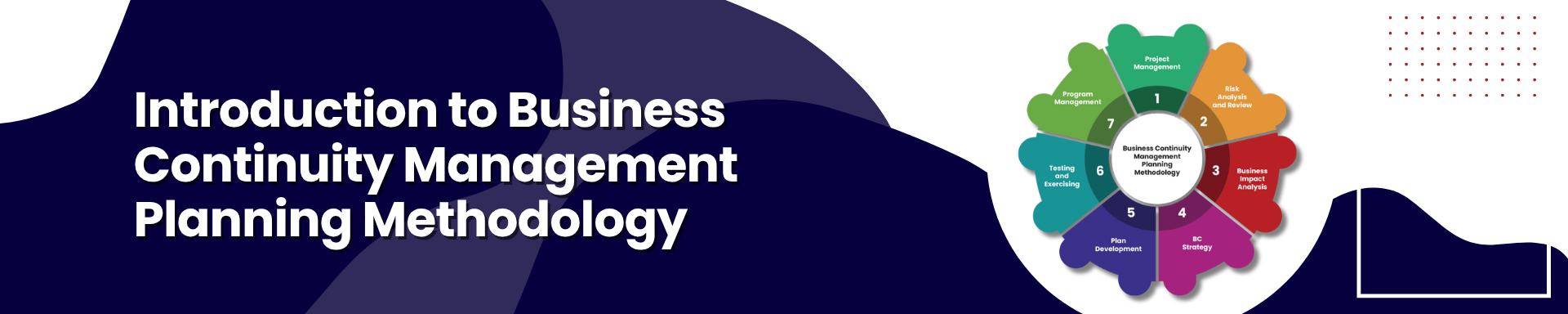](https://cta-redirect.hubspot.com/cta/redirect/3893111/68f13ffe-b808-44ec-9a28-7304d89f5889)
[Dr Goh Moh Heng](https://blog.bcm-institute.org/ebook/author/dr-goh-moh-heng) Oct 20, 2026
###### Business Continuity Management Certified Planner-Specialist-Expert
### **[](https://cta-redirect.hubspot.com/cta/redirect/3893111/5cd5edea-eed4-45ec-99b3-824e5267fb21)[](https://cta-redirect.hubspot.com/cta/redirect/3893111/68f13ffe-b808-44ec-9a28-7304d89f5889)Business Continuity Management Planning Methodology for Jamiyah Home for the Aged**
#### Introduction
Jamiyah Home for the Aged (JHA) cannot close its doors when something goes wrong, so it needs a structured way to keep caring for residents through any disruption.
This chapter sets out that structure: a seven-phase planning methodology that will guide JHA from a first Board decision to a living, tested business continuity capability.
#### Why Continuity Matters at JHA
[](https://cta-redirect.hubspot.com/cta/redirect/3893111/21d5f070-6f1f-44e9-948d-d0a8e1945f20)JHA, also known as Darul Takrim, was established in 1996 as an eldercare and destitute welfare facility by the then Ministry of Community Development, with Jamiyah Singapore (the Muslim Missionary Society Singapore) appointed as managing agent.
It began operating at Still Road on 15 December 1996 and moved to its purpose-built premises at 1 Tampines Avenue 3 in December 1997. Its mission is simple: to provide a Home for the homeless aged.
Many residents are elderly, frail and destitute. They have nowhere else to go, and many have limited family support.
The Home runs 24 hours a day, every day of the year. If power, water, staff, food supplies or the building itself are lost, residents still need their medication, meals, personal care and supervision on schedule. For this population, even a short interruption can become a safety incident.
#### A Changed Regulatory Setting
The regulatory ground under JHA shifted on 1 July 2026, when the Social Residential Homes Act 2025 (SRHA) came into operation.
The SRHA creates a single licensing regime for social residential homes, including welfare homes, and replaces relevant provisions of the Destitute Persons Act 1989.
Under the amended Destitute Persons Act, the Director-General of Social Welfare may place a person in a welfare home only if it is licensed under the SRHA.
The law itself provides for continuity. Section 4 of the SRHA states that one of the Act's purposes is to ensure continuity of residential accommodation and care for residents.
The Act also allows the Director-General to issue directions to ensure continuity (section 25), to manage an orderly cessation of operations (section 26), and, in serious cases, to seek a step-in order that hands the Home's operation to another party (section 27).
Codes of practice under section 24 may cover measures for infectious disease outbreaks, fire, flood and other emergencies, and MSF issued the SRH Code of Practice 2026 in July 2026.
In plain terms, the regulator now expects licensed homes to show that they can keep going. JHA demonstrates this through business continuity management (BCM).
#### What BCM is, in One Paragraph
BCM is a management discipline that helps an organisation keep delivering its most important services during a disruption and recover the rest in a planned order.
The international standard is ISO 22301:2019, *Security and resilience – Business continuity management systems – Requirements*, together with Amendment 1:2024, which adds a requirement to consider climate change. ISO 22313:2020 gives guidance on applying ISO 22301. This eBook series follows both.
### Purpose of This Chapter
This chapter is written for JHA's Board members, the Superintendent, and senior staff, and assumes no prior BCM knowledge.
It explains each of the seven phases, what each produces, and one specific requirement JHA must meet in each phase. Later chapters in this eBook take each phase in detail.
#### The Seven-Phase Methodology at a Glance
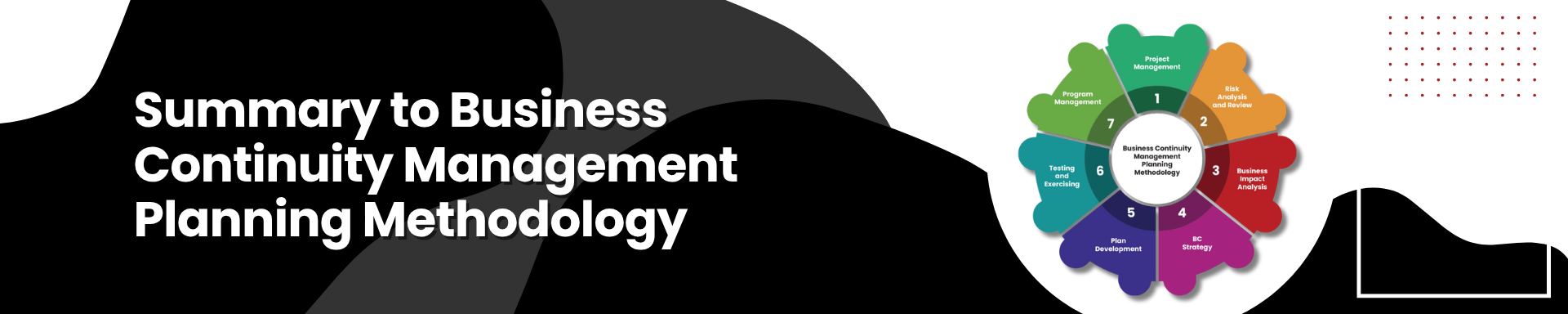
JHA's BCM planning methodology has seven phases: six that build the capability in sequence, and a seventh that runs continuously to keep it current.
[](https://cta-redirect.hubspot.com/cta/redirect/3893111/fbeb1a05-a26a-4e83-bdf5-200a565fd721)
Phases 1 to 6 are carried out in order the first time, because each depends on the outputs of the one before. After that, Programme Management drives an annual cycle that revisits risks, impacts, strategies and plans as JHA changes.
#### How the Phases Map to ISO 22301
ISO 22301 is built on the Plan-Do-Check-Act cycle used across ISO management system standards. Phases 1 to 4 plan the system, Phase 5 puts it into operation, Phase 6 checks it, and Phase 7 acts on what is learnt.
The table below shows the question each phase answers for JHA and the ISO 22301 clauses it addresses.
| **Phase** | **Key question for JHA** | **ISO 22301 clauses** |
| --- | --- | --- |
| **1. Project Management (PM)** | **Who owns BCM, and what does it cover?** | **4, 5, 6.2, 7.1** |
| **2. Risk Analysis and Review (RAR)** | **What could disrupt the Home, and how likely is it?** | **4.1 (climate), 6.1, 8.2.3** |
| **3. Business Impact Analysis (BIA)** | **Which activities matter most, and how fast must they return?** | **8.2.2** |
| **4. Business Continuity Strategy (BCS)** | **Which options will keep resident care going?** | **8.3** |
| **5. Plan Development (PD)** | **Who does what, when and how during a disruption?** | **8.4** |
| **6. Testing and Exercising (TE)** | **Do the plans work, and can staff carry them out?** | **8.5, 8.6** |
| **7. Programme Management (PgM)** | **How does BCM stay current and improve?** | **7.2–7.5, 9, 10** |
The following sections describe each phase in turn: its purpose, main activities and outputs, and one specific requirement that applies to JHA.
#### [](https://cta-redirect.hubspot.com/cta/redirect/3893111/f3c50f04-ebe4-4e72-a7cf-10ee0040d496)Phase 1: Project Management (PM)
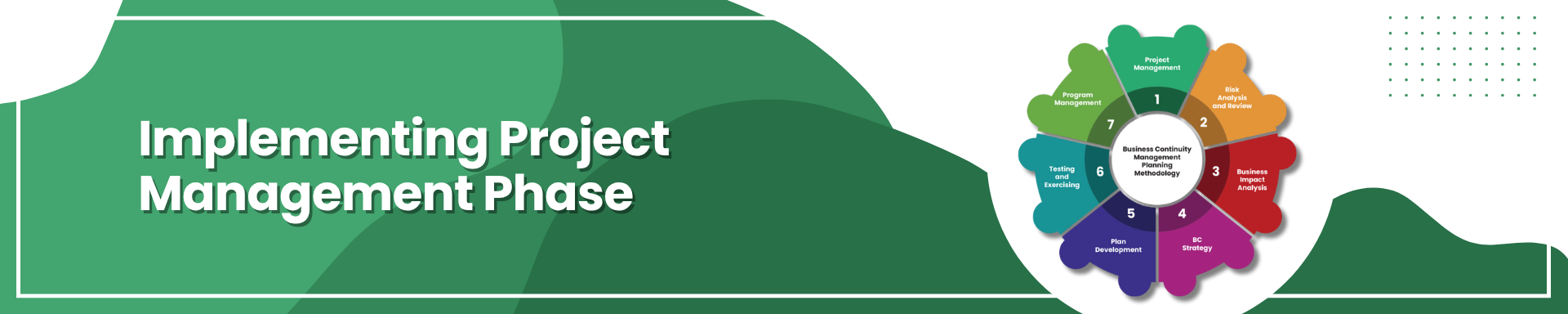
Project Management turns the Board's intention into an authorised, resourced and scoped BCM project. Without it, BCM becomes a document that one person writes, and nobody owns.
##### **What Happens in This Phase**
- The Board approves a BCM policy that states why JHA is doing BCM, what it covers and who is accountable.
- The Board names a BCM sponsor, and management names a project lead.
- A small BCM working group is formed from care, nursing, kitchen, facilities, administration and finance staff.
- The scope is agreed: which services, premises, people and dependencies are inside the BCM programme.
- A project plan sets out the phases, owners, milestones, budget and reporting line to the Board.
- Staff receive a short awareness briefing so they understand why they will be asked for information.
**ISO 22301 link:** context of the organisation and scope (clause 4), leadership and policy (clause 5), objectives (clause 6.2) and resources (clause 7.1).
**Main outputs:** BCM policy, project charter, scope statement, governance structure and project plan.
##### **Specific Requirement for JHA**
> The BCM charter must align BCM roles with JHA's SRHA licence roles. The Board-level BCM sponsor should be one of the key appointment holders approved under section 17 of the SRHA.
>
> The BCM project lead should be the Superintendent, as the individual most likely to be the approved person-in-charge under section 18.
>
> The scope must expressly cover the 24-hour residential operation at 1 Tampines Avenue 3 and every service JHA relies on from Jamiyah Singapore as managing agent, such as finance, human resources, IT and procurement.
This matters because the SRHA allows only one person-in-charge per home and holds key appointment holders accountable for how the home is run.
If the people accountable under the licence aren't the ones responsible for continuity, gaps appear exactly when a crisis demands clear authority.
Including managing-agent services in scope also avoids a common blind spot: a home can be resilient on site yet still stop paying staff or suppliers because a head-office system has failed.
#### [](https://cta-redirect.hubspot.com/cta/redirect/3893111/15348fa2-947b-440f-9d83-7e4958970d6e)Phase 2: Risk Analysis and Review (RAR)
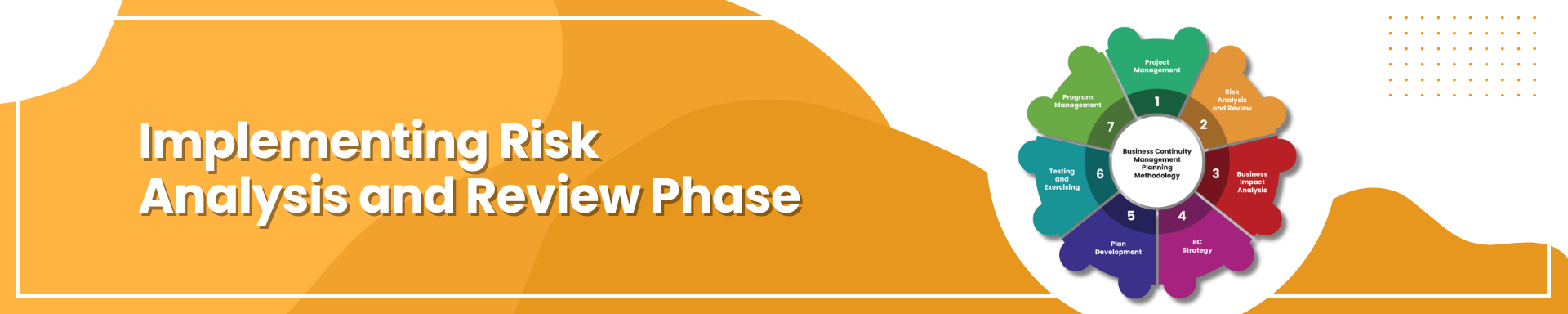
Risk Analysis and Review identifies what could disrupt JHA, how likely each threat is, and how badly it would hurt residents and operations. It tells the Board where to spend limited money on prevention and preparation.
##### **What Happens in This Phase**
- The working group lists credible threats to the Home, its people, its supplies and its information.
- The Board rates each threat for likelihood and impact using a simple scale it already understands from JHA's enterprise risk register.
- The Board records existing controls, such as fire safety systems, infection control routines, and backup arrangements.
- The Board treats risks above its risk appetite by reducing, transferring, accepting, or avoiding them.
- The results feed directly into the Business Impact Analysis and the strategy work that follows.
For a welfare home such as JHA, the threat list will typically include: an infectious disease outbreak among residents or staff; fire and the evacuation of residents with limited mobility; prolonged power, water or gas failure; flash flooding or storm damage; extreme heat; sudden loss of key care or nursing staff; failure of a food, medication or cleaning supplier; loss of resident records or IT systems; and regulatory action under the SRHA following a serious incident.
**ISO 22301 link:** risk assessment (clause 8.2.3), supported by actions to address risks and opportunities (clause 6.1).
**Main outputs:** BCM risk register, risk treatment plan and a short risk report to the Board.
##### **Specific Requirement for JHA**
> JHA must formally decide, and record, whether climate change is a relevant issue for its BCM system, as Amendment 1:2024 to ISO 22301 now requires under clause 4.1.
>
> Given that JHA's residents are elderly and frail, and that the Home runs around the clock, the risk assessment should specifically assess heat stress, prolonged heavy rainfall and the knock-on effects of both on power supply, staff travel and food deliveries. Interested parties such as MSF may also hold climate-related expectations, which the amendment notes under clause 4.2.1.
Older people are more vulnerable to heat-related illness, and a frail resident cannot simply leave a hot room.
Recording the climate decision, even if the conclusion is that existing controls are adequate, gives the Board and any certification auditor clear evidence that the question was asked and answered.
It also aligns with the environmental element of ESG that the Code of Governance for Charities and IPCs (2023) encourages charities to consider.
#### [](https://cta-redirect.hubspot.com/cta/redirect/3893111/6b386b1f-455a-4825-b4ba-4200e0c5fd7e)Phase 3: Business Impact Analysis (BIA)
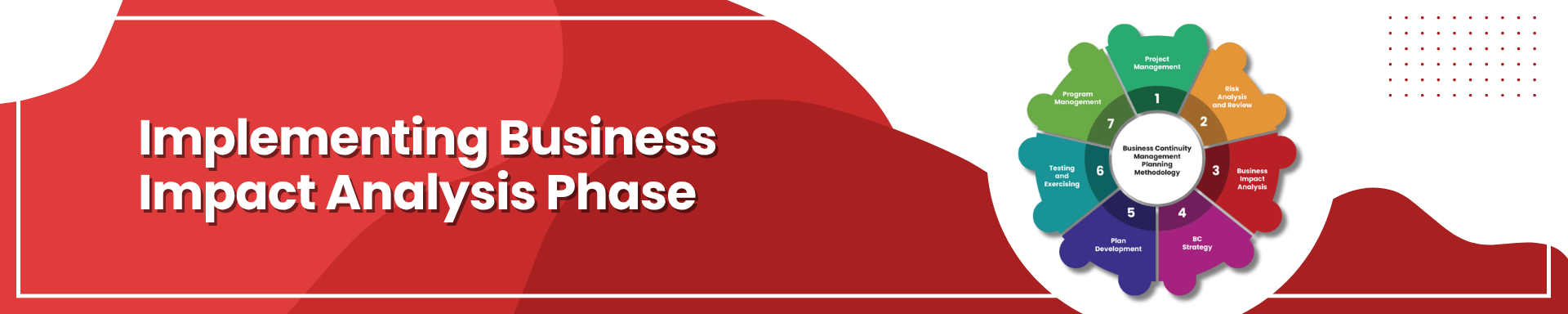
The Business Impact Analysis identifies which of JHA's activities matter most, how quickly each must be restored, and what each needs to run.
Where risk analysis asks "what could happen?", the BIA asks "what would it do to us, and how fast must we respond?"
##### **What Happens in This Phase**
- The JHA lists every activity, from medication rounds to payroll and donor reporting.
- For each activity, the team estimates the impact of an interruption over time: on resident safety, legal and licence compliance, reputation, finances and partners.
- The team sets the *maximum tolerable period of disruption* (MTPD): the point beyond which harm becomes unacceptable.
- It then sets a *recovery time objective* (RTO), which must be shorter than the MTPD, and a minimum service level to be delivered during disruption.
- It records dependencies: staff skills and numbers, premises, equipment, IT systems, records, suppliers, and partner agencies.
Terms such as MTPD and RTO sound technical, but any care manager will find the idea familiar. A missed medication dose has a time limit before it becomes dangerous. A cancelled donor report does not.
**ISO 22301 link:** business impact analysis (clause 8.2.2).
**Main outputs:** a prioritised list of activities, MTPDs and RTOs, minimum service levels, and a resource requirements register.
##### **Specific Requirement for JHA**
> The BIA must treat direct resident care as JHA's highest-priority activity group, measured in hours rather than days. This group includes medication administration, meals and hydration, support with activities of daily living such as bathing, toileting and moving around, and round-the-clock supervision.
>
> The BIA must also capture a current dependency profile of residents, showing who needs mobility assistance, who is on time-critical medication and who needs special diets, so that minimum staffing levels during a disruption are based on actual resident needs rather than the normal roster.
These care activities match the SRHA's definition of "support to carry out daily activities", which section 4 of the Act seeks to keep running.
A dependency profile also becomes vital in an evacuation or outbreak, when staff must know immediately which residents need the most help.
Staff can pause lower-priority activities, such as programmes, outings, and community events, for days or weeks without harm and record them as such, so staff are not diverted from care during an incident.
#### [](https://cta-redirect.hubspot.com/cta/redirect/3893111/66c784de-297c-4446-90c9-4611204cbb14)Phase 4: Business Continuity Strategy (BCS)
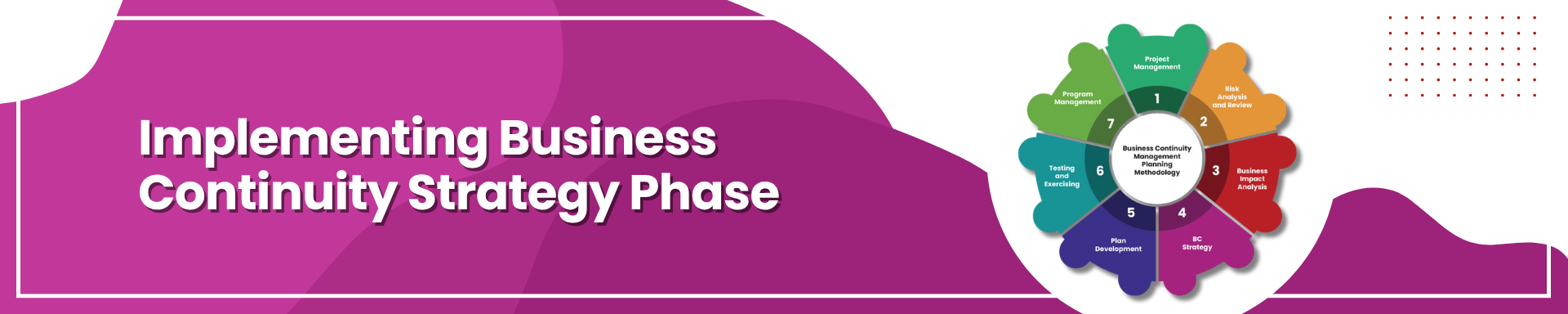
The Business Continuity Strategy selects the practical options JHA will use to keep prioritised activities running within their recovery time objectives.
It is where analysis becomes decisions, and where most BCM spending is approved.
##### **What Happens in This Phase**
Strategies are usually developed for five types of resources:
- **People:** cross-training, relief and agency staff arrangements, standby rosters and support for staff who cannot travel.
- **Premises:** fallback spaces within the building, evacuation sites and alternative accommodation for residents.
- **Supplies and suppliers:** emergency stocks of food, water, medication and personal protective equipment, and second suppliers for critical items.
- **Utilities and equipment:** backup power for essential equipment, refrigeration and lighting, and contingency for water supply.
- **Information and IT:** offline copies of resident records, medication charts and contact lists, plus recovery arrangements for systems run by Jamiyah Singapore.
Each option is costed and compared. The working group then recommends a set of strategies, and the Board approves them along with the budget to put them in place.
**ISO 22301 link:** business continuity strategies and solutions (clause 8.3).
**Main outputs:** approved continuity strategies, resource requirements, cost estimates and an implementation plan.
##### **Specific Requirement for JHA**
> JHA must establish a documented alternative accommodation and care strategy for the scenario in which residents cannot remain at 1 Tampines Avenue 3.
>
> This should begin with the Jamiyah network itself, for example a mutual-aid arrangement with Jamiyah Nursing Home (Darul Syifaa'), and extend to other licensed homes and to MSF.
>
> The strategy must state how residents, their records, their medication and enough staff would move with them, and it must be discussed in advance with MSF as the licensing authority.
The SRHA shows why this matters. Section 26 lets the Director-General direct an orderly transfer of residents to another licensed home, and section 27 allows residents to be moved to another licensee's care under a step-in order.
If JHA has already worked out how to transfer safely, it remains in control of its residents' welfare rather than having arrangements imposed at short notice. Being part of a wider organisation with several homes is a real strength for JHA, and the strategy should use it.
#### [](https://cta-redirect.hubspot.com/cta/redirect/3893111/a8d5e9c1-7cf9-4dc1-b2b5-d07c5b8544f3)Phase 5: Plan Development (PD)
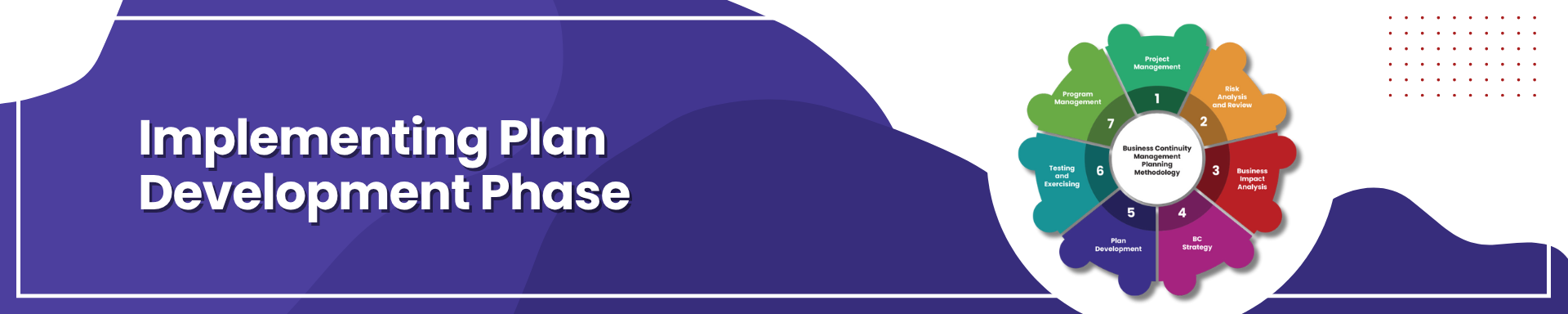
Plan Development documents who does what, when, and how, so teams can carry out approved strategies under pressure.
A good plan is short, clear and usable at 3 am by the most junior person on shift.
##### **What Happens in This Phase**
- **Define an incident response structur**e: who leads, who decides, who supports, and how the team is called together at any hour.
- Staff agree on **activation criteria**, so they know when an incident becomes a business continuity event.
- A **communications plan** covers staff, residents, next-of-kin, MSF, MOH, the managing agent, suppliers, volunteers and the media.
- **Business continuity plans** are written for each prioritised activity, with step-by-step actions, checklists and contact lists.
- **Recovery procedures** explain how to return to normal operations once the immediate disruption is over.
- Plans are stored in both printed and electronic form, in places staff can reach when systems or the building are unavailable.
**ISO 22301 link:** business continuity plans and procedures (clause 8.4), including response structure, warning and communication, and recovery.
**Main outputs:** incident management plan, business continuity plans, crisis communications plan, contact directories and action cards.
##### **Specific Requirement for JHA**
> JHA's plans must be cross-checked against the SRH Code of Practice 2026 and the SRH (General) Regulations 2026, and must include a clear, named step for notifying MSF promptly when a disruption affects residents' safety or care.
>
> Plans must also include role-based action cards for night and weekend shifts, when only a small team and no office staff are on site, and must set out how residents' privacy will be protected in any public or media communication.
The SRHA gives the Director-General broad powers to issue directions and take regulatory action, so MSF should plan its first response during an incident, not improvise.
The Code of Practice is the most detailed statement of what MSF expects from licensees, and the Act allows codes to cover outbreaks, fire, flood and other emergencies.
Night-shift action cards close the most common gap in care-home plans: they assume the managers who wrote them will be present when they are used.
Privacy protection reflects JHA's duty of care to residents, who are often most vulnerable, and SRHA's restrictions on publishing information that identifies residents of certain homes.
#### [](https://cta-redirect.hubspot.com/cta/redirect/3893111/3e0a6f35-5ca7-4c06-af13-eeefd836e7b7)Phase 6: Testing and Exercising (TE)
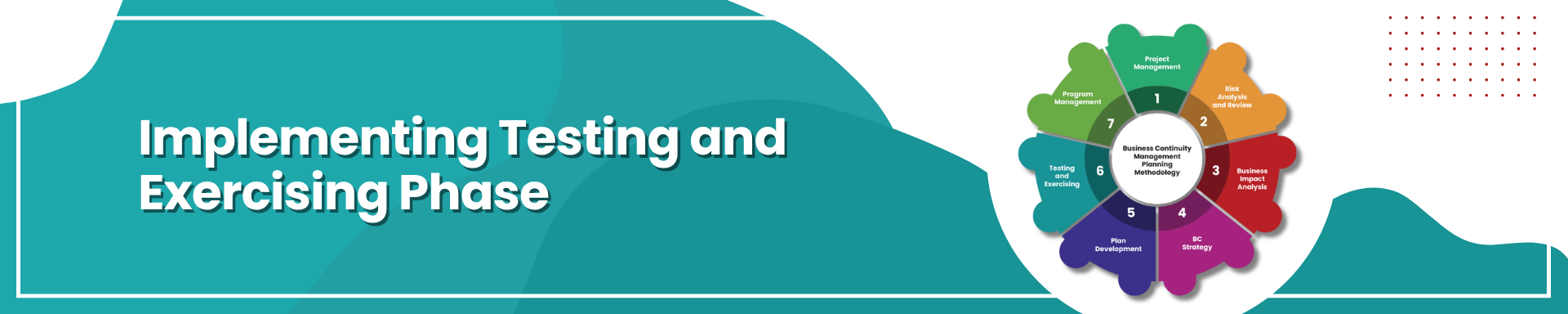
Testing and Exercising checks that the plans work and that staff can carry them out. An untested plan is an assumption; an exercised plan is a capability.
##### **What Happens in This Phase**
JHA should build up its exercise programme gradually, starting simple and increasing realism:
1. **Plan walkthrough:** plan owners read through the plan together to find gaps and errors.
2. **Tabletop exercise:** the incident team talks through a realistic scenario, such as a confirmed outbreak among residents and staff, and makes decisions as they would on the day.
3. **Functional test:** test a single element in real time, such as calling every number on the contact list, restoring records from backup, or starting the backup generator.
4. **Live exercise:** staff physically carry out part of the plan, such as moving residents to a fallback area or running the kitchen from emergency stock.
After each exercise, a short report records what went well, what did not and what must change. Assign owners and deadlines to actions, and update plans.
**ISO 22301 link:** exercise programme (clause 8.5) and evaluation of business continuity documentation and capabilities (clause 8.6).
**Main outputs:** multi-year exercise programme, exercise scenarios, post-exercise reports and corrective action log.
##### **Specific Requirement for JHA**
> JHA must run at least one scenario-based exercise each year that takes place during, or is set in, a night or weekend shift, and that tests the movement of residents with limited mobility. The results, including any resident-safety issues found, must be reported to the Board through the BCM sponsor.
Most serious incidents in residential care don't respect office hours, and the Home's office runs only from 9 am to 6 pm while care runs 24 hours.
Fire evacuation drills required under fire safety rules are valuable but narrow. A BCM exercise goes further by testing what happens next: where residents go, how medication and records follow them, who informs MSF and families, and how the Home keeps running for the next 72 hours. Reporting results to the Board turns exercising from a staff routine into evidence of governance.
#### [](https://cta-redirect.hubspot.com/cta/redirect/3893111/879ee324-2916-4ee7-bd18-19b1be0b7c24)Phase 7: Programme Management (PgM)
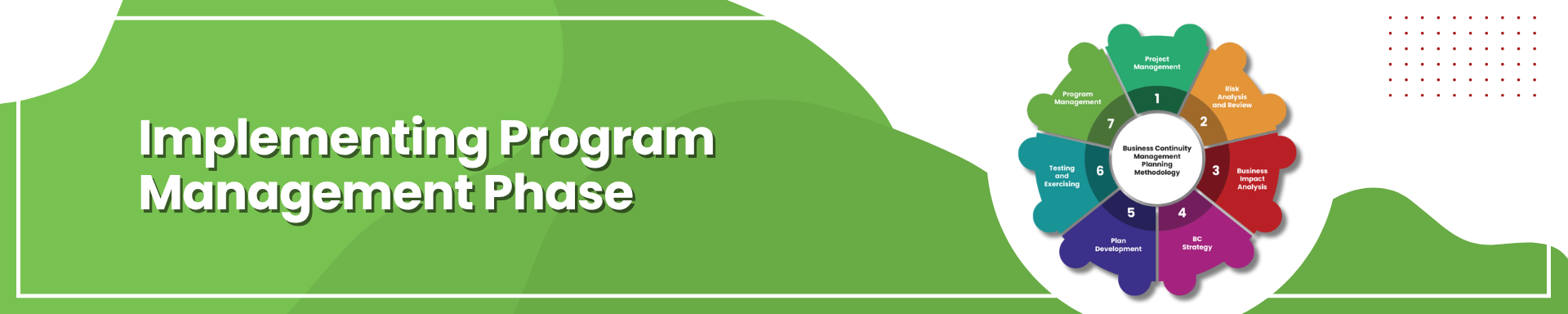
Programme Management keeps BCM alive after the project ends. The first six phases build capability; this phase ensures it stays current as staff, residents, suppliers, regulations, and risks change.
##### **What Happens in This Phase**
- BCM roles are written into job descriptions, induction and annual training.
- Plans are reviewed on a fixed cycle and after any significant change, such as a renovation, a new IT system, a change of Superintendent or a new supplier.
- Performance is monitored against BCM objectives, such as on-time plan reviews, held exercises, and closed actions.
- Internal audits check that the BCM system meets ISO 22301 and JHA's own policy.
- Senior management and the Board conduct a periodic management review and decide on improvements.
- The organisation captures lessons from real incidents, near misses, and exercises and acts on them.
**ISO 22301 link:** support, including competence, awareness, communication and documented information (clauses 7.2 to 7.5); performance evaluation (clause 9); and improvement (clause 10).
**Main outputs:** BCM maintenance schedule, training records, internal audit reports, management review minutes and an improvement log.
##### **Specific Requirement for JHA**
> The Board must receive an annual BCM report, prepared by the Superintendent and presented by the BCM sponsor, that serves as the formal ISO 22301 management review.
>
> The same report should be used as evidence of risk management for the Governance Evaluation Checklist under the Code of Governance for Charities and IPCs (2023), and as evidence of continuity arrangements for MSF during SRHA licence renewal or inspection.
One annual report serving three audiences reduces the paperwork burden on a small management team and keeps BCM on the Board agenda rather than letting it drift.
The Code of Governance operates on a "comply or explain" basis, and the Commissioner of Charities' 2024 Enterprise Risk Management Toolkit expressly includes business continuity, drawing on ISO 22313:2020. Under the SRHA, MSF's inspecting officers can request documents and information from licensees.
A well-kept BCM record lets JHA respond quickly and confidently.
#### [](https://cta-redirect.hubspot.com/cta/redirect/3893111/ed46e362-3b5a-4a67-95cd-d0df7fae8af4)
The seven-phase methodology gives JHA a clear, standards-based route from intention to capability.
Project Management secures authority and scope. Risk Analysis and Review shows what could go wrong.
The Business Impact Analysis shows what matters most and how fast it must be restored.
Business Continuity Strategy chooses the options, Plan Development documents them, Testing and Exercising proves they work, and Programme Management keeps them current.
The methodology is not new paperwork for its own sake. Each phase answers a question that JHA's Board, MSF and the public are entitled to ask of a home that cares for destitute older people: if something goes wrong tonight, will every resident still be safe, fed, medicated and cared for tomorrow?
Three themes run through the specific requirements set out in this chapter:
- **Accountability is aligned with the licence.** People in SRHA roles own BCM.
- **Residents come first.** Direct care is the top priority in every phase, from the BIA to the night-shift exercise.
- **JHA uses its network.** Jamiyah Singapore's shared services and sister homes are both dependencies to protect and sources of resilience.
#### What the Board is Asked to Do Next
1. Endorse this seven-phase methodology as the basis for JHA's BCM programme.
2. Appoint a Board-level BCM sponsor and confirm the Superintendent as BCM project lead.
3. Approve preparing a BCM policy and project charter for Board approval at its next meeting.
The following chapters cover each phase in turn and provide templates and worked examples tailored to JHA. eBook 3, *Starting Your BCM Implementation for Jamiyah Home for the Aged*, then turns the methodology into a practical first-year implementation plan.
[](https://cta-redirect.hubspot.com/cta/redirect/3893111/45126cea-7fe9-4ffe-b72e-5e4451c0e271)
#### Sources
- [Jamiyah Home for the Aged – Home](https://jha.jamiyah.org.sg/) and [About Us](https://jha.jamiyah.org.sg/about-us/)
- [MSF – About the Social Residential Homes Act](https://www.msf.gov.sg/what-we-do/srha/about-srha)
- [MSF – Regulatory Requirements under the SRHA](https://www.msf.gov.sg/what-we-do/srha/regulatory-requirements)
- [Social Residential Homes Act 2025, full text (LawPlayer, compiled from Singapore Statutes Online)](https://lawplayer.com/sg/act/SRHA2025)
- [SRHA 2025, section 64: Amendment of Destitute Persons Act 1989](https://lawplayer.com/sg/act/SRHA2025/64)
- [Rajah & Tann – Social Residential Homes Bill passed](https://sg.rajahtannasia.com/viewpoints/social-residential-homes-bill-passed-to-uphold-quality-and-consistent-standards-across-social-residential-homes/)
- [ISO 22301:2019 Amendment 1: Climate action changes (BIS adoption text)](https://services.bis.gov.in/tmp/MSD41626202_04112024_1.pdf)
- [Commissioner of Charities – Code of Governance for Charities and IPCs](https://charities.gov.sg/Pages/Charities-and-IPCs/Manage-Your-Charity/Code-of-Governance-for-Charities-IPCs.aspx)
- [Commissioner of Charities – Enterprise Risk Management Toolkit for Charities and IPCs 2024](https://charities.gov.sg/PublishingImages/Resource-and-Training/Guides-Templates-Awards/Guides/Documents/ERM%20Toolkit%20for%20Charities%20and%20IPCS%202024_5April2024.pdf)
#### **Comments**
### More Posts
[](https://cta-redirect.hubspot.com/cta/redirect/3893111/839787f4-a4fd-456f-accf-54c947026558)

All rights reserved. Copyright 2026
```json
{
"@context" : "https://schema.org",
"@type" : "BlogPosting",
"author" : {
"@type" : "Person",
"name" : "Dr Goh Moh Heng",
"url" : "https://blog.bcm-institute.org/ebook/author/dr-goh-moh-heng"
},
"dateModified" : "2026-10-20T00:59:28.112Z",
"datePublished" : "2026-10-20T00:57:57.000Z",
"headline" : "[BCM] [JHA] [E2] [C1] Business Continuity Management Planning Methodology for Jamiyah Home for the Aged",
"mainEntityOfPage" : {
"@id" : "https://blog.bcm-institute.org/ebook/bcm-jha-e2-c1-business-continuity-management-planning-methodology-for-jamiyah-home-for-the-aged",
"@type" : "WebPage"
},
"publisher" : {
"@type" : "Organization",
"logo" : {
"@type" : "ImageObject",
"url" : "https://blog.bcm-institute.org/hubfs/BCMI%20Logo.png"
},
"name" : "BCMI Pte Ltd"
}
}
```