---
title: [BCM] [JCUS] [E3] [BCS] [T1] Mitigation Strategies and Justification
description: [BCM] [JCUS] [E3] [BCS] [T1] Mitigation Strategies and Justification
image: https://blog.bcm-institute.org/hubfs/JCU%20Graphic%20Folder/JCU%20E3%20Morepost/%5BBCM%5D%20%5BJCU%5D%20%5BE3%5D%20%5BBCS%5D%20%5BT1%5D%20Mitigation%20Strategies%20and%20Justificann.jpg
---
. .
[](http://www.bcm-institute.org/)
- [Home](https://www.bcm-institute.org/)
- [About Us](https://www.bcm-institute.org/about-us-3/)
- [A President’s Perspective](https://www.bcm-institute.org/about-us/a-presidents-perspective/)
- [Our History](https://www.bcm-institute.org/about-us/our-history/)
- [Our Advisory Council](https://www.bcm-institute.org/about-us/our-advisory-council/)
- [Customers’ Testimonials](https://www.bcm-institute.org/about-us/customers-testimonials/)
- [Credential Verification](https://www.bcm-institute.org/about-us/credential-verification/)
- [Courses](https://blog.bcm-institute.org/blog/course-fees-for-blended-learning-courses-master-catalog)
- [ISO 22301 Business Continuity Management System Audit](https://blog.bcm-institute.org/audit/business-continuity-management-audit-courses)
- [ISO 22301 Business Continuity Management](https://blog.bcm-institute.org/bcm/business-continuity-management-courses)
- [Crisis Communication](https://blog.bcm-institute.org/crisis-communication/crisis-communication-courses)
- [Crisis Management](https://blog.bcm-institute.org/en/crisis-management/courses)
- [IT Disaster Recovery](https://blog.bcm-institute.org/it-disaster-recovery/courses)
- [Operational Resilience](https://blog.bcm-institute.org/operational-resilience/courses)
- [Operational Resilience Audit](https://blog.bcm-institute.org/operational-resilience-audit/courses)
- [Certification](https://blog.bcm-institute.org/certification/types-of-certifications-offered)
- [ISO 22301 BCMS Audit Certification](https://blog.bcm-institute.org/certification/business-continuity-management-audit-certification)
- [ISO22301 Business Continuity Management Certification](https://blog.bcm-institute.org/bcm/business-continuity-management-certification)
- [Crisis Communication Certification](https://blog.bcm-institute.org/crisis-communication/crisis-communication-certification)
- [Crisis Management Certification](https://blog.bcm-institute.org/en/crisis-management/crisis-management-certification)
- [IT Disaster Recovery Planning Certification](https://blog.bcm-institute.org/it-disaster-recovery/it-disaster-recovery-certification)
- [Operational Resilience Certification](https://blog.bcm-institute.org/operational-resilience/operational-resilience-certification)
- [Operational Resilience Audit Certification](https://blog.bcm-institute.org/operational-resilience-audit)
- [Seminars](https://blog.bcm-institute.org/meet-the-expert/mte-webinar-mainpage)
- [Store](https://www.bcm-institute.org/store-2/)
- [Contact Us](http://www.bcm-institute.org/about-us/contact-us/)
-
-
##### Institutional Resilience in Action: Business Continuity Management Implementation at JCU Singapore

# \[BCM\] \[JCUS\] \[E3\] \[BCS\] \[T1\] Mitigation Strategies and Justification
[![\[BCM\] \[JCU\] \[Full Banner\] Business Continuity Management Implementation at JCU Singapore](https://no-cache.hubspot.com/cta/default/3893111/c28ce2ee-dfaa-4e23-b28a-6ae8ca285f06.png)](https://cta-redirect.hubspot.com/cta/redirect/3893111/c28ce2ee-dfaa-4e23-b28a-6ae8ca285f06)
[](https://cta-redirect.hubspot.com/cta/redirect/3893111/f34dd618-1dd0-4efd-a0ea-7217027ffa68)
Business Continuity Strategy development converts the findings of the Risk Analysis and Review (RAR) into practical measures that reduce the probability of disruption, reduce its consequences, or strengthen the organisation's ability to withstand an incident.
For James Cook University Singapore (JCUS), this is particularly important because teaching, examinations, student administration, student support, research and other university activities depend on interconnected **people, premises, ICT systems, learning platforms, information, utilities, telecommunications, transportation and external service providers**.
The JCUS threat register therefore covers natural hazards, man-made events, people unavailability, supply-chain disruption, and equipment and IT-related disruption.
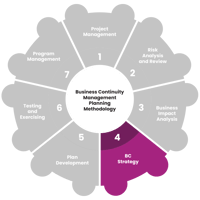
BCMpedia defines this stage as an assessment of **additional mitigation strategies for residual risks not fully mitigated during the RAR stage**.
Carry forward existing controls from the RAR, and keep Risk Ratings and Risk Levels consistent with the approved RAR assessment.
The four principal risk-treatment approaches are **Risk Avoidance, Risk Reduction, Risk Transference and Risk Acceptance**.
[![Banner \[BCM\] \[E3\] \[BCS\] \[T1\] Mitigation Strategies](https://no-cache.hubspot.com/cta/default/3893111/fdc7087d-c996-4bf1-9dbb-59f7d2ba89c5.png)](https://cta-redirect.hubspot.com/cta/redirect/3893111/fdc7087d-c996-4bf1-9dbb-59f7d2ba89c5)
[Dr Goh Moh Heng](https://blog.bcm-institute.org/ebook/author/dr-goh-moh-heng) Oct 3, 2026
###### Business Continuity Management Certified Planner-Specialist-Expert
### [![x \[BCM\] \[JCU\] Legal Disclaimer Banner](https://no-cache.hubspot.com/cta/default/3893111/e57030e6-3c63-46cc-988b-1eabb945de75.png)](https://cta-redirect.hubspot.com/cta/redirect/3893111/e57030e6-3c63-46cc-988b-1eabb945de75)
[](https://cta-redirect.hubspot.com/cta/redirect/3893111/db71ff66-a979-4fcc-8ce7-3866edc2b5ff)
#### Mitigation Strategies
[![Banner \[BCM\] \[E3\] \[BCS\] \[T1\] Mitigation Strategies](https://no-cache.hubspot.com/cta/default/3893111/fdc7087d-c996-4bf1-9dbb-59f7d2ba89c5.png)](https://cta-redirect.hubspot.com/cta/redirect/3893111/fdc7087d-c996-4bf1-9dbb-59f7d2ba89c5)
### BCS Part 1: Mitigation Strategies for James Cook University
Introduction
[](https://cta-redirect.hubspot.com/cta/redirect/3893111/f34dd618-1dd0-4efd-a0ea-7217027ffa68)
[![\[BCM\] \[JCU\] \[E3\] \[BCS\] \[T1\] Mitigation Strategies and Justification](https://no-cache.hubspot.com/cta/default/3893111/12b9c723-7ba3-4523-a1c2-0e75dc09a4e3.png)](https://cta-redirect.hubspot.com/cta/redirect/3893111/12b9c723-7ba3-4523-a1c2-0e75dc09a4e3)Business Continuity Strategy development converts the findings of the Risk Analysis and Review (RAR) into practical measures that reduce the probability of disruption, reduce its consequences, or strengthen the organisation's ability to withstand an incident.
For James Cook University Singapore (JCUS), this is particularly important because teaching, examinations, student administration, student support, research and other university activities depend on interconnected **people, premises, ICT systems, learning platforms, information, utilities, telecommunications, transportation and external service providers**.
The JCUS threat register therefore covers natural hazards, man-made events, people unavailability, supply-chain disruption, and equipment and IT-related disruption.
BCMpedia defines this stage as an assessment of **additional mitigation strategies for residual risks not fully mitigated during the RAR stage**.
Existing controls should be carried forward from the RAR, while Risk Ratings and Risk Levels should remain consistent with the approved RAR assessment.
The four principal risk-treatment approaches are **Risk Avoidance, Risk Reduction, Risk Transference and Risk Acceptance**.
Additional mitigation measures are applied on top of existing controls.
BCMpedia examples include insurance, fire detection and suppression, monitoring and intrusion detection, safety protocols, security awareness, relocation to safer locations and outsourcing selected activities while retaining accountability.
Selection should consider factors such as implementation and maintenance cost, resource availability, competencies, readiness, urgency and safety, risk reduction and the relationship between preventive cost and expected benefit. [BCMpedia](https://www.bcmpedia.org/w/index.php?title=Part_1%3A_Mitigation_Strategies_v2)
#### **Basis of this Chapter**
The current JCUS RAR Part 1 register covers a broad threat universe, not only conventional emergency scenarios.
It includes flooding and severe weather, fire and security events, pandemics and personnel shortages, supplier and cloud-service failures, cyberattacks, ransomware, network and application failures, data integrity problems, identity-system failures, and emerging AI-related threats.
The table below concentrates on the principal threats requiring distinct mitigation decisions. Closely related threats are consolidated where they share substantially the same preventive strategy.
This makes the BCS document operationally manageable while preserving the main threat families identified in the JCUS Threat Register.
**Important assessment note:** the published RAR Part 1 source identifies threats but explicitly states that it does **not** assign likelihood, impact, risk scores or risk-treatment measures.
Therefore, the Risk Ratings and Risk Levels below are **proposed working values for BCS development**, based on the preceding JCUS RAR Part 3 assessment where available.
Replace them with JCUS's formally approved RAR values before this table becomes a controlled BCM record.
#### **Mitigation Strategy Assessment**
[![Banner \[Table\] \[BCM\] \[E3\] \[BCS\] \[T1\] Mitigation Strategies](https://no-cache.hubspot.com/cta/default/3893111/126d86fd-4977-4d69-8e44-fe000291f236.png)](https://cta-redirect.hubspot.com/cta/redirect/3893111/126d86fd-4977-4d69-8e44-fe000291f236)
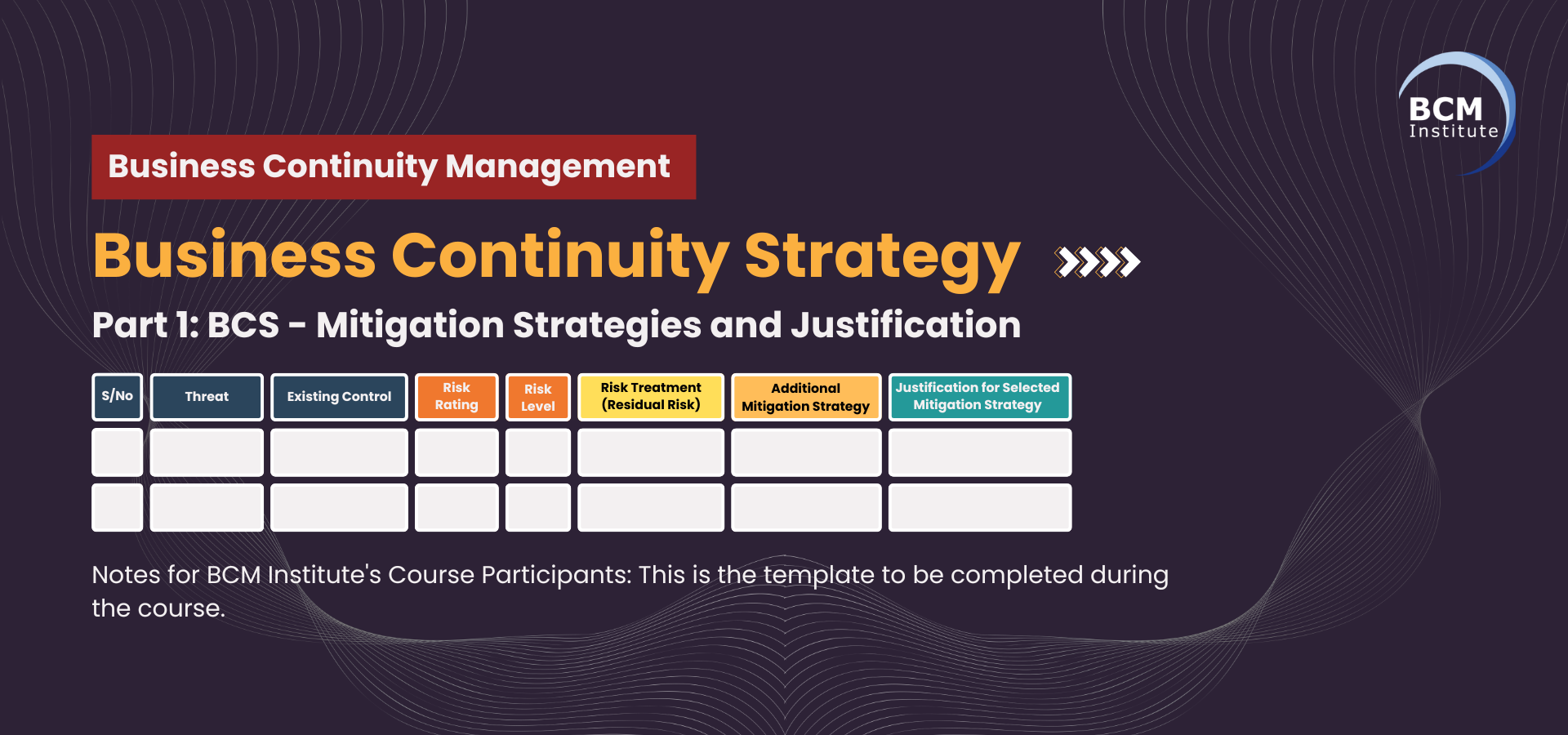
##### Table T1: Mitigation Strategies for JCUS
| Threat | Existing Controls | Risk Rating | Risk Level | Risk Treatment (Residual Risk) | Additional Mitigation Strategy | Justification for Selected Mitigation Strategy |
| --- | --- | --- | --- | --- | --- | --- |
| Flood / Flash Flood | Drainage and building maintenance; weather monitoring; emergency communication; campus access controls; remote-working/learning capability | 8 | Low | Reduce / Accept | Establish flood-trigger thresholds; identify alternate access routes; protect critical equipment from water exposure; formalise campus closure and remote-teaching activation criteria | Reduces exposure to access denial and equipment damage while providing a practical continuity option where the hazard itself cannot be prevented |
| Severe Thunderstorm / Lightning | Weather monitoring; lightning protection; electrical protection; emergency communications; indoor safety arrangements | 12 | Medium | Reduce | Strengthen severe-weather notification; surge protection for critical equipment; preventive inspection of lightning protection; remote-delivery procedures for affected activities | Reduces safety and technology consequences of a recurring environmental hazard |
| Extreme Heat | Air-conditioning; indoor teaching areas; facilities monitoring; workplace safety practices | 9 | Low | Reduce / Accept | Enhanced temperature monitoring; preventive HVAC maintenance; contingency cooling; rescheduling of outdoor activities; heat-stress guidance | Protects students and staff while reducing dependency on uninterrupted cooling for critical facilities |
| Haze | Indoor facilities; air-conditioning; public-health advisories; remote-learning capability | 12 | Medium | Reduce | Establish PSI-based response thresholds; maintain suitable air filtration; review outdoor activity controls; enable remote teaching for affected classes; support vulnerable persons | The hazard cannot be controlled by JCUS, so mitigation should reduce exposure and sustain teaching |
| Earthquake / Regional Seismic Event | Building standards; evacuation procedures; emergency response arrangements | 5 | Very Low | Accept / Reduce | Post-event structural inspection protocol; evacuation drills; alternate-site and remote-learning arrangements | Low direct likelihood supports acceptance of residual risk while maintaining proportionate life-safety and continuity measures |
| Pandemic-related Movement Restrictions / Pandemic / Infectious Disease | Remote teaching; remote work; hygiene measures; communications; absence management; public-health guidance | 15 | Medium | Reduce | Maintain scalable hybrid/remote delivery; cross-train essential roles; establish workforce-splitting arrangements; remote access capacity; infection-response protocols | A prolonged event can simultaneously affect premises access, staff availability and student participation; distributed delivery reduces concentration risk |
| Fire | Detection and alarm systems; extinguishers; fire-safety systems; evacuation procedures; trained wardens; emergency services | 10 | Low | Reduce / Transfer | Periodically test suppression and detection; strengthen fire compartmentation where required; off-site backups; alternate teaching locations; appropriate property/business interruption insurance | Combines life-safety prevention with financial transfer and continuity measures for potentially prolonged facility loss |
| Explosion / Gas Leak / Chemical Spill | Safety procedures; hazardous-material controls; evacuation; emergency response; facilities monitoring | 10 | Low | Reduce / Transfer | Strengthen hazardous-material inventories; spill containment; specialist response arrangements; isolation procedures; contractor controls; insurance review | Reduces likelihood and limits escalation while recognising that specialist external response may be required |
| Structural Failure / Building Collapse | Facilities inspections; maintenance; statutory building requirements; access restrictions | 10 | Low | Reduce / Transfer | Condition monitoring; escalation criteria for defects; engineering inspection arrangements; alternate-site plans; property insurance | Structural hazards have potentially severe consequences despite low likelihood; early detection and alternate facilities reduce exposure |
| Civil Disturbance / Public Disorder | Security monitoring; access controls; communications; liaison with authorities | 8 | Low | Reduce / Accept | Campus lockdown/closure criteria; alternative access routes; remote learning/work; mass-notification capability | JCUS cannot control external disorder but can reduce exposure by limiting physical attendance and sustaining services remotely |
| Terrorism / Bomb Threat / Suspicious Item | Security procedures; access controls; evacuation; emergency communication; liaison with authorities | 10 | Low | Reduce / Accept | Threat-response protocols; lockdown/evacuation decision procedures; staff awareness; exercise security scenarios; establish alternate command location | Prioritises life safety and decision readiness for low-frequency, high-consequence events |
| Active Assailant / Workplace Violence | Security controls; incident reporting; emergency response; access management | 10 | Low | Reduce | Strengthen lockdown capability; emergency notification; staff awareness; escalation procedures; post-incident welfare arrangements | Immediate life-safety risk requires rapid notification, protective action and clear escalation |
| Utility Failure Affecting Access | Building services; maintenance; emergency lighting; UPS for selected systems | 12 | Medium | Reduce / Transfer | Identify minimum utility requirements; test backup power; arrange emergency maintenance support; define campus closure thresholds; enable remote operations | Utility failure can make premises unusable even when academic systems remain functional |
| Road Closure / Major Traffic Incident | Multiple transport options; communications; flexible working arrangements | 8 | Low | Reduce / Accept | Communicate alternative routes; remote teaching/work activation; flexible attendance arrangements; examination contingency procedures | Provides low-cost mitigation for a threat largely outside JCUS's direct control |
| Public Transport Disruption / Transportation Failure | Multiple public transport options; communication channels; remote-working/learning capability | 8 | Low | Reduce / Accept | Flexible class arrangements; online teaching fallback; alternative examination arrangements; early student/staff notification | The threat register notes JCUS's dependency on MRT and bus access; flexible delivery reduces attendance-related disruption. [BCM Institute Blog](https://blog.bcm-institute.org/ebook/bcm-jcus-e3-rar-t1-list-of-threats) |
| Loss of Key Personnel | Delegation arrangements; documented procedures; team structures | 12 | Medium | Reduce | Deputies for critical positions; succession arrangements; cross-training; knowledge repositories; role-specific recovery procedures | Reduces single-person dependency and allows critical decisions and activities to continue |
| High Staff Turnover / Skills Shortage / Concentrated Attrition | Recruitment; workforce planning; documented processes | 12 | Medium | Reduce / Transfer | Cross-training; skills matrices; succession plans; knowledge-transfer requirements; approved specialist contractors | Builds internal redundancy while allowing specialist external capability where maintaining all skills internally is impractical |
| Staff Fatigue / Psychological Stress | HR support; management oversight; employee support arrangements | 9 | Low | Reduce | Incident-team rotations; maximum shift guidance; deputies; welfare monitoring; post-incident support | Sustained disruption can degrade decision quality and recovery capacity even when personnel remain technically available |
| Supplier / Outsourcing Failure | Contracts; vendor management; procurement controls; service-level arrangements | 12 | Medium | Reduce / Transfer | Identify critical suppliers; establish alternate suppliers; strengthen SLAs and continuity clauses; require supplier BCM evidence; maintain minimum stock where appropriate | Reduces dependency on individual providers and strengthens contractual recovery obligations |
| Cloud Service Provider Failure / Cloud Service Outage | Provider resilience; contractual SLAs; monitoring; backups where applicable | 15 | Medium | Reduce / Transfer | Assess provider concentration; maintain independent data backups; define manual/alternative processes; review exit strategy; test SaaS outage scenarios | JCUS may have limited direct control over restoration, so mitigation should address concentration and preserve alternative operating capability |
| Telecommunications Provider / Internet Failure | Provider infrastructure; network monitoring; remote access arrangements | 12 | Medium | Reduce / Transfer | Diverse connectivity; secondary ISP/path where justified; mobile connectivity fallback; offline teaching materials; provider escalation arrangements | Reduces single-carrier dependency supporting online teaching, communications and cloud access |
| Electricity Utility / Power Failure | Utility supply; UPS; emergency lighting; building safety systems | 12 | Medium | Reduce | Test UPS; backup power for critical systems; controlled shutdown procedures; remote-teaching activation; prioritised restoration list | Protects systems and enables orderly continuation where campus facilities cannot operate normally |
| Water Supply Failure | Utility supply; facilities monitoring; maintenance arrangements | 8 | Low | Reduce / Accept | Define minimum sanitation requirements; bottled/emergency water arrangements where appropriate; closure thresholds; alternate teaching arrangements | Extended loss can make campus occupation unsuitable despite unaffected ICT |
| Logistics / Import Disruption | Procurement processes; supplier relationships; inventory management | 9 | Low | Reduce / Transfer | Minimum stock for critical consumables; alternate suppliers; longer lead-time planning; substitute equipment/materials | Particularly relevant to laboratories and specialist equipment that may depend on imported materials |
| Vendor Insolvency / Contract Termination | Procurement due diligence; contracts; vendor performance monitoring | 12 | Medium | Reduce / Transfer | Financial health monitoring; replacement-provider shortlist; data portability; exit clauses; transition plans | Reduces the risk that commercial failure causes abrupt loss of a critical capability |
| Single-Source Dependency | Existing vendor management | 12 | Medium | Avoid / Reduce | Introduce secondary sourcing where feasible; maintain substitutes; document exit arrangements; reduce proprietary lock-in | Directly addresses the concentration vulnerability identified in the JCUS threat register |
| Third-Party Cyber Incident / Supply-Chain Attack | Vendor security requirements; access controls; contracts; cybersecurity monitoring | 15 | Medium | Reduce / Transfer | Third-party cyber assurance; least-privilege integration; segmentation; breach-notification clauses; supplier incident exercises; alternative service arrangements | Limits the ability of a compromised provider to propagate disruption into JCUS |
| Cyberattack | Cybersecurity controls; authentication; endpoint/network security; monitoring; backups; incident response | 20 | High | Reduce / Transfer | Strengthen MFA; privileged-access controls; segmentation; EDR/SOC monitoring; immutable backups; phishing exercises; cyber insurance where appropriate; regular incident exercises | Cyberattack can affect teaching, assessment, student administration and institutional information simultaneously; layered prevention and recoverability are required |
| Ransomware | Endpoint security; backups; patching; access controls; cybersecurity awareness | 15 | Medium | Reduce / Transfer | Immutable/offline backups; network segmentation; privileged-access management; EDR; restoration testing; ransomware playbook; third-party incident support | Focuses both on preventing propagation and ensuring that data and services can be restored without dependence on compromised infrastructure |
| Malware / AI-Enabled Cyberattack | Endpoint protection; email filtering; security awareness; access controls | 15 | Medium | Reduce | Behavioural detection; enhanced email controls; MFA; rapid patching; AI/social-engineering awareness; continuous threat monitoring | Emerging AI-enabled attacks can increase the speed and credibility of phishing and credential attacks; adaptive controls are needed |
| DDoS Attack | Provider/network security; monitoring; internet infrastructure | 12 | Medium | Reduce / Transfer | DDoS protection/scrubbing; redundant internet paths; CDN where relevant; provider escalation procedures | Reduces service unavailability while leveraging specialist provider capacity |
| Insider Threat | Access controls; authentication; HR processes; logging | 15 | Medium | Reduce | Least privilege; segregation of duties; privileged-access monitoring; joiner-mover-leaver controls; behavioural monitoring; periodic access recertification | Reduces misuse of legitimate access and limits the consequences of compromised or malicious privileged accounts |
| Data Breach | Access controls; cybersecurity measures; data governance; logging | 15 | Medium | Reduce / Transfer | Data classification; encryption; DLP; access reviews; incident response; breach notification procedures; cyber insurance where appropriate | Protects personal, academic and institutional information while supporting regulatory and financial response |
| Network Failure | Network monitoring; redundant components; vendor support | 12 | Medium | Reduce | Eliminate critical single points of failure; spare components; resilient architecture; configuration backups; failover testing | Network connectivity underpins learning, administration and cloud access; technical redundancy reduces broad service interruption |
| Server / Hardware Failure | Maintenance; monitoring; backups; vendor support | 12 | Medium | Reduce / Transfer | Hardware redundancy; lifecycle replacement; spares; virtualisation/failover; support agreements | Common technology failures are best treated through redundancy and rapid replacement |
| Database Corruption / Data Integrity Failure | Backups; application controls; access restrictions | 15 | Medium | Reduce | Point-in-time recovery; integrity checks; reconciliation controls; immutable backups; controlled change; restoration exercises | Availability alone is insufficient when academic or student information cannot be trusted |
| Software Failure / Failed Technology Change | Change management; testing; vendor support; backup/configuration controls | 16 | High | Reduce | Strengthen pre-production testing; rollback capability; phased deployment; change freeze periods for critical academic events; post-change validation | Reduces the likelihood that routine technology change causes widespread operational disruption |
| Backup Failure | Scheduled backups; backup monitoring; recovery procedures | 15 | Medium | Reduce | Independent backup verification; immutable/offline copies; restoration testing; backup failure alerts; documented recovery priorities | A backup provides little resilience unless its completeness and restorability are proven |
| Data Centre Failure | Facility resilience; power/cooling controls; backups; infrastructure monitoring | 15 | Medium | Reduce / Transfer | Geographic resilience; alternate hosting; tested DR capability; dependency mapping; provider recovery obligations | A shared hosting failure can affect multiple systems simultaneously, requiring technical and contractual resilience |
| Authentication / Identity Management Failure | Central identity services; MFA; directory services; administrative controls | 15 | Medium | Reduce | Resilient identity architecture; emergency administrative access; replicated identity services; tested recovery; break-glass procedures | Centralised identity is a concentration point because functioning applications may still become inaccessible |
| Artificial Intelligence System Failure | Human review; application/vendor controls where implemented | 9 | Low | Reduce / Accept | Maintain human validation; document non-AI fallback procedures; monitor provider dependencies; restrict AI use in critical decisions unless independently verified | Prevents an emerging technology dependency from becoming a single point of operational or information failure |
| Storage Capacity Exhaustion | Capacity monitoring; storage administration | 12 | Medium | Reduce | Automated capacity thresholds; forecasting; reserved emergency capacity; archive/retention management | A predictable technical failure can generally be prevented through proactive capacity management |
| Specialist Laboratory Equipment Failure | Preventive maintenance; vendor servicing; operating procedures | 12 | Medium | Reduce / Transfer | Critical spares; maintenance agreements; alternate equipment/facilities; reciprocal arrangements; contingency scheduling | Specialist equipment may lack immediate substitutes, making advance alternatives important for teaching and research continuity |
| Cyber-Physical / Building Management System Failure | Facilities monitoring; access controls; maintenance; ICT security | 15 | Medium | Reduce | Network segregation; manual override capability; secure remote access; BMS backup/configuration recovery; specialist maintenance support | Failure can make premises unusable even when academic ICT remains operational, requiring both cyber and facilities controls |
The JCUS Threat Register explicitly recognises that threats can cascade.
For example, severe weather can disrupt transport, power, telecommunications, and staff availability, while ransomware can affect teaching, examinations, student records, finance, regulatory obligations, and stakeholder communications.
This means mitigation strategies should be designed around **dependencies and consequences**, rather than treating every threat as an isolated event.
#### **Selecting the Appropriate Risk Treatment**
The treatment selected for each residual risk should reflect JCUS's circumstances rather than defaulting to risk reduction. BCMpedia recognises four principal approaches.
**Risk Avoidance** is appropriate where JCUS can discontinue or redesign the activity creating an unacceptable exposure.
Eliminating an unnecessary single-source dependency is an example.
**Risk Reduction** is likely to be the most commonly applied strategy. It involves introducing measures that reduce either the likelihood of an event or its consequences.
Examples include redundant ICT infrastructure, cross-training, alternate teaching methods and enhanced cybersecurity controls.
**Risk Transference** shifts specified financial or operational consequences to another party while JCUS retains overall accountability for its obligations.
Examples include insurance, outsourced specialist services, and contractual supplier arrangements.
**Risk Acceptance** may be appropriate when the residual exposure falls within approved risk tolerance, the event is very unlikely, or further mitigation would be disproportionate.
Acceptance should be explicit, documented and authorised at the appropriate management level.
#### **From Mitigation to Business Continuity Capability**
Mitigation does not replace Business Continuity Planning. Even strong preventive controls cannot eliminate every credible disruption.
JCUS should therefore connect mitigation decisions to its wider continuity framework:

This relationship is particularly important for JCUS because physical and digital delivery environments are interdependent. The Threat Register identifies teaching facilities, laboratories, library resources, ICT and learning technologies as interconnected dependencies.
For example, mitigation may reduce the likelihood of a cloud outage but cannot guarantee provider availability.
The corresponding continuity strategy therefore still needs an alternative way to deliver essential teaching or access critical information.
Likewise, fire-prevention systems reduce the probability and consequences of fire but cannot guarantee continued campus access. Alternate teaching locations, online delivery, remote work and recovery procedures remain necessary.
#### **Implementation and Governance**
JCUS should convert each additional mitigation strategy it approves into an accountable implementation action rather than leaving it as a recommendation in the BCS worksheet.
For each action, JCUS should identify an **action owner, target completion date, required resources, implementation status, evidence of completion, expected reduction in residual risk and review date**.
Priority should normally be given to strategies addressing high residual risk, life-safety exposure, regulatory obligations, major concentration risks and dependencies capable of affecting several Critical Business Functions simultaneously.
The Threat Register should also remain dynamic. Its source chapter recommends review when material changes occur in campus facilities, academic programmes, learning-delivery models, ICT platforms, cloud adoption, cybersecurity threats, significant suppliers, regulatory requirements, specialist research activities, public-health conditions and climate or environmental threats.
**[![Banner \[BCM\] \[E3\] \[BCS\] \[Summing Up\] \[T1\] Mitigation Strategies](https://no-cache.hubspot.com/cta/default/3893111/c2542a7f-6d92-4371-93ba-348e87d8c1ce.png)](https://cta-redirect.hubspot.com/cta/redirect/3893111/c2542a7f-6d92-4371-93ba-348e87d8c1ce)**
BCS Part 1 converts JCUS's Risk Analysis and Review into practical preventive and mitigating action.
Its purpose is not simply to reproduce the Threat Register, but to determine whether the controls already in place adequately address residual risk and, where they do not, identify additional measures that are proportionate, implementable and effective.
For JCUS, this requires a broad resilience perspective.
Traditional threats such as fire, flooding and infectious disease remain important, but the University's continuity also depends increasingly on cloud services, telecommunications, digital learning platforms, identity services, cybersecurity, third parties, specialist equipment and trusted information.
The JCUS Threat Register itself highlights these interconnected physical and digital dependencies.
The selected mitigation strategy should consequently address the **cause of vulnerability as well as the consequences of disruption**.
Redundancy can reduce technology concentration; cross-training can reduce key-person dependency; alternate suppliers can reduce supply-chain concentration; remote teaching can reduce dependence on campus access; and tested backups and recovery capabilities can reduce the consequences of cyber and technology failures.
Mitigation must also remain proportionate. BCMpedia recommends considering cost, maintenance effort, available skills and personnel, resource readiness, urgency and safety, risk removal, and the balance between prevention cost and expected benefit when choosing additional measures.
Once approved and implemented, these strategies should be integrated with JCUS's Business Continuity Plans, ICT Disaster Recovery arrangements, crisis-management processes, supplier-management practices and exercising programme.
The effectiveness of each mitigation measure should then be reviewed whenever the threat environment, organisational dependencies or underlying controls materially change.
In this way, **BCS Part 1: Mitigation Strategies for James Cook University** bridges understanding risk and building practical resilience—reducing preventable disruption while ensuring that JCUS remains capable of continuing and recovering its critical activities when prevention alone is insufficient.
[](https://cta-redirect.hubspot.com/cta/redirect/3893111/3aefb2d2-3110-47c1-ad4f-d3e6e5381066)
[![\[BCM\] \[JCU\] \[3/4 Banner\] Business Continuity Management Implementation at JCU Singapore](https://no-cache.hubspot.com/cta/default/3893111/d81098d9-9f30-4c17-a897-2fc202440adc.png)](https://cta-redirect.hubspot.com/cta/redirect/3893111/d81098d9-9f30-4c17-a897-2fc202440adc)
| **eBook 3: Starting Your BCM Implementation** | | | | | | |
| --- | --- | --- | --- | --- | --- | --- |
| **MBCO** | **P&S** | **RAR T1** | **RAR T2** | **RAR T3** | **BCS T1** | **CBF** |
| [![\[BCM\] \[JCU\] \[E3\] \[BIA\] MBCO Corporate MBCO](https://no-cache.hubspot.com/cta/default/3893111/37db16b1-9a61-4815-adbb-527771b7bd35.png)](https://cta-redirect.hubspot.com/cta/redirect/3893111/37db16b1-9a61-4815-adbb-527771b7bd35) | [![\[BCM\] \[JCU\] \[E3\] \[BIA\] \[PS\] Key Product and Services](https://no-cache.hubspot.com/cta/default/3893111/3117a3bf-33fd-4522-a373-4ce343e253a6.png)](https://cta-redirect.hubspot.com/cta/redirect/3893111/3117a3bf-33fd-4522-a373-4ce343e253a6) | [![\[BCM\] \[JCU\] \[E3\] \[RAR\] \[T1\] List of Threats](https://no-cache.hubspot.com/cta/default/3893111/de614923-e16d-4c4b-878e-60b97f56183f.png)](https://cta-redirect.hubspot.com/cta/redirect/3893111/de614923-e16d-4c4b-878e-60b97f56183f) | [![\[BCM\] \[JCU\] \[E3\] \[RAR\] \[T2\] Treatment and Control](https://no-cache.hubspot.com/cta/default/3893111/71606f66-523b-41e0-af99-19f5e4cc2f37.png)](https://cta-redirect.hubspot.com/cta/redirect/3893111/71606f66-523b-41e0-af99-19f5e4cc2f37) | [![\[BCM\] \[JCU\] \[E3\] \[RAR\] \[T3\] Risk Impact and Likelihood Assessment](https://no-cache.hubspot.com/cta/default/3893111/0192071d-0c49-4a20-a2a8-f0894418f873.png)](https://cta-redirect.hubspot.com/cta/redirect/3893111/0192071d-0c49-4a20-a2a8-f0894418f873) | [![\[BCM\] \[JCU\] \[E3\] \[BCS\] \[T1\] Mitigation Strategies and Justification](https://no-cache.hubspot.com/cta/default/3893111/12b9c723-7ba3-4523-a1c2-0e75dc09a4e3.png)](https://cta-redirect.hubspot.com/cta/redirect/3893111/12b9c723-7ba3-4523-a1c2-0e75dc09a4e3) | [![\[BCM\] \[JCU\] \[E1\] \[C10\] Identifying Critical Business Functions](https://no-cache.hubspot.com/cta/default/3893111/b7aaf4cf-e4f4-4e31-bb8f-6885a5f2203d.png)](https://cta-redirect.hubspot.com/cta/redirect/3893111/b7aaf4cf-e4f4-4e31-bb8f-6885a5f2203d) |
| **CBF-1 Teaching and Learning Delivery** | | | | | | |
| **DP** | **BIAQ P1** | **BIAQ P2** | **BIAQ P3** | **BIAQ P4** | **BIAQ P5** | **BIAQ P6** |
| [![\[BCM\] \[JCU\] \[E3\] \[BIA\] \[DP\] \[CBF\] \[1\] Teaching and Learning Delivery](https://no-cache.hubspot.com/cta/default/3893111/87dc20a3-b9ed-454a-90ee-2ca3e2419322.png)](https://cta-redirect.hubspot.com/cta/redirect/3893111/87dc20a3-b9ed-454a-90ee-2ca3e2419322) | **[![\[BCM\] \[JCU\] \[E3\] \[BIA\] \[T1\] \[CBF\] \[1\] Teaching and Learning Delivery](https://no-cache.hubspot.com/cta/default/3893111/c0d85e4b-2df7-44ee-9c25-4112e99a64f3.png)](https://cta-redirect.hubspot.com/cta/redirect/3893111/c0d85e4b-2df7-44ee-9c25-4112e99a64f3)** | **[![\[BCM\] \[JCU\] \[E3\] \[BIA\] \[T2\] \[CBF\] \[1\] Teaching and Learning Delivery](https://no-cache.hubspot.com/cta/default/3893111/3d5d03b2-0465-4e70-8920-efbaf80a835c.png)](https://cta-redirect.hubspot.com/cta/redirect/3893111/3d5d03b2-0465-4e70-8920-efbaf80a835c)** | **[![\[BCM\] \[JCU\] \[E3\] \[BIA\] \[T3\] \[CBF\] \[1\] Teaching and Learning Delivery](https://no-cache.hubspot.com/cta/default/3893111/4107cc4d-b5ca-486c-bca0-d2a049b8c752.png)](https://cta-redirect.hubspot.com/cta/redirect/3893111/4107cc4d-b5ca-486c-bca0-d2a049b8c752)** | **[![\[BCM\] \[JCU\] \[E3\] \[BIA\] \[T4\] \[CBF\] \[1\] Teaching and Learning Delivery](https://no-cache.hubspot.com/cta/default/3893111/e9bd80ac-aa4d-4da0-873e-92bb036ae9c9.png)](https://cta-redirect.hubspot.com/cta/redirect/3893111/e9bd80ac-aa4d-4da0-873e-92bb036ae9c9)** | **[![\[BCM\] \[JCU\] \[E3\] \[BIA\] \[T5\] \[CBF\] \[1\] Teaching and Learning Delivery](https://no-cache.hubspot.com/cta/default/3893111/7c619369-8c50-4876-a478-749b847adee0.png)](https://cta-redirect.hubspot.com/cta/redirect/3893111/7c619369-8c50-4876-a478-749b847adee0)** | **[![\[BCM\] \[JCU\] \[E3\] \[BIA\] \[T6\] \[CBF\] \[1\] Teaching and Learning Delivery](https://no-cache.hubspot.com/cta/default/3893111/bdb520b6-bc53-40cf-bc72-5e4eb5c2d1ae.png)](https://cta-redirect.hubspot.com/cta/redirect/3893111/bdb520b6-bc53-40cf-bc72-5e4eb5c2d1ae)** |
| | | **BCS T2** | **BCS T3** | **PD** | | |
| | | [![\[BCM\] \[JCU\] \[E3\] \[BCS\] \[T2\] \[CBF\] \[1\] Teaching and Learning Delivery](https://no-cache.hubspot.com/cta/default/3893111/10a04273-213c-4b93-a69a-966039c382bb.png)](https://cta-redirect.hubspot.com/cta/redirect/3893111/10a04273-213c-4b93-a69a-966039c382bb) | [![\[BCM\] \[JCU\] \[E3\] \[BCS\] \[T3\] \[CBF\] \[1\] Teaching and Learning Delivery](https://no-cache.hubspot.com/cta/default/3893111/d2ec73f8-a65d-473f-9a70-afa20ac0b990.png)](https://cta-redirect.hubspot.com/cta/redirect/3893111/d2ec73f8-a65d-473f-9a70-afa20ac0b990) | [![\[BCM\] \[JCU\] \[E3\] \[PD\] \[CBF\] \[1\] Teaching and Learning Delivery](https://no-cache.hubspot.com/cta/default/3893111/41fe68b0-13dc-4690-bd61-369c6da03192.png)](https://cta-redirect.hubspot.com/cta/redirect/3893111/41fe68b0-13dc-4690-bd61-369c6da03192) | | |
| | | | | | | |
#### More Information About Business Continuity Management Courses
To learn more about the course and schedule, click the buttons below for the BCM-300 Business Continuity Management Implementer \[BCM-3\] and the BCM-5000 Business Continuity Management Expert Implementer \[BCM-5\].
| [](https://cta-redirect.hubspot.com/cta/redirect/3893111/f3922b80-e96a-46d6-8993-dc150a5de2d5) | [](https://cta-redirect.hubspot.com/cta/redirect/3893111/9ff8a3dc-e39a-465b-929f-72e232cdd5fb) | [![Register \[BL-B-3\]\*](https://no-cache.hubspot.com/cta/default/3893111/ac6cf073-4cdd-4541-91ed-889f731d5076.png)](https://cta-redirect.hubspot.com/cta/redirect/3893111/ac6cf073-4cdd-4541-91ed-889f731d5076) |
| --- | --- | --- |
| [](https://cta-redirect.hubspot.com/cta/redirect/3893111/21525c10-4003-4934-95fc-fe218174bc5b) | [](https://cta-redirect.hubspot.com/cta/redirect/3893111/46460171-c91a-4936-9bb2-8dc5928a0e02) | [](https://cta-redirect.hubspot.com/cta/redirect/3893111/1cb17ac7-50b2-4f88-bc4b-c7444e4b57b5) |
| [![FAQ \[BL-B-3\]](https://no-cache.hubspot.com/cta/default/3893111/b3824ba1-7aa1-4eb6-bef8-94f57121c5ae.png)](https://cta-redirect.hubspot.com/cta/redirect/3893111/b3824ba1-7aa1-4eb6-bef8-94f57121c5ae) | Please feel free to send us a note if you have any questions. [![Email to Sales Team \[BCM Institute\]](https://no-cache.hubspot.com/cta/default/3893111/3c53daeb-2836-4843-b0e0-645baee2ab9e.png)](https://cta-redirect.hubspot.com/cta/redirect/3893111/3c53daeb-2836-4843-b0e0-645baee2ab9e) | [](https://cta-redirect.hubspot.com/cta/redirect/3893111/9c199ae8-c470-4bb7-9612-73c7a084e94c) |
| [](https://cta-redirect.hubspot.com/cta/redirect/3893111/8999211a-2c51-4be7-bf49-c393f6c67974) | [](https://cta-redirect.hubspot.com/cta/redirect/3893111/5c1aa95d-f6dd-4067-a95c-5cc0c32d7ed8) | [](https://cta-redirect.hubspot.com/cta/redirect/3893111/086ab3b9-4d66-4a95-b2f7-1148e9803a9c) |
#### **Your Comments Here:**
### More Posts
[](https://cta-redirect.hubspot.com/cta/redirect/3893111/839787f4-a4fd-456f-accf-54c947026558)

All rights reserved. Copyright 2026
```json
{
"@context" : "https://schema.org",
"@type" : "BlogPosting",
"author" : {
"@type" : "Person",
"name" : "Dr Goh Moh Heng",
"url" : "https://blog.bcm-institute.org/ebook/author/dr-goh-moh-heng"
},
"dateModified" : "2026-10-03T12:46:13.840Z",
"datePublished" : "2026-10-03T11:46:55.000Z",
"headline" : "[BCM] [JCUS] [E3] [BCS] [T1] Mitigation Strategies and Justification",
"mainEntityOfPage" : {
"@id" : "https://blog.bcm-institute.org/ebook/bcm-jcus-e3-bcs-t1-mitigation-strategies-and-justification",
"@type" : "WebPage"
},
"publisher" : {
"@type" : "Organization",
"logo" : {
"@type" : "ImageObject",
"url" : "https://blog.bcm-institute.org/hubfs/BCMI%20Logo.png"
},
"name" : "BCMI Pte Ltd"
}
}
```