---
title: [BCM] [ALPS] [E3] [BIA] [P2] [CBF] [2] Pharmaceutical Procurement and Supply Management
description: [BCM] [ALPS] [E3] [BIA] [P2] [CBF] [2] Pharmaceutical Procurement and Supply Management
image: https://blog.bcm-institute.org/hubfs/ALPS%20Graphic%20Folder/ALPS%20Morepost/ALPS%20CBF/ALPS%20CBF%202/%5BBCM%5D%20%5BALPS%5D%20%5BE3%5D%20%5BBIA%5D%20%5BT2%5D%20%5BCBF%5D%20%5B2%5D%20Pharmaceutical%20Procurement%20and%20Supply%20Management.jpg
---
. .
[](http://www.bcm-institute.org/)
- [Home](https://www.bcm-institute.org/)
- [About Us](https://www.bcm-institute.org/about-us-3/)
- [A President’s Perspective](https://www.bcm-institute.org/about-us/a-presidents-perspective/)
- [Our History](https://www.bcm-institute.org/about-us/our-history/)
- [Our Advisory Council](https://www.bcm-institute.org/about-us/our-advisory-council/)
- [Customers’ Testimonials](https://www.bcm-institute.org/about-us/customers-testimonials/)
- [Credential Verification](https://www.bcm-institute.org/about-us/credential-verification/)
- [Courses](https://blog.bcm-institute.org/blog/course-fees-for-blended-learning-courses-master-catalog)
- [ISO 22301 Business Continuity Management System Audit](https://blog.bcm-institute.org/audit/business-continuity-management-audit-courses)
- [ISO 22301 Business Continuity Management](https://blog.bcm-institute.org/bcm/business-continuity-management-courses)
- [Crisis Communication](https://blog.bcm-institute.org/crisis-communication/crisis-communication-courses)
- [Crisis Management](https://blog.bcm-institute.org/en/crisis-management/courses)
- [IT Disaster Recovery](https://blog.bcm-institute.org/it-disaster-recovery/courses)
- [Operational Resilience](https://blog.bcm-institute.org/operational-resilience/courses)
- [Operational Resilience Audit](https://blog.bcm-institute.org/operational-resilience-audit/courses)
- [Certification](https://blog.bcm-institute.org/certification/types-of-certifications-offered)
- [ISO 22301 BCMS Audit Certification](https://blog.bcm-institute.org/certification/business-continuity-management-audit-certification)
- [ISO22301 Business Continuity Management Certification](https://blog.bcm-institute.org/bcm/business-continuity-management-certification)
- [Crisis Communication Certification](https://blog.bcm-institute.org/crisis-communication/crisis-communication-certification)
- [Crisis Management Certification](https://blog.bcm-institute.org/en/crisis-management/crisis-management-certification)
- [IT Disaster Recovery Planning Certification](https://blog.bcm-institute.org/it-disaster-recovery/it-disaster-recovery-certification)
- [Operational Resilience Certification](https://blog.bcm-institute.org/operational-resilience/operational-resilience-certification)
- [Operational Resilience Audit Certification](https://blog.bcm-institute.org/operational-resilience-audit)
- [Seminars](https://blog.bcm-institute.org/meet-the-expert/mte-webinar-mainpage)
- [Store](https://www.bcm-institute.org/store-2/)
- [Contact Us](http://www.bcm-institute.org/about-us/contact-us/)
-
-
##### **Implementing Business Continuity Management for ALPS Healthcare: An Enterprise Implementation Guide**

# \[BCM\] \[ALPS\] \[E3\] \[BIA\] \[P2\] \[CBF\] \[2\] Pharmaceutical Procurement and Supply Management
[![\[BCM\] \[ALPS\] \[Full Banner\] Implementing Business Continuity Management for ALPS Healthcare](https://no-cache.hubspot.com/cta/default/3893111/a577c05a-ab89-4043-9a89-1dea0d883afc.png)](https://cta-redirect.hubspot.com/cta/redirect/3893111/a577c05a-ab89-4043-9a89-1dea0d883afc)
The purpose of evaluating business impacts during a **Business Impact Analysis (BIA)** is to determine the consequences of disrupting each Sub-Critical Business Function that supports **Pharmaceutical Procurement and Supply Management**.
While all business functions contribute to the overall delivery of pharmaceutical procurement services, they do not carry the same level of operational criticality or consequence if interrupted. Understanding these differences enables ALPS Healthcare to establish evidence-based recovery priorities and allocate continuity resources where they are needed most.
Business impacts should be analysed across multiple dimensions because a disruption rarely affects only one aspect of the organisation.
Depending on the affected Sub-Critical Business Function, the primary consequence may involve operational delays, regulatory non-compliance, financial losses, supplier failures, technology outages, reputational damage, or reduced healthcare service delivery.
### [![Banner \[BCM\] \[E3\] \[BIA\] \[P2\] Impact Area of Business Functions](https://no-cache.hubspot.com/cta/default/3893111/182e67c2-aa89-4b0b-b3e9-144293680ea4.png)](https://cta-redirect.hubspot.com/cta/redirect/3893111/182e67c2-aa89-4b0b-b3e9-144293680ea4)
[Dr Goh Moh Heng](https://blog.bcm-institute.org/ebook/author/dr-goh-moh-heng) Aug 5, 2026
###### Business Continuity Management Certified Planner-Specialist-Expert
### [![\[BCM\] \[ALPS\] Legal Disclaimer Banner](https://no-cache.hubspot.com/cta/default/3893111/eb6856d2-cbb2-4a76-b237-7bd842e84226.png)](https://cta-redirect.hubspot.com/cta/redirect/3893111/eb6856d2-cbb2-4a76-b237-7bd842e84226)
[](https://cta-redirect.hubspot.com/cta/redirect/3893111/6f3def45-6e82-4ee5-9e44-fc3946ad2398)
### [![Banner \[BCM\] \[E3\] \[BIA\] \[P2\] Impact Area of Business Functions](https://no-cache.hubspot.com/cta/default/3893111/182e67c2-aa89-4b0b-b3e9-144293680ea4.png)](https://cta-redirect.hubspot.com/cta/redirect/3893111/182e67c2-aa89-4b0b-b3e9-144293680ea4)
### CBF-2 Pharmaceutical Procurement and Supply Management
[![\[BCM\] \[ALPS\] \[E3\] \[BIA\] \[T2\] \[CBF\] \[2\] Pharmaceutical Procurement and Supply Management](https://no-cache.hubspot.com/cta/default/3893111/10661937-edb5-459e-b9fd-07209caac51f.png)](https://cta-redirect.hubspot.com/cta/redirect/3893111/10661937-edb5-459e-b9fd-07209caac51f)
The purpose of evaluating business impacts during a **Business Impact Analysis (BIA)** is to determine the consequences of disrupting each Sub-Critical Business Function that supports **Pharmaceutical Procurement and Supply Management**.
While all business functions contribute to the overall delivery of pharmaceutical procurement services, they do not carry the same level of operational criticality or consequence if interrupted. Understanding these differences enables ALPS Healthcare to establish evidence-based recovery priorities and allocate continuity resources where they are needed most.
Business impacts should be analysed across multiple dimensions because a disruption rarely affects only one aspect of the organisation.
Depending on the affected Sub-Critical Business Function, the primary consequence may involve operational delays, regulatory non-compliance, financial losses, supplier failures, technology outages, reputational damage, or reduced healthcare service delivery.
Evaluating each impact area independently provides a comprehensive understanding of organisational risk and supports proportionate recovery strategies.
The assessment of financial impacts, affected Business Unit Minimum Business Continuity Objectives (BU MBCOs), and operational consequences provides the foundation for determining Recovery Time Objectives (RTOs), identifying critical resource requirements, developing Business Continuity Strategies, and preparing Business Continuity Plans (BCPs).
For ALPS Healthcare, these assessments ensure that continuity measures are aligned with the critical need to maintain a secure, compliant, and uninterrupted supply of pharmaceuticals to Singapore's public healthcare institutions.
[![Banner \[Table\] \[BCM\] \[E3\] \[BIA\] \[P2\] Impact Areas of Business Functions \[BIAQ\]](https://no-cache.hubspot.com/cta/default/3893111/91582408-03ad-40e1-90e8-43ce62079aa6.png)](https://cta-redirect.hubspot.com/cta/redirect/3893111/91582408-03ad-40e1-90e8-43ce62079aa6)
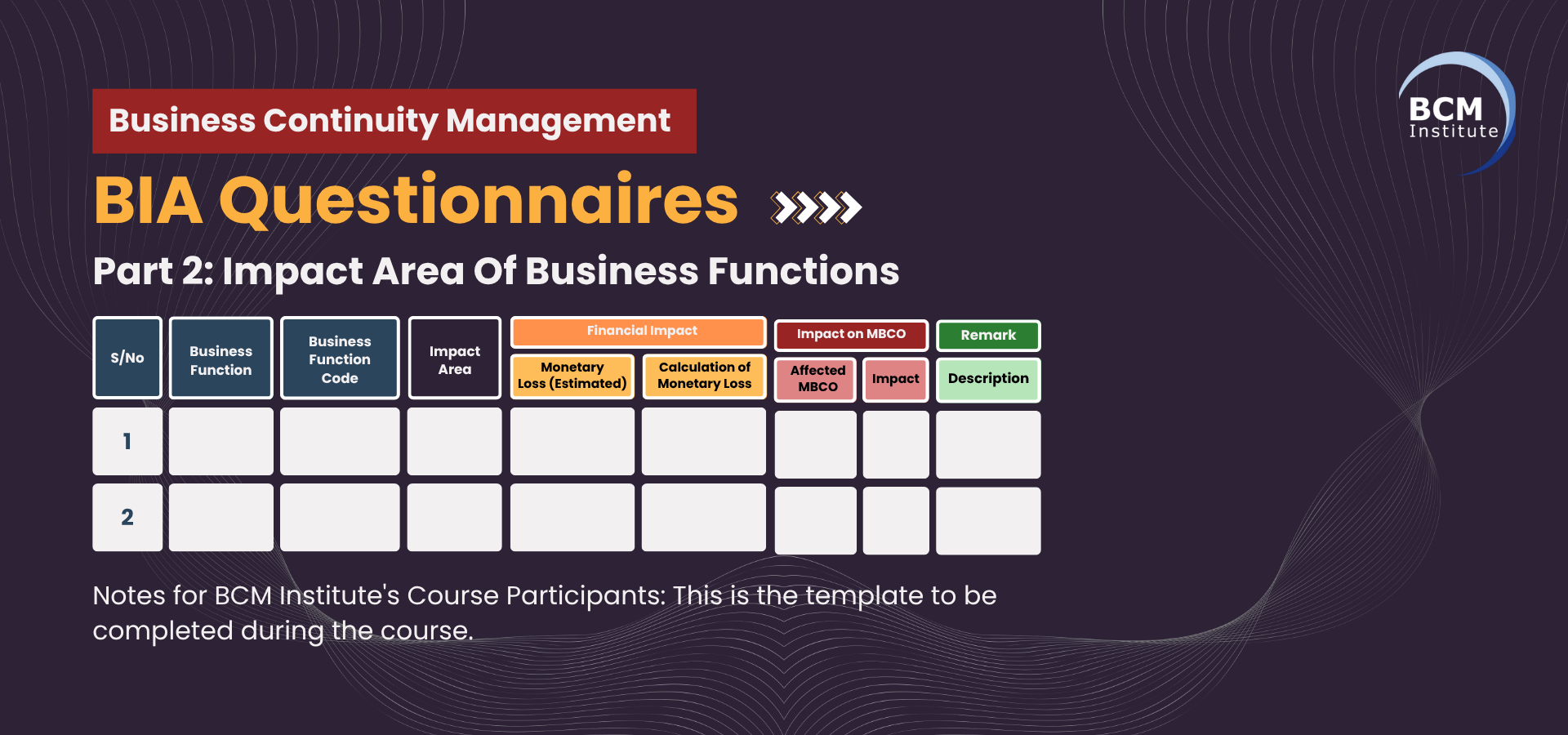
Table P2: Impact Area Assessment for CBF-2
| Sub-CBF Code | Sub-Critical Business Function | Impact Area | Financial Impact – Monetary Loss (Estimated) | Financial Impact – Calculation Formula | Impact on BU MBCO – Affected MBCO | Impact on BU MBCO – Business Impact | Remarks / Description |
| --- | --- | --- | --- | --- | --- | --- | --- |
| CBF-2.1 | Pharmaceutical Demand Forecasting | Operational | SGD 150,000 | Emergency procurement cost + inventory imbalance cost | Daily forecasting of essential medicines | Unable to accurately forecast demand, increasing stock-out or overstock risk. | Critical medicines may become unavailable or excessive inventory may expire. |
| CBF-2.2 | Pharmaceutical Requirements Planning | Operational | SGD 200,000 | Additional procurement cost + urgent replenishment cost | Priority procurement planning | Essential medicine procurement plans cannot be completed within required timeframes. | Procurement priorities become misaligned with healthcare demand. |
| CBF-2.3 | Approved Drug Catalogue Management | Regulatory | SGD 80,000 | Product correction cost + administrative recovery cost | Access to current approved drug catalogue | Procurement may use outdated or unauthorised pharmaceutical information. | Increased regulatory and patient safety risks. |
| CBF-2.4 | Supplier Qualification and Evaluation | Third-Party Dependency | SGD 300,000 | Supplier replacement cost + procurement delay cost | Qualification of suppliers for essential medicines | New suppliers cannot be approved to support continuity of medicine supply. | Reduced supplier resilience and increased dependency on existing vendors. |
| CBF-2.5 | Pharmaceutical Tender and Sourcing Management | Operational | SGD 500,000 | Delayed sourcing cost + emergency purchasing premium | Procurement of shortage-critical medicines | Critical tenders cannot be completed, delaying medicine availability. | Significant procurement delays and higher acquisition costs. |
| CBF-2.6 | Contract and Pricing Management | Financial | SGD 250,000 | Contract variation cost + increased purchase price | Maintenance of active pharmaceutical contracts | Emergency purchasing may proceed without favourable contract pricing. | Procurement expenditure increases substantially during disruption. |
| CBF-2.7 | Purchase Order Processing | Operational | SGD 450,000 | Delayed order value + manual processing cost | Timely processing of priority purchase orders | Essential medicine orders cannot be issued within emergency timelines. | Suppliers experience ordering delays affecting healthcare institutions. |
| CBF-2.8 | Regulatory and Product Compliance Verification | Regulatory | SGD 600,000 | Compliance remediation cost + potential regulatory penalties | Regulatory verification before procurement | Medicines cannot be released for procurement without compliance verification. | Regulatory breaches and patient safety concerns may arise. |
| CBF-2.9 | Pharmaceutical Supply Scheduling | Third-Party Dependency | SGD 350,000 | Delivery delay cost + expedited logistics cost | Daily coordination of medicine deliveries | Essential deliveries become delayed or rescheduled. | Hospitals may experience interruptions to pharmaceutical replenishment. |
| CBF-2.10 | Pharmaceutical Receipt and Inspection Coordination | Operational | SGD 220,000 | Receiving delay cost + inspection overtime | Same-day receipt and verification | Incoming medicines cannot be released promptly into inventory. | Distribution delays increase across healthcare facilities. |
| CBF-2.11 | Cold Chain and Controlled Storage Coordination | Operational | SGD 1,200,000 | Value of temperature-sensitive inventory lost + replacement cost | Continuous compliant cold-chain storage | Cold-chain integrity cannot be maintained for critical pharmaceuticals. | High-value vaccines and biologics may become unusable. |
| CBF-2.12 | Pharmaceutical Inventory Replenishment | Operational | SGD 750,000 | Emergency replenishment cost + stock-out recovery cost | Emergency safety stock maintenance | Safety stock levels cannot be sustained for essential medicines. | Increased risk of medicine shortages across hospitals. |
| CBF-2.13 | Drug Shortage Monitoring and Mitigation | Operational | SGD 900,000 | Alternative sourcing cost + shortage mitigation cost | Alternative sourcing for critical medicines | Medicine shortages cannot be identified or mitigated promptly. | Extended shortages directly affect patient treatment capability. |
| CBF-2.14 | Supplier Performance Management | Third-Party Dependency | SGD 180,000 | Supplier remediation cost + procurement administration cost | Monitoring of critical supplier performance | Supplier performance deterioration remains undetected. | Increased delivery failures and reduced supply reliability. |
| CBF-2.15 | Pharmaceutical Recall Coordination | Regulatory | SGD 1,500,000 | Recall execution cost + product replacement cost + communication cost | Immediate recall and product isolation capability | Unsafe medicines cannot be rapidly identified and withdrawn. | Serious patient safety, regulatory, and reputational consequences. |
| CBF-2.16 | Procurement Risk Monitoring | Operational | SGD 250,000 | Risk response cost + disruption management cost | Daily monitoring of procurement risks | Emerging procurement threats remain unidentified until disruption occurs. | Reduced preparedness for supply chain disruptions. |
| CBF-2.17 | Pharmaceutical Procurement Information Management | Information | SGD 180,000 | Data recovery cost + manual reconstruction effort | Access to procurement records and contracts | Procurement documentation becomes unavailable for operational decisions. | Reduced auditability and slower emergency procurement decisions. |
| CBF-2.18 | Pharmaceutical Procurement Reporting and Governance | Reputation | SGD 120,000 | Reporting recovery cost + management coordination cost | Daily reporting on procurement status | Management loses visibility of procurement performance during incidents. | Decision-making becomes slower due to reduced situational awareness. |
[![Banner \[BCM\] \[E3\] \[BIA\] \[Summing Up\] \[P2\] Impact Areas of Business Functions \[BIAQ\]](https://no-cache.hubspot.com/cta/default/3893111/76188041-e1c9-43d9-8efa-e550f46ad04d.png)](https://cta-redirect.hubspot.com/cta/redirect/3893111/76188041-e1c9-43d9-8efa-e550f46ad04d)
The assessment of business impacts for each **Sub-Critical Business Function** provides ALPS Healthcare with a structured understanding of the operational, financial, regulatory, technological, and third-party consequences associated with disruptions to **Pharmaceutical Procurement and Supply Management**.
By analysing each business function independently, the Business Impact Analysis identifies where interruptions would have the greatest effect on medicine availability, healthcare service continuity, regulatory compliance, and organisational performance.
Estimating the **financial impact** of disruptions enables management to quantify the potential cost of downtime, evaluate the economic benefits of continuity investments, and prioritise mitigation measures based on risk exposure.
Although the financial values presented are indicative for Business Impact Analysis purposes, they provide a practical basis for comparing recovery options, justifying resilience initiatives, and supporting informed investment decisions.
The impact analysis also establishes the relationship between each Sub-Critical Business Function and its corresponding **Business Unit Minimum Business Continuity Objective (BU MBCO)**.
This linkage enables ALPS Healthcare to determine appropriate **Recovery Time Objectives (RTOs)**, prioritise recovery sequencing, identify critical resource dependencies, and develop targeted Business Continuity Strategies and Business Continuity Plans (BCPs).
Collectively, these outputs strengthen organisational resilience by ensuring that essential pharmaceutical procurement capabilities can be maintained and restored in a structured, risk-informed, and timely manner during disruptive events.
[](https://cta-redirect.hubspot.com/cta/redirect/3893111/3aefb2d2-3110-47c1-ad4f-d3e6e5381066)
[![\[BCM\] \[ALPS\] \[3/4 Banner\] Implementing Business Continuity Management for ALPS Healthcare](https://no-cache.hubspot.com/cta/default/3893111/5bb3d163-ccf4-4942-8e51-90cb0e0de84f.png)](https://cta-redirect.hubspot.com/cta/redirect/3893111/5bb3d163-ccf4-4942-8e51-90cb0e0de84f)
| **eBook 3: Starting Your BCM Implementation** | | | | | | |
| --- | --- | --- | --- | --- | --- | --- |
| **MBCO** | **P&S** | **RAR T1** | **RAR T2** | **RAR T3** | **BCS T1** | **CBF** |
| [![\[BCM\] \[ALPS\] \[E3\] \[BIA\] MBCO Corporate MBCO](https://no-cache.hubspot.com/cta/default/3893111/3e0b35d2-08b6-4caf-b7db-144625ec8145.png)](https://cta-redirect.hubspot.com/cta/redirect/3893111/3e0b35d2-08b6-4caf-b7db-144625ec8145) | [![\[BCM\] \[ALPS\] \[E3\] \[BIA\] \[PS\] Key Product and Services](https://no-cache.hubspot.com/cta/default/3893111/ab611654-bce2-450c-affc-3970de6c8909.png)](https://cta-redirect.hubspot.com/cta/redirect/3893111/ab611654-bce2-450c-affc-3970de6c8909) | [![\[BCM\] \[ALPS\] \[E3\] \[RAR\] \[T1\] List of Threats](https://no-cache.hubspot.com/cta/default/3893111/806c27e6-1db5-42a2-ac84-e0df3624bc49.png)](https://cta-redirect.hubspot.com/cta/redirect/3893111/806c27e6-1db5-42a2-ac84-e0df3624bc49) | [![\[BCM\] \[ALPS\] \[E3\] \[RAR\] \[T2\] Treatment and Control](https://no-cache.hubspot.com/cta/default/3893111/bf6da142-014d-4c47-83cf-f31e0c55b75e.png)](https://cta-redirect.hubspot.com/cta/redirect/3893111/bf6da142-014d-4c47-83cf-f31e0c55b75e) | [![\[BCM\] \[ALPS\] \[E3\] \[RAR\] \[T3\] Risk Impact and Likelihood Assessment](https://no-cache.hubspot.com/cta/default/3893111/4c14572c-2ed4-46aa-82c8-5ead8fd31ced.png)](https://cta-redirect.hubspot.com/cta/redirect/3893111/4c14572c-2ed4-46aa-82c8-5ead8fd31ced) | [![\[BCM\] \[ALPS\] \[E3\] \[BCS\] \[T1\] Mitigation Strategies and Justification](https://no-cache.hubspot.com/cta/default/3893111/25548d11-adb7-4e6e-9a5a-054db2ea377d.png)](https://cta-redirect.hubspot.com/cta/redirect/3893111/25548d11-adb7-4e6e-9a5a-054db2ea377d) | [![\[BCM\] \[ALPS\] \[E1\] \[C10\] Identifying Critical Business Functions](https://no-cache.hubspot.com/cta/default/3893111/94f8b16c-55da-4543-a948-448f2241296e.png)](https://cta-redirect.hubspot.com/cta/redirect/3893111/94f8b16c-55da-4543-a948-448f2241296e) |
| **CBF-2 Pharmaceutical Procurement and Supply Management** | | | | | | |
| **DP** | **BIAQ P1** | **BIAQ P2** | **BIAQ P3** | **BIAQ P4** | **BIAQ P5** | **BIAQ P6** |
| [![\[BCM\] \[ALPS\] \[E3\] \[BIA\] \[DP\] \[CBF\] \[2\] Pharmaceutical Procurement and Supply Management](https://no-cache.hubspot.com/cta/default/3893111/14fb1541-5073-4293-a4b3-76e57b0b5956.png)](https://cta-redirect.hubspot.com/cta/redirect/3893111/14fb1541-5073-4293-a4b3-76e57b0b5956) | [![\[BCM\] \[ALPS\] \[E3\] \[BIA\] \[T1\] \[CBF\] \[2\] Pharmaceutical Procurement and Supply Management](https://no-cache.hubspot.com/cta/default/3893111/a44633ed-d5cd-446e-be5f-075dbb65247c.png)](https://cta-redirect.hubspot.com/cta/redirect/3893111/a44633ed-d5cd-446e-be5f-075dbb65247c) | [![\[BCM\] \[ALPS\] \[E3\] \[BIA\] \[T2\] \[CBF\] \[2\] Pharmaceutical Procurement and Supply Management](https://no-cache.hubspot.com/cta/default/3893111/10661937-edb5-459e-b9fd-07209caac51f.png)](https://cta-redirect.hubspot.com/cta/redirect/3893111/10661937-edb5-459e-b9fd-07209caac51f) | [![\[BCM\] \[ALPS\] \[E3\] \[BIA\] \[T3\] \[CBF\] \[2\] Pharmaceutical Procurement and Supply Management](https://no-cache.hubspot.com/cta/default/3893111/5171d0b5-976b-445f-9e43-a4e588e823f0.png)](https://cta-redirect.hubspot.com/cta/redirect/3893111/5171d0b5-976b-445f-9e43-a4e588e823f0) | [![\[BCM\] \[ALPS\] \[E3\] \[BIA\] \[T4\] \[CBF\] \[2\] Pharmaceutical Procurement and Supply Management](https://no-cache.hubspot.com/cta/default/3893111/34c325a5-f352-4a73-abe3-e665d504d71f.png)](https://cta-redirect.hubspot.com/cta/redirect/3893111/34c325a5-f352-4a73-abe3-e665d504d71f) | [![\[BCM\] \[ALPS\] \[E3\] \[BIA\] \[T5\] \[CBF\] \[2\] Pharmaceutical Procurement and Supply Management](https://no-cache.hubspot.com/cta/default/3893111/0bcf5a3a-4abf-4f74-b32d-fe90a6f667cc.png)](https://cta-redirect.hubspot.com/cta/redirect/3893111/0bcf5a3a-4abf-4f74-b32d-fe90a6f667cc) | [![\[BCM\] \[ALPS\] \[E3\] \[BIA\] \[T6\] \[CBF\] \[2\] Pharmaceutical Procurement and Supply Management](https://no-cache.hubspot.com/cta/default/3893111/b0445693-282e-4078-bb82-d359cdc7f389.png)](https://cta-redirect.hubspot.com/cta/redirect/3893111/b0445693-282e-4078-bb82-d359cdc7f389) |
| | | **BCS T2** | **BCS T3** | **PD** | | |
| | | [![\[BCM\] \[ALPS\] \[E3\] \[BCS\] \[T2\] \[CBF\] \[2\] Pharmaceutical Procurement and Supply Management](https://no-cache.hubspot.com/cta/default/3893111/e0edaf2d-dbbe-4690-a580-2e64966100e7.png)](https://cta-redirect.hubspot.com/cta/redirect/3893111/e0edaf2d-dbbe-4690-a580-2e64966100e7) | [![\[BCM\] \[ALPS\] \[E3\] \[BCS\] \[T3\] \[CBF\] \[2\] Pharmaceutical Procurement and Supply Management](https://no-cache.hubspot.com/cta/default/3893111/39abeb9e-931e-4f0e-a6b4-4d24f339ed63.png)](https://cta-redirect.hubspot.com/cta/redirect/3893111/39abeb9e-931e-4f0e-a6b4-4d24f339ed63) | [![\[BCM\] \[ALPS\] \[E3\] \[PD\] \[CBF\] \[2\] Pharmaceutical Procurement and Supply Management](https://no-cache.hubspot.com/cta/default/3893111/963ac068-f245-4af5-9eed-ba5ecbbff753.png)](https://cta-redirect.hubspot.com/cta/redirect/3893111/963ac068-f245-4af5-9eed-ba5ecbbff753) | | |
| | | | | | | |
#### More Information About Business Continuity Management Courses
To learn more about the course and schedule, click the buttons below for the BCM-300 Business Continuity Management Implementer \[BCM-3\] and the BCM-5000 Business Continuity Management Expert Implementer \[BCM-5\].
| [](https://cta-redirect.hubspot.com/cta/redirect/3893111/f3922b80-e96a-46d6-8993-dc150a5de2d5) | [](https://cta-redirect.hubspot.com/cta/redirect/3893111/9ff8a3dc-e39a-465b-929f-72e232cdd5fb) | [![Register \[BL-B-3\]\*](https://no-cache.hubspot.com/cta/default/3893111/ac6cf073-4cdd-4541-91ed-889f731d5076.png)](https://cta-redirect.hubspot.com/cta/redirect/3893111/ac6cf073-4cdd-4541-91ed-889f731d5076) |
| --- | --- | --- |
| [](https://cta-redirect.hubspot.com/cta/redirect/3893111/21525c10-4003-4934-95fc-fe218174bc5b) | [](https://cta-redirect.hubspot.com/cta/redirect/3893111/46460171-c91a-4936-9bb2-8dc5928a0e02) | [](https://cta-redirect.hubspot.com/cta/redirect/3893111/1cb17ac7-50b2-4f88-bc4b-c7444e4b57b5) |
| [![FAQ \[BL-B-3\]](https://no-cache.hubspot.com/cta/default/3893111/b3824ba1-7aa1-4eb6-bef8-94f57121c5ae.png)](https://cta-redirect.hubspot.com/cta/redirect/3893111/b3824ba1-7aa1-4eb6-bef8-94f57121c5ae) | Please feel free to send us a note if you have any questions. [![Email to Sales Team \[BCM Institute\]](https://no-cache.hubspot.com/cta/default/3893111/3c53daeb-2836-4843-b0e0-645baee2ab9e.png)](https://cta-redirect.hubspot.com/cta/redirect/3893111/3c53daeb-2836-4843-b0e0-645baee2ab9e) | [](https://cta-redirect.hubspot.com/cta/redirect/3893111/9c199ae8-c470-4bb7-9612-73c7a084e94c) |
| [](https://cta-redirect.hubspot.com/cta/redirect/3893111/8999211a-2c51-4be7-bf49-c393f6c67974) | [](https://cta-redirect.hubspot.com/cta/redirect/3893111/5c1aa95d-f6dd-4067-a95c-5cc0c32d7ed8) | [](https://cta-redirect.hubspot.com/cta/redirect/3893111/086ab3b9-4d66-4a95-b2f7-1148e9803a9c) |
#### **Your Comments Here:**
### More Posts
[](https://cta-redirect.hubspot.com/cta/redirect/3893111/839787f4-a4fd-456f-accf-54c947026558)

All rights reserved. Copyright 2026
```json
{
"@context" : "https://schema.org",
"@type" : "BlogPosting",
"author" : {
"@type" : "Person",
"name" : "Dr Goh Moh Heng",
"url" : "https://blog.bcm-institute.org/ebook/author/dr-goh-moh-heng"
},
"dateModified" : "2026-08-06T01:57:44.190Z",
"datePublished" : "2026-08-05T10:03:29.000Z",
"headline" : "[BCM] [ALPS] [E3] [BIA] [P2] [CBF] [2] Pharmaceutical Procurement and Supply Management",
"mainEntityOfPage" : {
"@id" : "https://blog.bcm-institute.org/ebook/bcm-alps-e3-bia-p2-cbf-2-pharmaceutical-procurement-and-supply-management",
"@type" : "WebPage"
},
"publisher" : {
"@type" : "Organization",
"logo" : {
"@type" : "ImageObject",
"url" : "https://blog.bcm-institute.org/hubfs/BCMI%20Logo.png"
},
"name" : "BCMI Pte Ltd"
}
}
```