---
title: [BCM] [ALPS] [E2] [C5] Business Continuity Strategy
description: [BCM] [ALPS] [E2] [C5] Business Continuity Strategy
image: https://blog.bcm-institute.org/hubfs/ALPS%20Graphic%20Folder/ALPS%20Morepost/ALPS%20E2%20Morepost/%5BBCM%5D%20%5BGRA%5D%20%5BE2%5D%20%5BC5%5D%20Business%20Continuity%20Strategy.jpg
---
.
[](http://www.bcm-institute.org/)
- [Home](https://www.bcm-institute.org/)
- [About Us](https://www.bcm-institute.org/about-us-3/)
- [A President’s Perspective](https://www.bcm-institute.org/about-us/a-presidents-perspective/)
- [Our History](https://www.bcm-institute.org/about-us/our-history/)
- [Our Advisory Council](https://www.bcm-institute.org/about-us/our-advisory-council/)
- [Customers’ Testimonials](https://www.bcm-institute.org/about-us/customers-testimonials/)
- [Credential Verification](https://www.bcm-institute.org/about-us/credential-verification/)
- [Courses](https://blog.bcm-institute.org/blog/course-fees-for-blended-learning-courses-master-catalog)
- [ISO 22301 Business Continuity Management System Audit](https://blog.bcm-institute.org/audit/business-continuity-management-audit-courses)
- [ISO 22301 Business Continuity Management](https://blog.bcm-institute.org/bcm/business-continuity-management-courses)
- [Crisis Communication](https://blog.bcm-institute.org/crisis-communication/crisis-communication-courses)
- [Crisis Management](https://blog.bcm-institute.org/en/crisis-management/courses)
- [IT Disaster Recovery](https://blog.bcm-institute.org/it-disaster-recovery/courses)
- [Operational Resilience](https://blog.bcm-institute.org/operational-resilience/courses)
- [Operational Resilience Audit](https://blog.bcm-institute.org/operational-resilience-audit/courses)
- [Certification](https://blog.bcm-institute.org/certification/types-of-certifications-offered)
- [ISO 22301 BCMS Audit Certification](https://blog.bcm-institute.org/certification/business-continuity-management-audit-certification)
- [ISO22301 Business Continuity Management Certification](https://blog.bcm-institute.org/bcm/business-continuity-management-certification)
- [Crisis Communication Certification](https://blog.bcm-institute.org/crisis-communication/crisis-communication-certification)
- [Crisis Management Certification](https://blog.bcm-institute.org/en/crisis-management/crisis-management-certification)
- [IT Disaster Recovery Planning Certification](https://blog.bcm-institute.org/it-disaster-recovery/it-disaster-recovery-certification)
- [Operational Resilience Certification](https://blog.bcm-institute.org/operational-resilience/operational-resilience-certification)
- [Operational Resilience Audit Certification](https://blog.bcm-institute.org/operational-resilience-audit)
- [Seminars](https://blog.bcm-institute.org/meet-the-expert/mte-webinar-mainpage)
- [Store](https://www.bcm-institute.org/store-2/)
- [Contact Us](http://www.bcm-institute.org/about-us/contact-us/)
-
-
##### **Implementing Business Continuity Management for ALPS Healthcare: An Enterprise Implementation Guide**

# \[BCM\] \[ALPS\] \[E2\] \[C5\] Business Continuity Strategy
[![\[BCM\] \[ALPS\] \[Full Banner\] Implementing Business Continuity Management for ALPS Healthcare](https://no-cache.hubspot.com/cta/default/3893111/a577c05a-ab89-4043-9a89-1dea0d883afc.png)](https://cta-redirect.hubspot.com/cta/redirect/3893111/a577c05a-ab89-4043-9a89-1dea0d883afc)
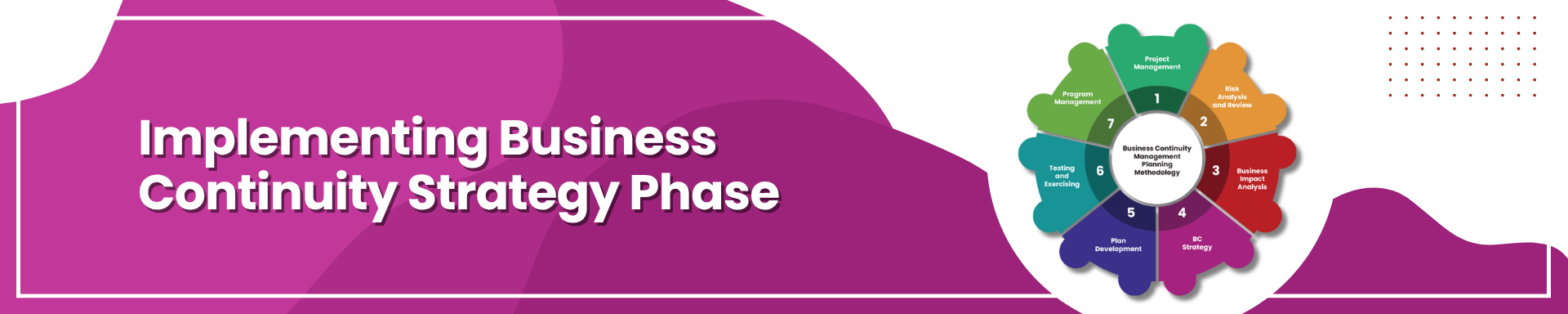
The **Business Continuity Strategy (BCS)** Phase is the fourth phase of the Business Continuity Management (BCM) Planning Methodology and transforms the findings of the Risk Analysis and Review (RAR) and Business Impact Analysis (BIA) into practical, implementable solutions.
While the Risk Analysis and Review identifies threats and vulnerabilities, and the Business Impact Analysis establishes recovery priorities and objectives, the Business Continuity Strategy Phase determines **how ALPS Healthcare will continue delivering its critical business functions during and after a disruption**.
For **ALPS Healthcare (ALPS)**, business continuity strategies are essential because the organisation is responsible for ensuring the uninterrupted procurement, storage, inventory management, and distribution of pharmaceuticals, medical devices, healthcare consumables, and other essential supplies supporting Singapore's public healthcare institutions.
Any prolonged disruption to these activities could affect the availability of life-saving treatments, clinical services, and healthcare operations nationwide.
Business continuity strategies extend beyond recovery.
They incorporate **prevention**, **mitigation**, and **recovery** measures that collectively strengthen organisational resilience.
Prevention strategies reduce the likelihood of disruptions occurring.
Mitigation strategies minimise the impact when disruptions do occur. Recovery strategies restore critical business functions within the Recovery Time Objectives (RTOs) established during the Business Impact Analysis.
For ALPS, continuity strategies must address not only internal operations but also the resilience of suppliers, logistics providers, technology platforms, warehouse facilities, transportation networks, and healthcare stakeholders.
As a key participant in Singapore's healthcare ecosystem, ALPS must ensure that continuity planning supports both organisational objectives and the uninterrupted delivery of healthcare services.
This chapter presents a practical Business Continuity Strategy framework specifically tailored to ALPS Healthcare and aligned with ISO 22301.
The strategies described provide a comprehensive approach for protecting critical business functions while maintaining continuity of healthcare supply chain operations during disruptive events.
### [](https://cta-redirect.hubspot.com/cta/redirect/3893111/66c784de-297c-4446-90c9-4611204cbb14)
[Dr Goh Moh Heng](https://blog.bcm-institute.org/ebook/author/dr-goh-moh-heng) Aug 6, 2026
###### Business Continuity Management Certified Planner-Specialist-Expert
#### [![\[BCM\] \[ALPS\] Legal Disclaimer Banner](https://no-cache.hubspot.com/cta/default/3893111/eb6856d2-cbb2-4a76-b237-7bd842e84226.png)](https://cta-redirect.hubspot.com/cta/redirect/3893111/eb6856d2-cbb2-4a76-b237-7bd842e84226)eBook 2: Chapter 5
### [](https://cta-redirect.hubspot.com/cta/redirect/3893111/66c784de-297c-4446-90c9-4611204cbb14)
### Business Continuity Strategy Phase of the BCM Planning Methodology for
### ALPS Healthcare
#### Introduction
[![\[BCM\] \[ALPS\] \[E2\] \[C5\] Business Continuity Strategy](https://no-cache.hubspot.com/cta/default/3893111/404ab765-7f69-49dd-ac4a-b9079f065d1c.png)](https://cta-redirect.hubspot.com/cta/redirect/3893111/404ab765-7f69-49dd-ac4a-b9079f065d1c)
The Business Continuity Strategy (BCS) Phase is the fourth phase of the Business Continuity Management (BCM) Planning Methodology and transforms the findings of the Risk Analysis and Review (RAR) and Business Impact Analysis (BIA) into practical, implementable solutions.
While the Risk Analysis and Review identifies threats and vulnerabilities, and the Business Impact Analysis establishes recovery priorities and objectives, the Business Continuity Strategy Phase determines **how ALPS Healthcare will continue delivering its critical business functions during and after a disruption**.
For **ALPS Healthcare (ALPS)**, business continuity strategies are essential because the organisation is responsible for ensuring the uninterrupted procurement, storage, inventory management, and distribution of pharmaceuticals, medical devices, healthcare consumables, and other essential supplies supporting Singapore's public healthcare institutions.
Any prolonged disruption to these activities could affect the availability of life-saving treatments, clinical services, and healthcare operations nationwide.
Business continuity strategies extend beyond recovery. They incorporate **prevention**, **mitigation**, and **recovery** measures that collectively strengthen organisational resilience. Prevention strategies reduce the likelihood of disruptions occurring.
Mitigation strategies minimise the impact when disruptions do occur. Recovery strategies restore critical business functions within the Recovery Time Objectives (RTOs) established during the Business Impact Analysis.
For ALPS, continuity strategies must address not only internal operations but also the resilience of suppliers, logistics providers, technology platforms, warehouse facilities, transportation networks, and healthcare stakeholders.
As a key participant in Singapore's healthcare ecosystem, ALPS must ensure that continuity planning supports both organisational objectives and the uninterrupted delivery of healthcare services.
This chapter presents a practical Business Continuity Strategy framework specifically tailored to ALPS Healthcare and aligned with ISO 22301.
The strategies described provide a comprehensive approach for protecting critical business functions while maintaining continuity of healthcare supply chain operations during disruptive events.
#### Purpose of the BC Strategy Phase
The **Business Continuity Strategy (BCS)** Phase is the fourth phase of the Business Continuity Management (BCM) Planning Methodology and transforms the findings of the Risk Analysis and Review (RAR) and Business Impact Analysis (BIA) into practical, implementable solutions.
While the Risk Analysis and Review identifies threats and vulnerabilities, and the Business Impact Analysis establishes recovery priorities and objectives, the Business Continuity Strategy Phase determines **how ALPS Healthcare will continue delivering its critical business functions during and after a disruption**.
For **ALPS Healthcare (ALPS)**, business continuity strategies are essential because the organisation is responsible for ensuring the uninterrupted procurement, storage, inventory management, and distribution of pharmaceuticals, medical devices, healthcare consumables, and other essential supplies supporting Singapore's public healthcare institutions.
Any prolonged disruption to these activities could affect the availability of life-saving treatments, clinical services, and healthcare operations nationwide.
Business continuity strategies extend beyond recovery. They incorporate **prevention**, **mitigation**, and **recovery** measures that collectively strengthen organisational resilience. Prevention strategies reduce the likelihood of disruptions occurring.
Mitigation strategies minimise the impact when disruptions do occur. Recovery strategies restore critical business functions within the Recovery Time Objectives (RTOs) established during the Business Impact Analysis.
For ALPS, continuity strategies must address not only internal operations but also the resilience of suppliers, logistics providers, technology platforms, warehouse facilities, transportation networks, and healthcare stakeholders.
As a key participant in Singapore's healthcare ecosystem, ALPS must ensure that continuity planning supports both organisational objectives and the uninterrupted delivery of healthcare services.
This chapter presents a practical Business Continuity Strategy framework specifically tailored to ALPS Healthcare and aligned with ISO 22301.
The strategies described provide a comprehensive approach for protecting critical business functions while maintaining continuity of healthcare supply chain operations during disruptive events.
#### **Objectives of the Business Continuity Strategy Phase**
The objectives of this phase are to:
- Develop practical strategies for maintaining critical business functions.
- Prevent disruptions where feasible.
- Reduce the operational impact of disruptive events.
- Restore critical operations within established Recovery Time Objectives (RTOs).
- Protect people, facilities, information, and technology.
- Strengthen supplier and logistics resilience.
- Ensure continuity of healthcare supply chain services.
- Support compliance with ISO 22301 and Singapore regulatory expectations.
- Enhance organisational resilience through continual improvement.
#### **Business Continuity Strategy Framework**
Business continuity strategies are generally grouped into three complementary categories:
##### **Prevention Strategies**
Prevent incidents from occurring through proactive controls.
Examples include:
- Supplier qualification programmes.
- Preventive maintenance.
- Cybersecurity controls.
- Employee awareness.
- Physical security.
- Compliance monitoring.
##### **Mitigation Strategies**
Reduce the impact when disruptions occur.
Examples include:
- Safety stock.
- Multi-supplier sourcing.
- Alternate warehouses.
- Network redundancy.
- Generator backup.
- Cold-chain redundancy.
##### **Recovery Strategies**
Restore business operations rapidly after disruption.
Examples include:
- Alternate work locations.
- Disaster recovery sites.
- Manual workarounds.
- Emergency procurement.
- Mutual aid arrangements.
- Crisis management procedures.
#### **Business Continuity Strategy Categories**
ALPS Healthcare should develop strategies covering the following resource categories.
- People
- Facilities
- Technology
- Information
- Suppliers
- Logistics
- Communications
- Governance
- Financial Resources
#### **Business Continuity Strategies for ALPS Healthcare Critical Business Functions (Narrative)**
The following strategies illustrate how ALPS Healthcare can apply prevention, mitigation, and recovery measures to each of its identified Critical Business Functions.
##### **CBF-1 Strategic Procurement and Sourcing**
Develop diversified sourcing strategies by qualifying multiple suppliers for essential healthcare products, maintaining strategic procurement agreements, monitoring supplier performance, and establishing emergency sourcing procedures to ensure continuity of supply during market disruptions.
##### **CBF-2 Pharmaceutical Procurement and Supply Management**
Maintain strategic pharmaceutical inventories, establish framework agreements with local and international manufacturers, monitor global medicine shortages, and implement expedited procurement procedures during healthcare emergencies.
##### **CBF-3 Medical Supplies and Equipment Procurement**
Diversify medical equipment suppliers, maintain pre-approved vendor panels, and implement emergency purchasing arrangements for high-demand medical consumables.
##### **CBF-4 Supplier and Vendor Management**
Conduct supplier resilience assessments, require suppliers to maintain Business Continuity Plans, monitor supplier financial health, and establish alternative supplier arrangements for critical products.
##### **CBF-5 Contract and Purchase Order Management**
Implement redundant electronic procurement platforms, maintain secure backups of contracts and purchase orders, and establish manual approval processes should digital systems become unavailable.
##### **CBF-6 Demand Planning and Supply Planning**
Use predictive analytics, healthcare demand forecasting, and scenario planning to anticipate demand fluctuations during disease outbreaks, pandemics, or national emergencies.
##### **CBF-7 Inventory Management and Replenishment**
Maintain minimum safety stock levels, automate replenishment alerts, conduct regular inventory audits, and establish emergency redistribution procedures across healthcare institutions.
##### **CBF-8 Warehouse and Storage Operations**
Operate redundant warehouse capabilities, maintain fire protection systems, provide backup power, implement warehouse automation resilience measures, and develop contingency storage arrangements.
##### **CBF-9 Cold-Chain and Controlled-Environment Logistics**
Install dual refrigeration systems, continuous environmental monitoring, backup generators, emergency cold storage facilities, and validated alternative transportation for temperature-sensitive products.
##### **CBF-10 Healthcare Distribution and Delivery Operations**
Maintain multiple logistics providers, establish emergency delivery routes, prioritise deliveries to critical healthcare facilities, and deploy contingency transportation arrangements during national emergencies.
##### **CBF-11 Supply Shortage and Supply Disruption Management**
Implement shortage monitoring, alternative product substitution procedures, supplier escalation processes, strategic reserve inventories, and national coordination mechanisms for scarce medical products.
##### **CBF-12 Procurement and Supply Chain Information Systems**
Provide high-availability ICT infrastructure, cloud redundancy, disaster recovery environments, cybersecurity controls, regular backups, and tested recovery procedures.
##### **CBF-13 Supply Chain Data, Analytics and Reporting**
Ensure data replication, secure reporting platforms, automated dashboard recovery, and alternative reporting procedures to maintain operational visibility during system outages.
##### **CBF-14 Quality Assurance and Product Traceability**
Maintain product traceability through redundant systems, secure quality records, barcode redundancy, and alternative verification procedures to support recalls and regulatory compliance.
##### **CBF-15 Financial Operations and Supplier Payments**
Implement secure electronic payment systems, alternate banking arrangements, emergency payment authorisation procedures, and redundant financial processing capabilities.
##### **CBF-16 Regulatory, Governance and Compliance Management**
Maintain regulatory reporting continuity through secure document repositories, alternate communication channels, and predefined escalation procedures for regulatory notifications.
##### **CBF-17 Information Security and Cyber Resilience**
Implement defence-in-depth cybersecurity architecture, multi-factor authentication, network segmentation, Security Operations Centre (SOC) monitoring, incident response capabilities, and cyber recovery strategies.
##### **CBF-18 Business Continuity and Crisis Management**
Maintain enterprise Crisis Management Teams, Business Continuity Plans, Emergency Response Procedures, regular exercising programmes, and resilient crisis communication capabilities.
##### **CBF-19 Public Healthcare Institution Coordination and Stakeholder Management**
Develop coordinated communication protocols with healthcare clusters, government agencies, suppliers, and logistics providers to ensure prioritised allocation of healthcare resources during disruptive events.
##### **CBF-20 Corporate Management and Decision Support**
Maintain resilient executive decision-making capabilities through alternate command facilities, secure collaboration platforms, executive dashboards, and strategic crisis governance processes.
#### **Business Continuity Strategies for ALPS Healthcare Critical Business Functions**
| CBF Code | Critical Business Function | Prevention Strategy | Mitigation Strategy | Recovery Strategy |
| --- | --- | --- | --- | --- |
| CBF-1 | Strategic Procurement and Sourcing | Multi-source supplier qualification | Strategic sourcing contracts | Emergency sourcing procedures |
| CBF-2 | Pharmaceutical Procurement and Supply Management | Approved pharmaceutical supplier network | Strategic medicine stockpiles | Emergency pharmaceutical procurement |
| CBF-3 | Medical Supplies and Equipment Procurement | Multiple approved vendors | Safety stock for essential items | Alternative procurement channels |
| CBF-4 | Supplier and Vendor Management | Supplier due diligence | Supplier continuity assessments | Alternate supplier activation |
| CBF-5 | Contract and Purchase Order Management | Digital workflow controls | Secure document backups | Manual procurement procedures |
| CBF-6 | Demand Planning and Supply Planning | Demand forecasting | Scenario-based planning | Emergency supply allocation |
| CBF-7 | Inventory Management and Replenishment | Inventory optimisation | Buffer stock management | Emergency inventory redistribution |
| CBF-8 | Warehouse and Storage Operations | Preventive maintenance | Alternate storage locations | Warehouse recovery procedures |
| CBF-9 | Cold-Chain and Controlled-Environment Logistics | Continuous temperature monitoring | Dual refrigeration and generators | Emergency cold-chain transfer |
| CBF-10 | Healthcare Distribution and Delivery Operations | Logistics route planning | Multiple logistics providers | Emergency healthcare deliveries |
| CBF-11 | Supply Shortage and Supply Disruption Management | Supply monitoring | Strategic reserve inventories | Product substitution and emergency sourcing |
| CBF-12 | Procurement and Supply Chain Information Systems | Cybersecurity controls | High-availability infrastructure | ICT disaster recovery |
| CBF-13 | Supply Chain Data, Analytics and Reporting | Data governance | Data replication | Alternative reporting platforms |
| CBF-14 | Quality Assurance and Product Traceability | Quality management systems | Redundant traceability records | Manual product verification |
| CBF-15 | Financial Operations and Supplier Payments | Financial controls | Alternate banking arrangements | Emergency payment processing |
| CBF-16 | Regulatory, Governance and Compliance Management | Compliance monitoring | Regulatory reporting procedures | Alternative regulatory communications |
| CBF-17 | Information Security and Cyber Resilience | Defence-in-depth security | Cyber incident response | Cyber recovery programme |
| CBF-18 | Business Continuity and Crisis Management | BCM governance | Crisis management activation | Business continuity plan execution |
| CBF-19 | Public Healthcare Institution Coordination and Stakeholder Management | Stakeholder engagement | Coordinated communication protocols | Healthcare coordination centre activation |
| CBF-20 | Corporate Management and Decision Support | Executive governance | Alternate decision-support systems | Executive crisis command arrangements |
#### **Strategy Development Considerations**
When developing business continuity strategies, ALPS Healthcare should evaluate:
- Alignment with Recovery Time Objectives (RTOs).
- Compliance with healthcare regulations.
- Cost-benefit considerations.
- Availability of skilled personnel.
- Supplier resilience.
- Technology resilience.
- Logistics network capabilities.
- Warehouse capacity.
- Information security requirements.
- Public healthcare priorities.
Each strategy should be validated to ensure that it can realistically achieve the recovery objectives established during the Business Impact Analysis.
**8. Strategy Selection Criteria**
Business continuity strategies should be selected based on:
- Effectiveness in maintaining critical business functions.
- Speed of implementation.
- Resource availability.
- Operational feasibility.
- Cost efficiency.
- Scalability.
- Sustainability.
- Regulatory compliance.
- Compatibility with existing operations.
- Ability to support Singapore's healthcare system during prolonged disruptions.
#### **Business Continuity Strategy Deliverables**
The Business Continuity Strategy Phase should produce the following deliverables:
- Business Continuity Strategy Report.
- Recovery Strategy Catalogue.
- Alternate Supplier Strategy.
- Alternate Facility Strategy.
- Workforce Continuity Strategy.
- ICT Recovery Strategy.
- Logistics Continuity Strategy.
- Cold-Chain Continuity Strategy.
- Resource Allocation Plan.
- Strategy Approval Report.
#### **Relationship with the Plan Development Phase**
The approved business continuity strategies become the foundation for the next phase of the BCM Planning Methodology.
Specifically, the selected strategies will be translated into:
- Crisis Management Plans.
- Business Continuity Plans.
- Department Recovery Plans.
- IT Disaster Recovery Plans.
- Emergency Response Procedures.
- Communication Plans.
- Recovery Checklists.
- Operational playbooks.
The effectiveness of these plans depends on the quality and practicality of the strategies developed during this phase.
#### [![Banner \[Summary\] \[BCM\] \[E2\] \[C5\] Business Continuity Strategy](https://no-cache.hubspot.com/cta/default/3893111/ca7fd7d5-8923-46f4-b420-08a7eca83bdb.png)](https://cta-redirect.hubspot.com/cta/redirect/3893111/ca7fd7d5-8923-46f4-b420-08a7eca83bdb)
The Business Continuity Strategy Phase transforms the findings of the Risk Analysis and Review and Business Impact Analysis into practical solutions that enable ALPS Healthcare to continue supporting Singapore's public healthcare system during disruptive events.
By combining **prevention, mitigation, and recovery strategies**, ALPS strengthens the resilience of its procurement, warehousing, logistics, information systems, supplier network, and governance processes while ensuring that critical healthcare products remain available to the institutions that depend upon them.
Given ALPS' strategic role in the national healthcare supply chain, business continuity strategies must extend beyond organisational boundaries to address dependencies on suppliers, logistics providers, technology platforms, healthcare institutions, and government agencies.
The strategy framework presented in this chapter provides a comprehensive approach to safeguarding critical business functions, reducing operational risks, and restoring services in line with the recovery objectives established during the Business Impact Analysis.
The outputs of this phase—including the Business Continuity Strategy Report, Recovery Strategy Catalogue, Alternate Supplier Strategy, ICT Recovery Strategy, Logistics Continuity Strategy, and Resource Allocation Plan—provide the blueprint for the **Plan Development (PD) Phase**.
In the next chapter, these approved strategies will be translated into detailed Business Continuity Plans, Crisis Management Plans, Department Recovery Plans, and operational procedures that enable ALPS Healthcare to respond effectively to disruptions and sustain the continuity of Singapore's healthcare supply chain.
[![\[BCM\] \[ALPS\] \[3/4 Banner\] Implementing Business Continuity Management for ALPS Healthcare](https://no-cache.hubspot.com/cta/default/3893111/5bb3d163-ccf4-4942-8e51-90cb0e0de84f.png)](https://cta-redirect.hubspot.com/cta/redirect/3893111/5bb3d163-ccf4-4942-8e51-90cb0e0de84f)
| **eBook 2: Implementing Business Continuity Management** | | | | |
| --- | --- | --- | --- | --- |
| **C1** | **C2** | **C3** | **C4** | **C5** |
| [![\[BCM\] \[ALPS\] \[E2\] \[C1\] Business Continuity Management Planning Methodology](https://no-cache.hubspot.com/cta/default/3893111/34a98265-b1ac-4365-8fb1-b89701c81850.png)](https://cta-redirect.hubspot.com/cta/redirect/3893111/34a98265-b1ac-4365-8fb1-b89701c81850) | [![\[BCM\] \[ALPS\] \[E2\] \[C2\] Project Management](https://no-cache.hubspot.com/cta/default/3893111/2a25b902-93e0-4adc-9793-121a2849bfab.png)](https://cta-redirect.hubspot.com/cta/redirect/3893111/2a25b902-93e0-4adc-9793-121a2849bfab) | [![\[BCM\] \[ALPS\] \[E2\] \[C3\] Risk Analysis and Review](https://no-cache.hubspot.com/cta/default/3893111/74b8cdd9-6407-4d41-bfa9-1c382a227c82.png)](https://cta-redirect.hubspot.com/cta/redirect/3893111/74b8cdd9-6407-4d41-bfa9-1c382a227c82) | [![\[BCM\] \[ALPS\] \[E2\] \[C4\] Business Impact Analysis](https://no-cache.hubspot.com/cta/default/3893111/eedd40d9-b511-4e16-96de-58834c1e7d92.png)](https://cta-redirect.hubspot.com/cta/redirect/3893111/eedd40d9-b511-4e16-96de-58834c1e7d92) | [![\[BCM\] \[ALPS\] \[E2\] \[C5\] Business Continuity Strategy](https://no-cache.hubspot.com/cta/default/3893111/404ab765-7f69-49dd-ac4a-b9079f065d1c.png)](https://cta-redirect.hubspot.com/cta/redirect/3893111/404ab765-7f69-49dd-ac4a-b9079f065d1c) |
| **C6** | **C7** | **C8** | **C9** | **C10** |
| [![\[BCM\] \[ALPS\] \[E2\] \[C6\] BCM Plan Development](https://no-cache.hubspot.com/cta/default/3893111/4df32844-f3fe-4e88-b9e0-c33cd4f354f5.png)](https://cta-redirect.hubspot.com/cta/redirect/3893111/4df32844-f3fe-4e88-b9e0-c33cd4f354f5) | [![\[BCM\] \[ALPS\] \[E2\] \[C7\] Testing and Exercising](https://no-cache.hubspot.com/cta/default/3893111/be2eeb3c-4b1a-4d42-bebd-0a30e1047952.png)](https://cta-redirect.hubspot.com/cta/redirect/3893111/be2eeb3c-4b1a-4d42-bebd-0a30e1047952) | [![\[BCM\] \[ALPS\] \[E2\] \[C8\] Program Management](https://no-cache.hubspot.com/cta/default/3893111/52497940-4ed8-4ee5-b5e9-0a1b21e83f29.png)](https://cta-redirect.hubspot.com/cta/redirect/3893111/52497940-4ed8-4ee5-b5e9-0a1b21e83f29) | [![\[BCM\] \[ALPS\] \[E2\] \[C9\] Summary](https://no-cache.hubspot.com/cta/default/3893111/c702d1dd-d76e-4015-8be8-58641496151a.png)](https://cta-redirect.hubspot.com/cta/redirect/3893111/c702d1dd-d76e-4015-8be8-58641496151a) | [![\[BCM\] \[ALPS\] \[E2\] \[C10\] Back Cover of eBook 2](https://no-cache.hubspot.com/cta/default/3893111/7f72c39b-5844-4487-92a5-c9d0f38f0bad.png)](https://cta-redirect.hubspot.com/cta/redirect/3893111/7f72c39b-5844-4487-92a5-c9d0f38f0bad) |
| | | | | |
#### More Information About Business Continuity Management Courses
To learn more about the course and schedule, click the buttons below for BCM-300 Business Continuity Management Implementer \[BCM-3\] and BCM-5000 Business Continuity Management Expert Implementer \[BCM-5\]
| [](https://cta-redirect.hubspot.com/cta/redirect/3893111/f3922b80-e96a-46d6-8993-dc150a5de2d5) | [](https://cta-redirect.hubspot.com/cta/redirect/3893111/9ff8a3dc-e39a-465b-929f-72e232cdd5fb) | [![Register \[BL-B-3\]\*](https://no-cache.hubspot.com/cta/default/3893111/ac6cf073-4cdd-4541-91ed-889f731d5076.png)](https://cta-redirect.hubspot.com/cta/redirect/3893111/ac6cf073-4cdd-4541-91ed-889f731d5076) |
| --- | --- | --- |
| [](https://cta-redirect.hubspot.com/cta/redirect/3893111/21525c10-4003-4934-95fc-fe218174bc5b) | [](https://cta-redirect.hubspot.com/cta/redirect/3893111/46460171-c91a-4936-9bb2-8dc5928a0e02) | [](https://cta-redirect.hubspot.com/cta/redirect/3893111/1cb17ac7-50b2-4f88-bc4b-c7444e4b57b5) |
| [![FAQ \[BL-B-3\]](https://no-cache.hubspot.com/cta/default/3893111/b3824ba1-7aa1-4eb6-bef8-94f57121c5ae.png)](https://cta-redirect.hubspot.com/cta/redirect/3893111/b3824ba1-7aa1-4eb6-bef8-94f57121c5ae) | Please feel free to send us a note if you have any questions. [![Email to Sales Team \[BCM Institute\]](https://no-cache.hubspot.com/cta/default/3893111/3c53daeb-2836-4843-b0e0-645baee2ab9e.png)](https://cta-redirect.hubspot.com/cta/redirect/3893111/3c53daeb-2836-4843-b0e0-645baee2ab9e) | [](https://cta-redirect.hubspot.com/cta/redirect/3893111/9c199ae8-c470-4bb7-9612-73c7a084e94c) |
| [](https://cta-redirect.hubspot.com/cta/redirect/3893111/8999211a-2c51-4be7-bf49-c393f6c67974) | [](https://cta-redirect.hubspot.com/cta/redirect/3893111/5c1aa95d-f6dd-4067-a95c-5cc0c32d7ed8) | [](https://cta-redirect.hubspot.com/cta/redirect/3893111/086ab3b9-4d66-4a95-b2f7-1148e9803a9c) |
**Comments**
### More Posts
[](https://cta-redirect.hubspot.com/cta/redirect/3893111/839787f4-a4fd-456f-accf-54c947026558)

All rights reserved. Copyright 2026
```json
{
"@context" : "https://schema.org",
"@type" : "BlogPosting",
"author" : {
"@type" : "Person",
"name" : "Dr Goh Moh Heng",
"url" : "https://blog.bcm-institute.org/ebook/author/dr-goh-moh-heng"
},
"dateModified" : "2026-08-06T01:02:45.943Z",
"datePublished" : "2026-08-06T00:50:04.000Z",
"headline" : "[BCM] [ALPS] [E2] [C5] Business Continuity Strategy",
"mainEntityOfPage" : {
"@id" : "https://blog.bcm-institute.org/ebook/bcm-alps-e2-c5-business-continuity-strategy",
"@type" : "WebPage"
},
"publisher" : {
"@type" : "Organization",
"logo" : {
"@type" : "ImageObject",
"url" : "https://blog.bcm-institute.org/hubfs/BCMI%20Logo.png"
},
"name" : "BCMI Pte Ltd"
}
}
```