---
title: [BCM] [ALPS] [E1] [C9] Assessing Risks and Threats
description: [BCM] [ALPS] [E1] [C9] Assessing Risks and Threats
image: https://blog.bcm-institute.org/hubfs/ALPS%20Graphic%20Folder/ALPS%20Morepost/ALPS%20E1%20Morepost/%5BBCM%5D%20%5BALPS%5D%20%5BE1%5D%20%5BC9%5D%20Assessing%20Risks%20and%20Threats.jpg
---
.
[](http://www.bcm-institute.org/)
- [Home](https://www.bcm-institute.org/)
- [About Us](https://www.bcm-institute.org/about-us-3/)
- [A President’s Perspective](https://www.bcm-institute.org/about-us/a-presidents-perspective/)
- [Our History](https://www.bcm-institute.org/about-us/our-history/)
- [Our Advisory Council](https://www.bcm-institute.org/about-us/our-advisory-council/)
- [Customers’ Testimonials](https://www.bcm-institute.org/about-us/customers-testimonials/)
- [Credential Verification](https://www.bcm-institute.org/about-us/credential-verification/)
- [Courses](https://blog.bcm-institute.org/blog/course-fees-for-blended-learning-courses-master-catalog)
- [ISO 22301 Business Continuity Management System Audit](https://blog.bcm-institute.org/audit/business-continuity-management-audit-courses)
- [ISO 22301 Business Continuity Management](https://blog.bcm-institute.org/bcm/business-continuity-management-courses)
- [Crisis Communication](https://blog.bcm-institute.org/crisis-communication/crisis-communication-courses)
- [Crisis Management](https://blog.bcm-institute.org/en/crisis-management/courses)
- [IT Disaster Recovery](https://blog.bcm-institute.org/it-disaster-recovery/courses)
- [Operational Resilience](https://blog.bcm-institute.org/operational-resilience/courses)
- [Operational Resilience Audit](https://blog.bcm-institute.org/operational-resilience-audit/courses)
- [Certification](https://blog.bcm-institute.org/certification/types-of-certifications-offered)
- [ISO 22301 BCMS Audit Certification](https://blog.bcm-institute.org/certification/business-continuity-management-audit-certification)
- [ISO22301 Business Continuity Management Certification](https://blog.bcm-institute.org/bcm/business-continuity-management-certification)
- [Crisis Communication Certification](https://blog.bcm-institute.org/crisis-communication/crisis-communication-certification)
- [Crisis Management Certification](https://blog.bcm-institute.org/en/crisis-management/crisis-management-certification)
- [IT Disaster Recovery Planning Certification](https://blog.bcm-institute.org/it-disaster-recovery/it-disaster-recovery-certification)
- [Operational Resilience Certification](https://blog.bcm-institute.org/operational-resilience/operational-resilience-certification)
- [Operational Resilience Audit Certification](https://blog.bcm-institute.org/operational-resilience-audit)
- [Seminars](https://blog.bcm-institute.org/meet-the-expert/mte-webinar-mainpage)
- [Store](https://www.bcm-institute.org/store-2/)
- [Contact Us](http://www.bcm-institute.org/about-us/contact-us/)
-
-
##### **Implementing Business Continuity Management for ALPS Healthcare: An Enterprise Implementation Guide**
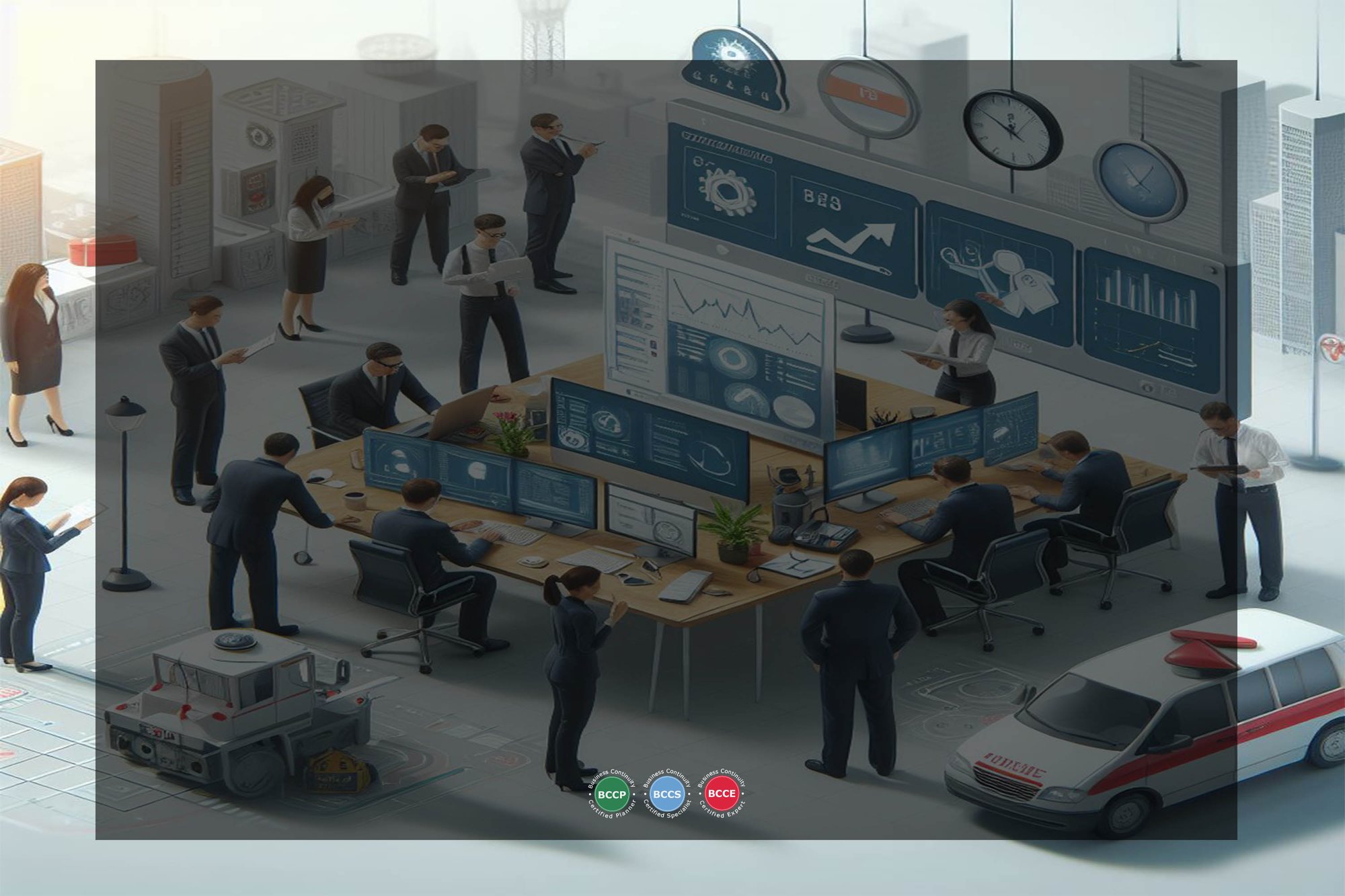
# \[BCM\] \[ALPS\] \[E1\] \[C9\] Assessing Risks and Threats
[![\[BCM\] \[ALPS\] \[Full Banner\] Implementing Business Continuity Management for ALPS Healthcare](https://no-cache.hubspot.com/cta/default/3893111/a577c05a-ab89-4043-9a89-1dea0d883afc.png)](https://cta-redirect.hubspot.com/cta/redirect/3893111/a577c05a-ab89-4043-9a89-1dea0d883afc)
Business Continuity Management (BCM) is founded on the principle that organisations must be prepared for disruptive events that could affect the continuity of their critical business functions.
[![x eBook Cover \[BCM\] \[ALPS\] \[E1\] \[2D\]](https://no-cache.hubspot.com/cta/default/3893111/b5679347-4c2f-400c-bfdb-65c0cf960dcb.png)](https://cta-redirect.hubspot.com/cta/redirect/3893111/b5679347-4c2f-400c-bfdb-65c0cf960dcb)ISO 22301 requires organisations to understand the internal and external issues that may affect the Business Continuity Management System (BCMS), while the Risk Analysis and Review (RAR) process identifies specific threats that could disrupt business operations.
Understanding these threats enables organisations to develop appropriate prevention, preparedness, response, recovery, and resilience strategies.
For ALPS Healthcare (ALPS), identifying threats is especially important because the organisation supports Singapore's public healthcare sector through strategic procurement, healthcare logistics, inventory management, warehousing, pharmaceutical sourcing, and supply chain coordination.
Disruptions affecting ALPS Healthcare may indirectly affect hospitals, healthcare institutions, clinicians, and patients.
Consequently, threat identification must extend beyond traditional facility-related incidents to include supply chain disruptions, cyber threats, public health emergencies, regulatory changes, and failures affecting critical third-party providers.
This chapter introduces the major categories of threats relevant to Business Continuity Management and presents representative crisis scenarios applicable to ALPS Healthcare.
These scenarios provide the basis for the Risk Analysis and Review (RAR), Business Impact Analysis (BIA), Business Continuity Strategy (BCS), and Testing and Exercising phases described in subsequent eBooks.
### [](https://cta-redirect.hubspot.com/cta/redirect/3893111/a4fa9f02-e184-43b1-8a52-230bf302dd76)
[Moh Heng Goh](https://blog.bcm-institute.org/ebook/author/moh-heng-goh) Aug 6, 2026
###### Business Continuity Management Certified Planner-Specialist-Expert
### [![\[BCM\] \[ALPS\] \[Full Banner\] Implementing Business Continuity Management for ALPS Healthcare](https://no-cache.hubspot.com/cta/default/3893111/a577c05a-ab89-4043-9a89-1dea0d883afc.png)](https://cta-redirect.hubspot.com/cta/redirect/3893111/a577c05a-ab89-4043-9a89-1dea0d883afc)
### Chapter 9
### [](https://cta-redirect.hubspot.com/cta/redirect/3893111/a4fa9f02-e184-43b1-8a52-230bf302dd76)
### Assessing Risks and Threats
#### Introduction
[](https://cta-redirect.hubspot.com/cta/redirect/3893111/4fb30324-a9e0-4f9f-853e-2bc256850f62)Business Continuity Management (BCM) is founded on the principle that organisations must be prepared for disruptive events that could affect the continuity of their critical business functions.
ISO 22301 requires organisations to understand the internal and external issues that may affect the Business Continuity Management System (BCMS), while the Risk Analysis and Review (RAR) process identifies specific threats that could disrupt business operations.
Understanding these threats enables organisations to develop appropriate prevention, preparedness, response, recovery, and resilience strategies.
For ALPS Healthcare (ALPS), identifying threats is especially important because the organisation supports Singapore's public healthcare sector through strategic procurement, healthcare logistics, inventory management, warehousing, pharmaceutical sourcing, and supply chain coordination.
Disruptions affecting ALPS Healthcare may indirectly affect hospitals, healthcare institutions, clinicians, and patients. Consequently, threat identification must extend beyond traditional facility-related incidents to include supply chain disruptions, cyber threats, public health emergencies, regulatory changes, and failures affecting critical third-party providers.
This chapter introduces the major categories of threats relevant to Business Continuity Management and presents representative crisis scenarios applicable to ALPS Healthcare.
These scenarios provide the basis for the Risk Analysis and Review (RAR), Business Impact Analysis (BIA), Business Continuity Strategy (BCS), and Testing and Exercising phases described in subsequent eBooks.
### **Understanding Key Risk Management Concepts**
#### **Business Continuity Threats**
[](https://cta-redirect.hubspot.com/cta/redirect/3893111/443f436c-6219-4360-91ab-8e569939d29e)[](https://cta-redirect.hubspot.com/cta/redirect/3893111/fa444299-4ddb-4696-9cc3-362d1bf7b801)
A business continuity threat is any event, condition, or circumstance that could disrupt an organisation's ability to deliver its critical products or services.
Examples include:
- Cyber attacks
- Fire
- Flooding
- Pandemic
- Utility failure
- Supplier failure
- Human error
A threat represents the source of potential disruption.
##### **Example – ALPS Healthcare**
A cyberattack affecting the Warehouse Management System (WMS) could prevent inventory visibility, delaying the distribution of essential medicines to hospitals.
**Relationship Between Threats and ISO 22301**
ISO 22301 does not prescribe a standard list of threats. Instead, organisations are required to understand their operating context and identify the risks that may affect business continuity.
Threat identification supports:
- Risk Analysis and Review (RAR).
- Business Impact Analysis (BIA).
- Business Continuity Strategy (BCS).
- Business Continuity Plan (BCP) development.
- Crisis Management.
- Incident Response.
- Testing and Exercising.
- Continual Improvement.
Threats, therefore, become the foundation on which organisational resilience is developed.
### **Major Categories of Business Continuity Threats**
#### **Natural Hazards**
Natural hazards include environmental events beyond human control.
Examples include:
- Flooding.
- Severe storms.
- Lightning.
- Haze.
- Earthquake (regional impact).
- Tsunami affecting regional supply chains.
- Extreme heat.
- Pandemic-related weather disruptions.
##### **Example – ALPS Healthcare**
Regional flooding disrupts inbound shipments of medical supplies from neighbouring countries, delaying replenishment of hospital inventories.
#### **Facility and Infrastructure Threats**
Threats affecting physical facilities include:
- Fire.
- Explosion.
- Structural damage.
- Building access restrictions.
- Utility failures.
- Water supply disruption.
- Air-conditioning failure.
- Cold-storage failure.
##### **Example**
A fire at a warehouse storing critical medical consumables requires activation of alternate warehousing and emergency distribution arrangements.
#### **Information and Cybersecurity Threats**
Digital threats have become one of the highest risks facing healthcare supply chains.
Examples include:
- Ransomware.
- Malware.
- Data breaches.
- Denial-of-Service (DoS) attacks.
- Insider cyber threats.
- System failures.
- Cloud service outages.
- Telecommunications failures.
##### **Example**
A ransomware attack encrypts procurement databases, preventing purchase order processing and supplier communications.
#### **Supply Chain Threats**
Healthcare organisations depend heavily upon resilient supply chains.
Threats include:
- Critical supplier failure.
- Overseas manufacturing disruption.
- Product shortages.
- Transportation disruption.
- Port congestion.
- Customs delays.
- Supplier insolvency.
- Counterfeit products.
##### **Example**
An overseas pharmaceutical manufacturer suspends production due to regulatory issues, prompting ALPS Healthcare to activate alternative sourcing arrangements.
#### **Workforce Threats**
People-related disruptions include:
- Pandemic.
- Loss of key personnel.
- Industrial action.
- Labour shortages.
- Workplace accidents.
- Infectious disease outbreaks.
- Staff absenteeism.
- Skills shortages.
##### **Example**
A widespread infectious disease significantly reduces warehouse staffing, requiring cross-trained personnel to support critical operations.
#### **Technology and Equipment Threats**
Operational technology failures may include:
- ERP failure.
- Warehouse Management System failure.
- Inventory system outage.
- Hardware failure.
- Network failure.
- Data corruption.
- Telecommunications outage.
- Equipment malfunction.
##### **Example**
Failure of automated warehouse retrieval systems delays order fulfilment for critical healthcare products.
#### **Logistics Threats**
Transportation disruptions include:
- Vehicle breakdown.
- Fuel shortages.
- Airport disruptions.
- Shipping delays.
- Road closures.
- Third-party logistics failure.
- Cold-chain transport failure.
##### **Example**
Closure of a major expressway requires emergency rerouting of deliveries to public hospitals.
#### **Regulatory and Governance Threats**
Examples include:
- Regulatory changes.
- Product recalls.
- Healthcare compliance failures.
- Procurement governance failures.
- Contractual disputes.
- Legal injunctions.
##### **Example**
A regulatory recall affecting multiple pharmaceutical products requires rapid withdrawal and redistribution of replacement stock.
#### **Reputation Threats**
Reputational events include:
- Product contamination.
- Media scrutiny.
- Public misinformation.
- Supply shortages.
- Ethical failures.
- Procurement integrity issues.
##### **Example**
Media reports on shortages of essential medicines heighten public concern and stakeholder scrutiny.
#### **Representative Threat Register for ALPS Healthcare**
The following table illustrates representative threats applicable to ALPS Healthcare.
| Threat Category | Representative Threat | Potential Operational Impact |
| --- | --- | --- |
| Natural Hazard | Flood | Warehouse operations disrupted |
| Pandemic | Workforce shortages | |
| Facilities | Fire | Warehouse closure |
| Building access restriction | Staff unable to access operations | |
| Technology | ERP failure | Procurement disruption |
| Warehouse Management System failure | Inventory visibility lost | |
| Cybersecurity | Ransomware | Procurement systems unavailable |
| Data breach | Exposure of sensitive operational data | |
| Supply Chain | Critical supplier failure | Medicine shortages |
| Overseas manufacturing disruption | Delayed procurement | |
| Logistics | Third-party logistics failure | Delivery delays |
| Cold-chain transport failure | Product spoilage | |
| Utilities | Power outage | Cold-storage disruption |
| Telecommunications outage | Communication failure | |
| Human Resources | Loss of key personnel | Operational delays |
| Governance | Product recall | Emergency redistribution required |
| External | Geopolitical conflict | Supply interruption |
| Port congestion | Shipment delays | |
#### **Understanding Crisis Scenarios**
A crisis scenario is a realistic event describing how one or more threats may affect the organisation.
Unlike individual threats, crisis scenarios examine:
- Escalation.
- Interdependencies.
- Decision-making.
- Recovery priorities.
- Stakeholder communications.
- Resource requirements.
Scenario development supports Business Continuity Planning and crisis exercises.
#### **Representative Crisis Scenarios for ALPS Healthcare**
##### **Scenario 1 – National Pandemic Resurgence**
Situation
A rapidly spreading infectious disease causes:
- High workforce absenteeism.
- Extraordinary demand for PPE.
- Medicine shortages.
- Transportation disruption.
- Supplier delays.
Expected BCM Response
- Activate Crisis Management Team.
- Prioritise healthcare institutions.
- Increase emergency procurement.
- Activate remote working.
- Coordinate with healthcare agencies.
##### **Scenario 2 – Major Warehouse Fire**
Situation
A fire renders the primary warehouse inoperable.
Expected BCM Response
- Activate alternate warehouse.
- Relocate inventory.
- Continue critical deliveries.
- Notify healthcare institutions.
- Coordinate emergency logistics.
##### **Scenario 3 – Ransomware Attack**
Situation
Cyber criminals encrypt procurement, inventory, and warehouse systems.
Expected BCM Response
- Activate Cyber Incident Response.
- Restore systems from backups.
- Implement manual procurement procedures.
- Communicate with suppliers.
- Continue priority distribution.
##### **Scenario 4 – Global Pharmaceutical Supply Shortage**
Situation
Several international manufacturers suspend production simultaneously.
Expected BCM Response
- Activate alternative suppliers.
- Prioritise allocation.
- Coordinate with healthcare institutions.
- Monitor inventory levels.
- Support national healthcare priorities.
##### **Scenario 5 – Cold-Chain Failure**
Situation
Power failure affects refrigerated pharmaceutical storage.
Expected BCM Response
- Transfer inventory.
- Activate backup generators.
- Monitor product temperatures.
- Replace compromised inventory.
- Notify affected stakeholders.
##### **Scenario 6 – Simultaneous Multi-Site Disruption**
Situation
A cyberattack coincides with transportation disruptions and supplier delays.
Expected BCM Response
- Activate Crisis Management Team.
- Prioritise Critical Business Functions.
- Coordinate enterprise recovery.
- Escalate executive decision-making.
- Maintain stakeholder communications.
#### **Relationship Between Threats and Critical Business Functions**
Threat analysis should consider how disruptions affect each Critical Business Function (CBF).
| Critical Business Function | Representative Threats |
| --- | --- |
| Strategic Procurement | Supplier failure, cyberattack |
| Pharmaceutical Procurement | Product shortages, manufacturing disruption |
| Medical Supplies Procurement | Transportation delays |
| Supplier Management | Supplier insolvency |
| Supply Planning | ERP failure |
| Inventory Management | Warehouse Management System outage |
| Warehouse Operations | Fire, flooding |
| Cold-Chain Logistics | Refrigeration failure |
| Distribution Operations | Logistics disruption |
| Supply Shortage Management | Pandemic, geopolitical conflict |
| Procurement Information Systems | Ransomware |
| Data Analytics | Database corruption |
| Quality Assurance | Product contamination |
| Finance | Payment system disruption |
#### **Using Threats Throughout the BCMS**
Threat identification supports every stage of Business Continuity Management.
| BCMS Activity | Use of Threat Information |
| --- | --- |
| Risk Analysis and Review | Evaluate likelihood and consequences |
| Business Impact Analysis | Determine operational impacts |
| Strategy Development | Select appropriate resilience measures |
| Plan Development | Prepare response procedures |
| Crisis Management | Develop escalation arrangements |
| Testing and Exercising | Design realistic exercise scenarios |
| Internal Audit | Review threat coverage |
| Continual Improvement | Update threat register based on emerging risks |
##### **Key Takeaways**
- Threat identification is a fundamental component of ISO 22301 and provides the basis for Business Continuity Management planning.
- ALPS Healthcare faces a diverse range of threats, including natural hazards, facility disruptions, cyber incidents, supply chain failures, workforce shortages, technology outages, logistics disruptions, regulatory events, and reputational challenges.
- Crisis scenarios combine one or more threats into realistic events that enable the organisation to evaluate decision-making, coordination, and recovery capabilities.
- Threat analysis should be integrated with the organisation's Critical Business Functions to ensure continuity strategies focus on the areas of greatest operational importance.
- Regular reviews of the threat landscape and realistic scenario testing will help ALPS Healthcare strengthen organisational resilience and maintain continuity of essential healthcare supply chain services.
#### [![Banner \[Summary\] \[BCM\] \[E1\] \[C9\] Assessing Risks and Threats](https://no-cache.hubspot.com/cta/default/3893111/0d5248d9-47ae-40d5-89d5-1ad12dd73b48.png)](https://cta-redirect.hubspot.com/cta/redirect/3893111/0d5248d9-47ae-40d5-89d5-1ad12dd73b48)
Understanding the threats that may disrupt organisational operations is a prerequisite for developing an effective Business Continuity Management System.
For ALPS Healthcare, the threat landscape extends well beyond traditional emergencies and includes cyberattacks, supply chain disruptions, pandemics, logistics disruptions, regulatory changes, technology outages, and failures affecting critical suppliers and service providers.
Given ALPS Healthcare's strategic role in supporting Singapore's public healthcare system, these threats could affect not only organisational performance but also the continuity of healthcare services nationwide.
This chapter has introduced the principal categories of business continuity threats, illustrated representative threats relevant to ALPS Healthcare, and demonstrated how these threats can be translated into realistic crisis scenarios for planning and exercising purposes.
By analysing how different threats may affect people, facilities, technology, suppliers, logistics, and governance, ALPS Healthcare can establish a comprehensive understanding of its operational risk environment and identify where resilience measures are most needed.
The threat categories and crisis scenarios presented in this chapter provide the foundation for the Risk Analysis and Review (RAR) phase described in the next eBook, *Implementing Business Continuity Management for ALPS Healthcare*.
There, each threat will be assessed based on its likelihood, potential consequences, and impact on Critical Business Functions.
This systematic approach enables ALPS Healthcare to develop appropriate continuity strategies, validate recovery capabilities through exercises, and continually enhance its resilience in alignment with the principles and requirements of ISO 22301.
[![\[BCM\] \[ALPS\] \[3/4 Banner\] Implementing Business Continuity Management for ALPS Healthcare](https://no-cache.hubspot.com/cta/default/3893111/5bb3d163-ccf4-4942-8e51-90cb0e0de84f.png)](https://cta-redirect.hubspot.com/cta/redirect/3893111/5bb3d163-ccf4-4942-8e51-90cb0e0de84f)
| **eBook 1: Understanding Your Organisation** | | | | | |
| --- | --- | --- | --- | --- | --- |
| **C1** | **C2** | **C3** | **C4** | **C5** | **C6** |
| [![\[BCM\] \[ALPS\] \[E1\] \[C1\] Overview of BCM Case Study](https://no-cache.hubspot.com/cta/default/3893111/aba468a7-0793-4be6-aa3a-e4e515274515.png)](https://cta-redirect.hubspot.com/cta/redirect/3893111/aba468a7-0793-4be6-aa3a-e4e515274515) | [![\[BCM\] \[ALPS\] \[E1\] \[C2\] Understanding Your Organisation](https://no-cache.hubspot.com/cta/default/3893111/2e1e0c68-8366-4d9e-bbba-58827b5c9b60.png)](https://cta-redirect.hubspot.com/cta/redirect/3893111/2e1e0c68-8366-4d9e-bbba-58827b5c9b60) | [![\[BCM\] \[ALPS\] \[E1\] \[C3\] Establishing Organisational Goals](https://no-cache.hubspot.com/cta/default/3893111/232c98bf-11f2-470d-a0df-edbd82ffe021.png)](https://cta-redirect.hubspot.com/cta/redirect/3893111/232c98bf-11f2-470d-a0df-edbd82ffe021) | [![\[BCM\] \[ALPS\] \[E1\] \[C4\] Establishing Business Continuity Objectives](https://no-cache.hubspot.com/cta/default/3893111/589c62fb-41d7-42d8-a663-afc6981b199a.png)](https://cta-redirect.hubspot.com/cta/redirect/3893111/589c62fb-41d7-42d8-a663-afc6981b199a) | [![\[BCM\] \[ALPS\] \[E1\] \[C5\] Determining BC Assumptions](https://no-cache.hubspot.com/cta/default/3893111/0528f41a-eac9-4a50-8577-ae3893d5e225.png)](https://cta-redirect.hubspot.com/cta/redirect/3893111/0528f41a-eac9-4a50-8577-ae3893d5e225) | [![\[BCM\] \[ALPS\] \[E1\] \[C6\] Composing BCM Team](https://no-cache.hubspot.com/cta/default/3893111/5e9da81a-1c9a-40dd-87b5-b2207013c2c2.png)](https://cta-redirect.hubspot.com/cta/redirect/3893111/5e9da81a-1c9a-40dd-87b5-b2207013c2c2) |
| **C7** | **C8** | **C9** | **C10** | **C11** | **C12** |
| [![\[BCM\] \[ALPS\] \[E1\] \[C7\] Analysing Operating Environment](https://no-cache.hubspot.com/cta/default/3893111/890857b2-cdf3-4c59-9fa0-c327aff136ce.png)](https://cta-redirect.hubspot.com/cta/redirect/3893111/890857b2-cdf3-4c59-9fa0-c327aff136ce) | [![\[BCM\] \[ALPS\] \[E1\] \[C8\] Implementing the BCM Planning Methodology](https://no-cache.hubspot.com/cta/default/3893111/26cf9a0b-9e5d-47ef-b238-ceb196d11c90.png)](https://cta-redirect.hubspot.com/cta/redirect/3893111/26cf9a0b-9e5d-47ef-b238-ceb196d11c90) | [](https://cta-redirect.hubspot.com/cta/redirect/3893111/4fb30324-a9e0-4f9f-853e-2bc256850f62) | [![\[BCM\] \[ALPS\] \[E1\] \[C10\] Identifying Critical Business Functions](https://no-cache.hubspot.com/cta/default/3893111/94f8b16c-55da-4543-a948-448f2241296e.png)](https://cta-redirect.hubspot.com/cta/redirect/3893111/94f8b16c-55da-4543-a948-448f2241296e) | [![\[BCM\] \[ALPS\] \[E1\] \[C11\] Summary](https://no-cache.hubspot.com/cta/default/3893111/8dc02c4d-9b11-4a35-8e71-731bde54727f.png)](https://cta-redirect.hubspot.com/cta/redirect/3893111/8dc02c4d-9b11-4a35-8e71-731bde54727f) | [![\[BCM\] \[ALPS\] \[E1\] \[C12\] \[Back Cover\] eBook 1](https://no-cache.hubspot.com/cta/default/3893111/20e1d7d9-607f-44fd-b9a0-13cfdd9bfa41.png)](https://cta-redirect.hubspot.com/cta/redirect/3893111/20e1d7d9-607f-44fd-b9a0-13cfdd9bfa41) |
| | | | | | |
#### More Information About Business Continuity Management Courses
To learn more about the course and schedule, click the buttons below for BCM-300 Business Continuity Management Implementer \[BCM-3\] and BCM-5000 Business Continuity Management Expert Implementer \[BCM-5\].
| [](https://cta-redirect.hubspot.com/cta/redirect/3893111/f3922b80-e96a-46d6-8993-dc150a5de2d5) | [](https://cta-redirect.hubspot.com/cta/redirect/3893111/9ff8a3dc-e39a-465b-929f-72e232cdd5fb) | [![Register \[BL-B-3\]\*](https://no-cache.hubspot.com/cta/default/3893111/ac6cf073-4cdd-4541-91ed-889f731d5076.png)](https://cta-redirect.hubspot.com/cta/redirect/3893111/ac6cf073-4cdd-4541-91ed-889f731d5076) |
| --- | --- | --- |
| [](https://cta-redirect.hubspot.com/cta/redirect/3893111/21525c10-4003-4934-95fc-fe218174bc5b) | [](https://cta-redirect.hubspot.com/cta/redirect/3893111/46460171-c91a-4936-9bb2-8dc5928a0e02) | [](https://cta-redirect.hubspot.com/cta/redirect/3893111/1cb17ac7-50b2-4f88-bc4b-c7444e4b57b5) |
| [![FAQ \[BL-B-3\]](https://no-cache.hubspot.com/cta/default/3893111/b3824ba1-7aa1-4eb6-bef8-94f57121c5ae.png)](https://cta-redirect.hubspot.com/cta/redirect/3893111/b3824ba1-7aa1-4eb6-bef8-94f57121c5ae) | Please feel free to send us a note if you have any questions. [![Email to Sales Team \[BCM Institute\]](https://no-cache.hubspot.com/cta/default/3893111/3c53daeb-2836-4843-b0e0-645baee2ab9e.png)](https://cta-redirect.hubspot.com/cta/redirect/3893111/3c53daeb-2836-4843-b0e0-645baee2ab9e) | [](https://cta-redirect.hubspot.com/cta/redirect/3893111/9c199ae8-c470-4bb7-9612-73c7a084e94c) |
| [](https://cta-redirect.hubspot.com/cta/redirect/3893111/8999211a-2c51-4be7-bf49-c393f6c67974) | [](https://cta-redirect.hubspot.com/cta/redirect/3893111/5c1aa95d-f6dd-4067-a95c-5cc0c32d7ed8) | [](https://cta-redirect.hubspot.com/cta/redirect/3893111/086ab3b9-4d66-4a95-b2f7-1148e9803a9c) |
### Your Comments Here :
### More Posts
[](https://cta-redirect.hubspot.com/cta/redirect/3893111/839787f4-a4fd-456f-accf-54c947026558)

All rights reserved. Copyright 2026
```json
{
"@context" : "https://schema.org",
"@type" : "BlogPosting",
"author" : {
"@type" : "Person",
"name" : "Moh Heng Goh",
"url" : "https://blog.bcm-institute.org/ebook/author/moh-heng-goh"
},
"dateModified" : "2026-08-06T03:56:45.776Z",
"datePublished" : "2026-08-06T03:50:57.000Z",
"headline" : "[BCM] [ALPS] [E1] [C9] Assessing Risks and Threats",
"mainEntityOfPage" : {
"@id" : "https://blog.bcm-institute.org/ebook/bcm-alps-e1-c9-assessing-risks-and-threats",
"@type" : "WebPage"
},
"publisher" : {
"@type" : "Organization",
"logo" : {
"@type" : "ImageObject",
"url" : "https://blog.bcm-institute.org/hubfs/BCMI%20Logo.png"
},
"name" : "BCMI Pte Ltd"
}
}
```