---
title: [OR] [PIDM] [E3] [CBS] [1] [DP] Deposit Insurance Protection Administration
description: [OR] [PIDM] [E3] [CBS] [1] [DP] Deposit Insurance Protection Administration
image: https://blog.bcm-institute.org/hubfs/PIDM%20Graphic%20Folder/PIDM%20Morepost/PIDM%20CBS%201%20Morepost/%5BOR%5D%20%5BPIDM%5D%20%5BE3%5D%20%5BCBS%5D%20%5B1%5D%20%5BDP%5D%20Deposit%20Insurance%20Protection%20Administration.jpg
---
. .
[](http://www.bcm-institute.org/)
- [Home](https://www.bcm-institute.org/)
- [About Us](https://www.bcm-institute.org/about-us-3/)
- [A President’s Perspective](https://www.bcm-institute.org/about-us/a-presidents-perspective/)
- [Our History](https://www.bcm-institute.org/about-us/our-history/)
- [Our Advisory Council](https://www.bcm-institute.org/about-us/our-advisory-council/)
- [Customers’ Testimonials](https://www.bcm-institute.org/about-us/customers-testimonials/)
- [Credential Verification](https://www.bcm-institute.org/about-us/credential-verification/)
- [Courses](https://blog.bcm-institute.org/blog/course-fees-for-blended-learning-courses-master-catalog)
- [ISO 22301 Business Continuity Management System Audit](https://blog.bcm-institute.org/audit/business-continuity-management-audit-courses)
- [ISO 22301 Business Continuity Management](https://blog.bcm-institute.org/bcm/business-continuity-management-courses)
- [Crisis Communication](https://blog.bcm-institute.org/crisis-communication/crisis-communication-courses)
- [Crisis Management](https://blog.bcm-institute.org/en/crisis-management/courses)
- [IT Disaster Recovery](https://blog.bcm-institute.org/it-disaster-recovery/courses)
- [Operational Resilience](https://blog.bcm-institute.org/operational-resilience/courses)
- [Operational Resilience Audit](https://blog.bcm-institute.org/operational-resilience-audit/courses)
- [Certification](https://blog.bcm-institute.org/certification/types-of-certifications-offered)
- [ISO 22301 BCMS Audit Certification](https://blog.bcm-institute.org/certification/business-continuity-management-audit-certification)
- [ISO22301 Business Continuity Management Certification](https://blog.bcm-institute.org/bcm/business-continuity-management-certification)
- [Crisis Communication Certification](https://blog.bcm-institute.org/crisis-communication/crisis-communication-certification)
- [Crisis Management Certification](https://blog.bcm-institute.org/en/crisis-management/crisis-management-certification)
- [IT Disaster Recovery Planning Certification](https://blog.bcm-institute.org/it-disaster-recovery/it-disaster-recovery-certification)
- [Operational Resilience Certification](https://blog.bcm-institute.org/operational-resilience/operational-resilience-certification)
- [Operational Resilience Audit Certification](https://blog.bcm-institute.org/operational-resilience-audit)
- [Seminars](https://blog.bcm-institute.org/meet-the-expert/mte-webinar-mainpage)
- [Store](https://www.bcm-institute.org/store-2/)
- [Contact Us](http://www.bcm-institute.org/about-us/contact-us/)
-
-
###### Building Operational Resilience at PIDM: A Strategic Implementation Guide
# \[OR\] \[PIDM\] \[E3\] \[CBS\] \[1\] \[DP\] Deposit Insurance Protection Administration
[](https://cta-redirect.hubspot.com/cta/redirect/3893111/7a6f5c32-e8ae-42c9-acb3-ba7f4b3f4998)
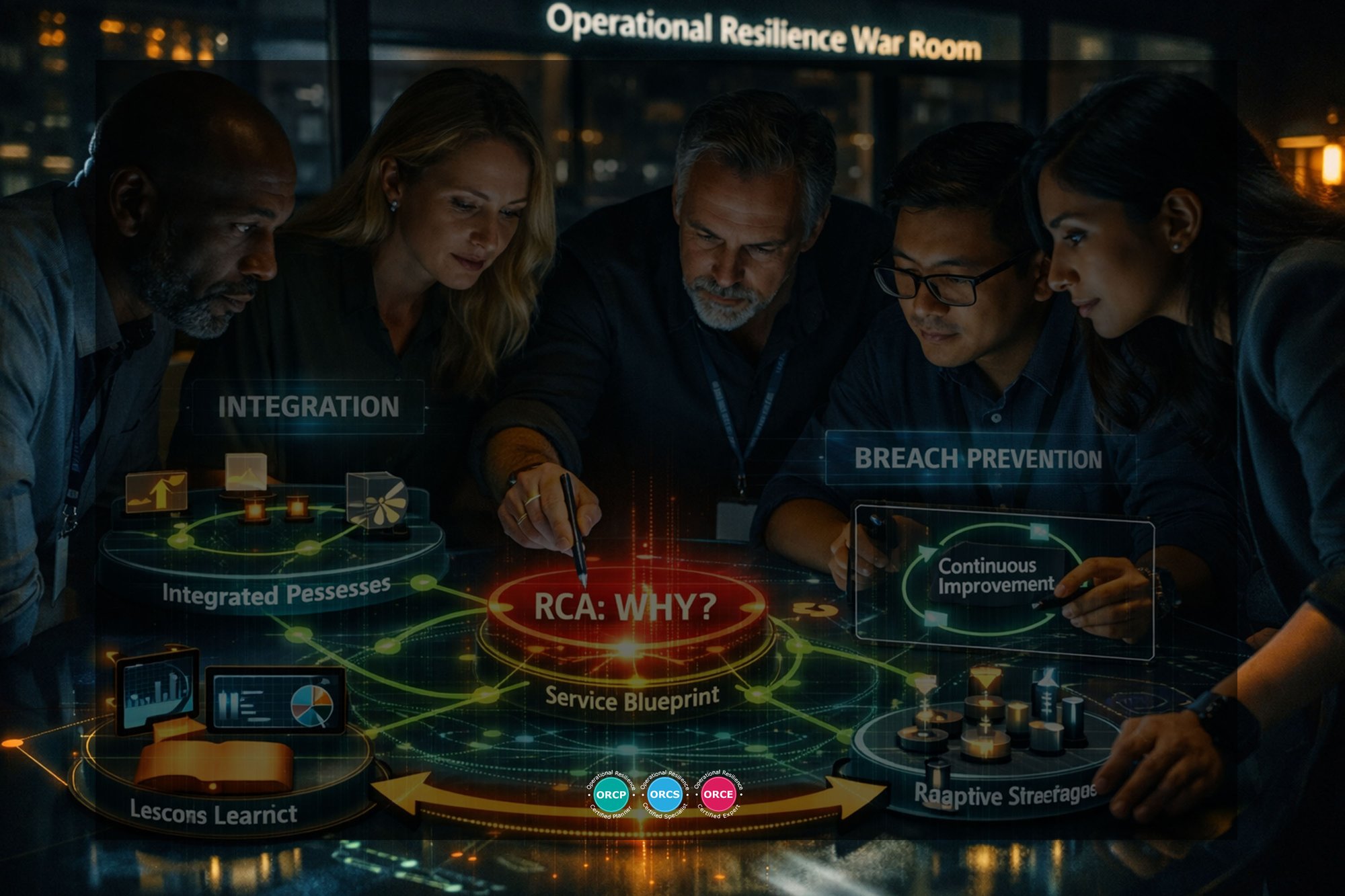
[](https://cta-redirect.hubspot.com/cta/redirect/3893111/7bb680f4-0965-49cd-b448-b88dff6349fb)Deposit Insurance Protection Administration is a critical service supporting Perbadanan Insurans Deposit Malaysia's (PIDM) responsibility to maintain effective deposit insurance protection for eligible depositors of member banks.
The service covers the ongoing administration of deposit insurance arrangements, including member bank participation, protection coverage determination, deposit insurance information, premium administration, compliance monitoring, and maintaining operational readiness.
Unlike insured deposit reimbursement, which becomes particularly important following a qualifying member bank failure, the Deposit Insurance Protection Administration is a continuous service.
It ensures that the necessary protection arrangements, information, and administrative controls remain effective during normal operations and periods of financial stress.
A disruption to this service could compromise the accuracy of protection information, delay the administration of member bank obligations, affect depositor confidence, or weaken PIDM's preparedness to fulfil its protection responsibilities.
### [](https://cta-redirect.hubspot.com/cta/redirect/3893111/732790df-c975-4982-a409-321d37ad0f1c)
[Dr Goh Moh Heng](https://blog.bcm-institute.org/ebook-or/author/dr-goh-moh-heng) Sep 28, 2026
###### Operational Resilience Certified Planner-Specialist-Expert
#### [](https://cta-redirect.hubspot.com/cta/redirect/3893111/52e8419c-3654-4d2f-815d-aa9dca0619a5)
### [](https://cta-redirect.hubspot.com/cta/redirect/3893111/732790df-c975-4982-a409-321d37ad0f1c)
### CBS-1 Deposit Insurance Protection Administration
#### Introduction
[![\[OR\] \[PIDM\] \[E3\] \[CBS\] \[1\] \[DP\] Deposit Insurance Protection Administration](https://no-cache.hubspot.com/cta/default/3893111/fcc1a03b-1f2c-41e4-a510-b733d153c6b0.png)](https://cta-redirect.hubspot.com/cta/redirect/3893111/fcc1a03b-1f2c-41e4-a510-b733d153c6b0)[](https://cta-redirect.hubspot.com/cta/redirect/3893111/7bb680f4-0965-49cd-b448-b88dff6349fb)Deposit Insurance Protection Administration is a critical service supporting Perbadanan Insurans Deposit Malaysia's (PIDM) responsibility to maintain effective deposit insurance protection for eligible depositors of member banks.
The service covers the ongoing administration of deposit insurance arrangements, including member bank participation, protection coverage determination, deposit insurance information, premium administration, compliance monitoring, and maintaining operational readiness.
Unlike insured deposit reimbursement, which becomes particularly important following a qualifying member bank failure, the Deposit Insurance Protection Administration is a continuous service.
It ensures that the necessary protection arrangements, information, and administrative controls remain effective during normal operations and periods of financial stress.
A disruption to this service could compromise the accuracy of protection information, delay the administration of member bank obligations, affect depositor confidence, or weaken PIDM's preparedness to fulfil its protection responsibilities.
For operational resilience purposes, PIDM must decompose the high-level service into a series of operationally meaningful business processes, referred to in this guide as Sub-Critical Business Services (Sub-CBS).
Each Sub-CBS represents a distinct process that contributes to delivering CBS-1.
The decomposition enables PIDM to understand how the service operates from end to end, identify the resources and dependencies supporting each process, and determine how disruptions affecting individual processes could propagate across the wider service.
It also establishes a consistent structure for subsequent dependency mapping, disruption impact assessment, impact tolerance analysis, and severe but plausible scenario testing.
The proposed processes in this chapter are an illustrative implementation model. Validate them against PIDM's actual operating procedures, statutory responsibilities, organisational structure, and approved service boundaries.
#### **Purpose and Scope of CBS-1 Deposit Insurance Protection Administration**
##### **Purpose of the critical business service**
CBS-1: Deposit Insurance Protection Administration ensures eligible depositors remain covered by an effectively administered deposit insurance system and that PIDM maintains the information, controls, and administrative arrangements needed to fulfil its protection responsibilities.
The service supports four principal outcomes:
- Accurate administration of member bank participation and applicable deposit insurance obligations.
- Consistent determination and maintenance of deposit insurance protection arrangements.
- Reliable protection information available to depositors, member banks, and relevant stakeholders.
- Continued administrative capability during disruptions, including the ability to maintain essential records and protection-related decisions.
The service should be designed around these outcomes rather than around individual organisational departments or technology applications.
##### **Service boundaries**
For this implementation guide, CBS-1 begins when an event or requirement creates a need to establish, maintain, update, or verify deposit insurance protection arrangements.
Such events may include a change in member bank status, the introduction of a deposit product, submission of protection-related information, a premium assessment cycle, or a change in applicable coverage requirements.
The service continues through administering, validating, communicating, and monitoring the relevant protection arrangements.
It ends when the required protection information, administrative decision, or obligation has been accurately processed, recorded, and made available to authorised recipients.
The service also includes arrangements to handle administrative exceptions and restore essential operations after a disruption.
Boundary distinction: CBS-1 concerns the ongoing administration of deposit insurance protection.
CBS-2 covers the actual reimbursement of insured deposits following a qualifying member bank failure.
Processes that prepare or maintain information needed for reimbursement may support both services, but CBS-1 should not duplicate reimbursement execution.
##### **Relationship between CBS and Sub-CBS**
The parent CBS defines the service outcome that PIDM must maintain.
The Sub-CBS processes describe how that outcome is achieved through coordinated operational activities.
A disruption to one Sub-CBS may affect other processes and ultimately compromise the parent service.
For example, inaccurate member bank information may affect premium assessments, protection records, and the information provided to depositors.
Decomposition therefore is not simply to create a process inventory.
It reveals the operational relationships that determine whether PIDM can continue delivering the service during disruption.
#### **Proposed Sub-CBS Catalogue for CBS-1**
The proposed catalogue decomposes the Deposit Insurance Protection Administration into 18 distinct business processes.
The processes follow the service lifecycle from establishing member bank participation and determining deposit protection through premium administration, information management, monitoring, exception handling, and recovery.
PIDM's published regulatory guidance identifies relevant activities involving deposit-taking membership, deposit product insurability, deposit information systems, total insured deposits, premium assessment, and member compliance. These provide the operational context for the proposed decomposition.
The catalogue distinguishes activities that deliver CBS-1 from those that belong primarily to other services, particularly insured deposit reimbursement and member institution resolution.
#### **[![Banner \[Table\] \[OR\] \[E3\] Detailed Processes](https://no-cache.hubspot.com/cta/default/3893111/3ecaed5c-33ef-4660-bbad-bdc9839aa08c.png)](https://cta-redirect.hubspot.com/cta/redirect/3893111/3ecaed5c-33ef-4660-bbad-bdc9839aa08c)**
##### **Table P1: Detailed Processes for CBS-1**
| Sub-CBS Code | Name of Sub-CBS | Description of Sub-CBS |
| --- | --- | --- |
| CBS-1.1 | Administer Member Bank Participation | Establish and maintain deposit insurance membership arrangements for eligible licensed commercial and Islamic banks. This process includes recognising membership commencement, maintaining membership status, recording relevant institutional changes, and ensuring that participation information remains accurate. |
| CBS-1.2 | Maintain Deposit Insurance Coverage Framework | Maintain the operational application of statutory deposit insurance coverage requirements. This includes interpreting applicable coverage provisions, incorporating approved changes into administrative rules, and ensuring consistent treatment of eligible deposits, exclusions, and applicable protection limits. |
| CBS-1.3 | Assess Deposit Product Insurability | Evaluate deposit products submitted by member banks to determine whether they qualify for protection under the Deposit Insurance System. The process includes reviewing product characteristics, applying insurability criteria, resolving classification questions, and documenting determinations. |
| CBS-1.4 | Administer Deposit Product Coverage Records | Maintain authoritative records of deposit product insurability determinations and subsequent changes. This includes recording approved classifications, updating information when product characteristics change, and ensuring that relevant stakeholders use current coverage information. |
| CBS-1.5 | Administer Member Bank Deposit Information Requirements | Establish and administer requirements for member banks to maintain and submit deposit information needed for deposit insurance purposes. This includes coordinating information specifications, submission arrangements, reporting obligations, and changes to information requirements. |
| CBS-1.6 | Receive and Validate Deposit Insurance Information | Receive applicable deposit insurance information from member banks and assess its completeness, consistency, and conformity with prescribed requirements. The process includes identifying submission errors, coordinating corrections, and confirming that accepted information is suitable for its intended administrative use. |
| CBS-1.7 | Maintain Insured Deposit Information and Records | Maintain reliable information required to support ongoing deposit insurance administration. This includes managing accepted information, maintaining record integrity, preserving relevant historical records, and ensuring that authorised users can retrieve accurate information when required. |
| CBS-1.8 | Validate Total Insured Deposits | Assess and validate total insured deposit information reported by member banks for applicable deposit insurance administration and premium purposes. This includes reviewing reported amounts, examining material inconsistencies, coordinating clarifications, and documenting validation outcomes. |
| CBS-1.9 | Assess Member Bank Premium Classification | Determine or validate the applicable premium category for each member bank under the relevant premium assessment framework. The process includes reviewing required assessment information, applying prescribed classification criteria, and documenting the resulting classification. |
| CBS-1.10 | Calculate and Assess Deposit Insurance Premiums | Determine the premiums payable by member banks using validated assessment information, applicable premium classifications, and prescribed rates. This includes calculating premium amounts, reviewing assessment accuracy, and issuing or confirming applicable premium obligations. |
| CBS-1.11 | Administer Premium Collection and Reconciliation | Manage the receipt and reconciliation of deposit insurance premiums payable by member banks. The process includes monitoring payment status, reconciling amounts received against assessed obligations, resolving discrepancies, and maintaining accurate premium collection records. |
| CBS-1.12 | Monitor Member Bank Compliance with Deposit Insurance Requirements | Monitor member banks' adherence to applicable deposit insurance obligations, including information submissions, premium requirements, and protection-related administrative responsibilities. The process includes identifying non-compliance, assessing its significance, and coordinating appropriate follow-up. |
| CBS-1.13 | Administer Deposit Insurance Disclosure Requirements | Coordinate and monitor the provision of accurate deposit insurance information by member banks to depositors. This includes administering applicable disclosure requirements, reviewing material disclosure concerns, and addressing inconsistencies that could misrepresent protection coverage. |
| CBS-1.14 | Provide Deposit Insurance Protection Information | Deliver authoritative information concerning deposit insurance coverage, eligible products, protection limits, and member bank participation. The process includes maintaining public information, responding to protection-related enquiries, and ensuring consistency across communication channels. |
| CBS-1.15 | Manage Deposit Insurance Administrative Exceptions | Resolve exceptions affecting the normal administration of deposit insurance protection. These may include disputed product classifications, inconsistent member information, premium discrepancies, or unusual coverage questions. The process includes assessment, escalation, authorised resolution, and documentation. |
| CBS-1.16 | Monitor Deposit Insurance Service Performance | Monitor the effectiveness and continuity of deposit insurance administration. This includes reviewing processing backlogs, information quality, submission timeliness, unresolved exceptions, and emerging service vulnerabilities that could affect protection administration. |
| CBS-1.17 | Manage Deposit Insurance Service Disruptions | Coordinate the operational response when an incident threatens or interrupts CBS-1. This includes assessing affected processes, activating relevant continuity arrangements, prioritising essential administrative activities, coordinating stakeholders, and escalating material service impacts. |
| CBS-1.18 | Restore and Reconcile Deposit Insurance Administration | Restore affected administrative processes following disruption and verify the integrity of recovered information and transactions. This includes clearing processing backlogs, reconciling records, validating outstanding obligations, and confirming that normal service delivery can safely resume. |
Catalogue status: Proposed for PIDM validation. The 18 processes represent an implementation-level decomposition and should not be interpreted as PIDM's officially documented internal processes.
#### **End-to-End Process Lifecycle**
The 18 Sub-CBS processes should be understood as an interconnected service delivery system rather than 18 independent activities.
They can be organised into six operational lifecycle groups.
##### **Table 4.1: Sub-CBS Lifecycle Classification**
| Lifecycle group | Sub-CBS processes | Operational outcome |
| --- | --- | --- |
| 1. Membership and Coverage Establishment | CBS-1.1 to CBS-1.4 | Member bank participation and deposit product protection status are accurately established and maintained. |
| 2. Deposit Information Administration | CBS-1.5 to CBS-1.8 | Deposit insurance information is received, validated, maintained, and available for authorised purposes. |
| 3. Premium Administration | CBS-1.9 to CBS-1.11 | The bank administers premium categories, assessments, and collections accurately. |
| 4. Compliance and Protection Communication | CBS-1.12 to CBS-1.14 | The bank monitors member bank obligations, and stakeholders receive accurate protection information. |
| 5. Exception and Performance Management | CBS-1.15 to CBS-1.16 | The group identifies and addresses administrative exceptions and service weaknesses. |
| 6. Disruption Management and Restoration | CBS-1.17 to CBS-1.18 | Essential administration is maintained or recovered following a disruption. |
The groups describe the principal sequence of service delivery.
In practice, some processes run concurrently or activate only when particular events occur.
For example, premium assessment follows a defined assessment cycle, whereas deposit product insurability assessment may be initiated when a member bank introduces or changes a relevant product.
Disruption management and restoration are cross-cutting processes that may be activated at any point in the lifecycle.
##### **Illustrative Service Delivery Sequence**
**![\[OR\] \[PM\] \[P3\] \[PIDM\] \[CBS\] \[1\] End to End Service Lifecycle](https://blog.bcm-institute.org/hs-fs/hubfs/%5BOR%5D%20%5BPM%5D%20Diagram/%5BOR%5D%20%5BPM%5D%20%5BP3%5D%20%5BPIDM%5D%20%5BCBS%5D%20%5B1%5D%20End%20to%20End%20Service%20Lifecycle.png?width=779&height=683&name=%5BOR%5D%20%5BPM%5D%20%5BP3%5D%20%5BPIDM%5D%20%5BCBS%5D%20%5B1%5D%20End%20to%20End%20Service%20Lifecycle.png)**
The lifecycle provides a practical structure for subsequent mapping workshops.
Each lifecycle group can be assigned to the relevant process owners, who will identify its inputs, outputs, operational resources, and relationships with other processes.
#### **Critical Interconnections Between Sub-CBS**
The operational resilience of CBS-1 depends on the reliability of relationships between its constituent processes.
A failure in one process may affect several downstream processes even when their individual systems and personnel remain available.
##### **Membership Information and Premium Administration**
CBS-1.1 maintains the status of participating member banks.
Inaccurate membership information may affect the administration of reporting obligations, premium assessments, and protection-related communications.
PIDM should therefore establish appropriate controls to ensure that membership changes are reflected consistently across relevant administrative processes.
##### **Deposit Product Classification and Coverage Information**
CBS-1.3 determines the insurability of relevant deposit products, while CBS-1.4 maintains the resulting coverage records.
These processes support CBS-1.13 and CBS-1.14 by ensuring that protection information provided through member banks and PIDM's communication channels reflects current determinations.
An incorrect classification could propagate into public information and create uncertainty concerning the protection of particular products.
##### **Deposit Information and Premium Assessment**
CBS-1.5 to CBS-1.8 establish the information needed to administer deposit insurance.
Validated total insured deposit information supports premium assessment under CBS-1.10.
A prolonged disruption affecting the receipt or validation of member bank information could delay premium calculations or require controlled alternative processing.
PIDM should assess whether alternative information sources and reconciliation procedures are available.
##### **Premium Classification, Assessment, and Collection**
CBS-1.9, CBS-1.10, and CBS-1.11 form an interconnected premium administration chain.
Incorrect premium classification may result in inaccurate assessments, while payment reconciliation failures may prevent PIDM from confirming whether obligations have been fulfilled.
Map these relationships with appropriate validation and exception-handling controls.
##### **Cross-Cutting Monitoring and Recovery**
CBS-1.15 to CBS-1.18 support overall service reliability.
Exception management and performance monitoring identify emerging weaknesses, while disruption management and restoration provide mechanisms to maintain or recover essential activities.
Map their dependencies across the complete CBS rather than against a single administrative function.
#### **Using the Sub-CBS Catalogue for Operational Resilience Implementation**
The Sub-CBS catalogue should become a controlled reference document supporting PIDM's subsequent operational resilience activities.
It provides the process-level structure required to move from identifying a high-level critical service to understanding how that service is delivered, where vulnerabilities exist and what must be protected.
##### **Mapping Processes and Resources**
For each Sub-CBS, PIDM should identify the people, technology, information, facilities and third parties required for delivery.
For example, CBS-1.8, Validate Total Insured Deposits, may depend on specialist personnel, information submitted by member banks, validation applications, secure information exchange arrangements and documented assessment procedures.
Record these resources as dependencies rather than additional Sub-CBS processes.
##### **Assessing Disruption Impacts**
PIDM should assess how the disruption of each Sub-CBS could affect the parent service.
The assessment should consider disruption duration, processing backlogs, information integrity, stakeholder consequences, and downstream process failures.
The severity of an interruption may vary by operating cycle.
For example, an outage affecting premium assessment during a critical submission period may have different consequences from an equivalent outage outside that period.
##### **Supporting Impact Tolerance Analysis**
Establish impact tolerance for the parent CBS based on the maximum disruption the business can accept before unacceptable consequences arise.
The Sub-CBS catalogue helps identify which processes must remain available, which may operate at reduced capacity, and which can be temporarily deferred.
Individual process recovery objectives should support the approved CBS impact tolerance, not replace it.
##### **Designing Severe but Plausible Scenarios**
The catalogue enables PIDM to develop scenarios that examine failures across multiple processes.
An illustrative scenario could involve a cyber incident that corrupts deposit information while simultaneously making the premium assessment environment unavailable.
The test would assess whether PIDM can identify the integrity issue, obtain alternative information, maintain essential administrative activities, and restore accurate records.
The objective is to evaluate end-to-end service delivery rather than simply demonstrate that an individual application can be recovered.
##### **Regulatory Alignment**
BNM issued its Discussion Paper on Operational Resilience in December 2025 to examine how financial institutions should prepare for and respond to severe operational disruptions while maintaining critical services.
The proposed Sub-CBS catalogue supports the broader operational resilience approach by establishing a basis for dependency mapping, disruption assessment, scenario testing, and continuous improvement.
However, the discussion paper should not automatically be treated as a directly binding requirement on PIDM.
PIDM must assess its applicability against its statutory position and any subsequent applicable requirements.
### [![Banner \[Summing\] \[OR\] \[E3\] Detailed Processes](https://no-cache.hubspot.com/cta/default/3893111/bce25519-5bf0-4302-aa7e-f4d565499b6d.png)](https://cta-redirect.hubspot.com/cta/redirect/3893111/bce25519-5bf0-4302-aa7e-f4d565499b6d)
Decomposing CBS-1: Deposit Insurance Protection Administration into 18 Sub-CBS processes provides PIDM with a structured understanding of the activities required to maintain the effective administration of its Deposit Insurance System.
The proposed catalogue covers the complete service lifecycle, beginning with member bank participation and coverage administration, continuing through deposit information management, premium assessment, compliance monitoring and protection communication, and concluding with exception handling, disruption management, and service restoration.
Each Sub-CBS represents a meaningful operational process rather than an individual task, technology application, or supporting resource.
The catalogue also establishes clear boundaries between ongoing deposit insurance administration and other PIDM services, particularly insured deposit reimbursement and member institution resolution.
This distinction helps prevent duplication while identifying and managing shared dependencies.
For PIDM's operational resilience programme, the catalogue provides the foundation for detailed process and resource mapping, interdependency analysis, disruption impact assessment, and impact tolerance setting.
It will also support the design of severe but plausible scenarios that test whether PIDM can maintain deposit insurance administration when multiple processes or supporting resources become unavailable.
The next implementation activity is to map each Sub-CBS to its supporting people, processes, technology, information, facilities, and third parties.
Through this mapping, PIDM can identify concentration risks, single points of failure, and vulnerabilities that could compromise the delivery of CBS-1.
The resulting information will enable PIDM to establish appropriate resilience arrangements, test their effectiveness, and implement improvements that strengthen the continuity of deposit insurance protection administration.
Reference: Bank Negara Malaysia. Discussion Paper on Operational Resilience, 19 December 2025.
Note from Author: The 18 Sub-CBS processes are proposed implementation classifications. PIDM must validate their final scope, ownership, and operational arrangements. The catalogue does not represent PIDM's officially approved internal process inventory.
**[](https://cta-redirect.hubspot.com/cta/redirect/3893111/56090723-e91a-4dcf-bae2-9a0dfc3808b0)**
| **eBook 3: Starting Your OR Implementation** | | | | |
| --- | --- | --- | --- | --- |
| **CBS-1 Deposit Insurance Protection Administration** | | | | |
| **CBS-1 DP** | **CBS-1 MII** | **CBS-1 ITo** | **CBS-1 SbPS** | **CBS-1 ST** |
| [![\[OR\] \[PIDM\] \[E3\] \[CBS\] \[1\] \[DP\] Deposit Insurance Protection Administration](https://no-cache.hubspot.com/cta/default/3893111/fcc1a03b-1f2c-41e4-a510-b733d153c6b0.png)](https://cta-redirect.hubspot.com/cta/redirect/3893111/fcc1a03b-1f2c-41e4-a510-b733d153c6b0) | [![\[OR\] \[PIDM\] \[E3\] \[CBS\] \[1\] \[MII\] Deposit Insurance Protection Administration](https://no-cache.hubspot.com/cta/default/3893111/2d1258ae-8671-46c3-8185-b57fa19bfad8.png)](https://cta-redirect.hubspot.com/cta/redirect/3893111/2d1258ae-8671-46c3-8185-b57fa19bfad8) | [![\[OR\] \[PIDM\] \[E3\] \[CBS\] \[1\] \[ITo\] Deposit Insurance Protection Administration](https://no-cache.hubspot.com/cta/default/3893111/33e29914-7a30-4f21-8b0d-dd3cba3c255a.png)](https://cta-redirect.hubspot.com/cta/redirect/3893111/33e29914-7a30-4f21-8b0d-dd3cba3c255a) | [![\[OR\] \[PIDM\] \[E3\] \[CBS\] \[1\] \[SbPS\] Deposit Insurance Protection Administration](https://no-cache.hubspot.com/cta/default/3893111/8572ef1b-f502-4dfb-912a-e57072c9b7b4.png)](https://cta-redirect.hubspot.com/cta/redirect/3893111/8572ef1b-f502-4dfb-912a-e57072c9b7b4) | [![\[OR\] \[PIDM\] \[E3\] \[CBS\] \[1\] \[ST\] Deposit Insurance Protection Administration](https://no-cache.hubspot.com/cta/default/3893111/d72c17a8-a9f9-4aeb-8593-32cb40696ad9.png)](https://cta-redirect.hubspot.com/cta/redirect/3893111/d72c17a8-a9f9-4aeb-8593-32cb40696ad9) |
**[](https://cta-redirect.hubspot.com/cta/redirect/3893111/084e620a-46c5-419a-82ed-6a681d15c0b6)[](https://cta-redirect.hubspot.com/cta/redirect/3893111/13a448f1-f09c-42da-a57e-0988e41658c5)**
For organisations looking to accelerate their journey, BCM Institute’s training and certification programs, including the **OR-5000 Operational Resilience Expert Implementer course**, provide in-depth insights and practical toolkits to embed this model effectively.
#### More Information About OR-5000 \[OR-5\] or OR-300 \[OR-3\]
Gain Competency: For organisations looking to accelerate their journey, BCM Institute’s training and certification programs, including the OR-5000 Operational Resilience Expert Implementer course, provide in-depth insights and practical toolkits to embed this model effectively.
To learn more about the course and schedule, click the buttons below for the \[OR-3\] OR-300 Operational Resilience Implementer course and the \[OR-5\] OR-5000 Operational Resilience Expert Implementer course.
| [](https://cta-redirect.hubspot.com/cta/redirect/3893111/3530eccb-515d-401e-afc2-3469e26d7fbf) | [](https://cta-redirect.hubspot.com/cta/redirect/3893111/fdd4fa9c-ed69-40c1-925f-4eb6a1c5c255) | [](https://cta-redirect.hubspot.com/cta/redirect/3893111/77a34b84-0a6d-44f8-b8d6-6ab04cdf5edd) |
| --- | --- | --- |
| [](https://cta-redirect.hubspot.com/cta/redirect/3893111/6e5c0cda-39b9-4bbd-b3d4-4cf46a790b14) | [](https://cta-redirect.hubspot.com/cta/redirect/3893111/a68a08aa-36d3-4216-9551-202c9fde06ea) | [![ \[BL-OR\] \[3-4-5\] View Schedule](https://no-cache.hubspot.com/cta/default/3893111/d0d733a1-16c0-4b68-a26d-adbfd4fc6069.png)](https://cta-redirect.hubspot.com/cta/redirect/3893111/d0d733a1-16c0-4b68-a26d-adbfd4fc6069) |
| [![\[BL-OR\] \[3\] FAQ OR-300](https://no-cache.hubspot.com/cta/default/3893111/f20c71b4-f5e8-4aa5-8056-c374ca33a091.png)](https://cta-redirect.hubspot.com/cta/redirect/3893111/f20c71b4-f5e8-4aa5-8056-c374ca33a091) | If you have any questions, click to contact us.[![Email to Sales Team \[BCM Institute\]](https://no-cache.hubspot.com/cta/default/3893111/3c53daeb-2836-4843-b0e0-645baee2ab9e.png)](https://cta-redirect.hubspot.com/cta/redirect/3893111/3c53daeb-2836-4843-b0e0-645baee2ab9e) | [](https://cta-redirect.hubspot.com/cta/redirect/3893111/7f2718a4-ea80-4f84-a319-dc2d4df37a46) |
| [](https://cta-redirect.hubspot.com/cta/redirect/3893111/74b1e556-8cd2-4a74-8821-db1804534955) | [](https://cta-redirect.hubspot.com/cta/redirect/3893111/f2bd8eb1-32d2-4732-9267-ea53223cf58f) | [](https://cta-redirect.hubspot.com/cta/redirect/3893111/084e620a-46c5-419a-82ed-6a681d15c0b6) |
#### **Your Comments Here:**

---

---

---

---


All rights reserved. Copyright 2026
```json
{
"@context" : "https://schema.org",
"@type" : "BlogPosting",
"author" : {
"@type" : "Person",
"name" : "Dr Goh Moh Heng",
"url" : "https://blog.bcm-institute.org/ebook-or/author/dr-goh-moh-heng"
},
"dateModified" : "2026-09-28T09:30:02.213Z",
"datePublished" : "2026-09-28T06:56:49.000Z",
"headline" : "[OR] [PIDM] [E3] [CBS] [1] [DP] Deposit Insurance Protection Administration",
"mainEntityOfPage" : {
"@id" : "https://blog.bcm-institute.org/ebook-or/or-pidm-e3-cbs-1-dp-deposit-insurance-protection-administration",
"@type" : "WebPage"
},
"publisher" : {
"@type" : "Organization",
"logo" : {
"@type" : "ImageObject",
"url" : "https://blog.bcm-institute.org/hubfs/BCMI%20Logo.png"
},
"name" : "BCMI Pte Ltd"
}
}
```