---
title: "[CM] [JHA] [E1] [C2] Understanding Your Organisation: Jamiyah Home for the Aged"
description: "Build the organisational picture behind JHA's crisis plan: purpose, legal status, governance, residents, interested parties, critical activities and dependencies."
---
.
[](http://www.bcm-institute.org/)
- [Home](https://www.bcm-institute.org/)
- [About Us](https://www.bcm-institute.org/about-us-3/)
- [A President’s Perspective](https://www.bcm-institute.org/about-us/a-presidents-perspective/)
- [Our History](https://www.bcm-institute.org/about-us/our-history/)
- [Our Advisory Council](https://www.bcm-institute.org/about-us/our-advisory-council/)
- [Customers’ Testimonials](https://www.bcm-institute.org/about-us/customers-testimonials/)
- [Credential Verification](https://www.bcm-institute.org/about-us/credential-verification/)
- [Courses](https://blog.bcm-institute.org/blog/course-fees-for-blended-learning-courses-master-catalog)
- [ISO 22301 Business Continuity Management System Audit](https://blog.bcm-institute.org/audit/business-continuity-management-audit-courses)
- [ISO 22301 Business Continuity Management](https://blog.bcm-institute.org/bcm/business-continuity-management-courses)
- [Crisis Communication](https://blog.bcm-institute.org/crisis-communication/crisis-communication-courses)
- [Crisis Management](https://blog.bcm-institute.org/en/crisis-management/courses)
- [IT Disaster Recovery](https://blog.bcm-institute.org/it-disaster-recovery/courses)
- [Operational Resilience](https://blog.bcm-institute.org/operational-resilience/courses)
- [Operational Resilience Audit](https://blog.bcm-institute.org/operational-resilience-audit/courses)
- [Certification](https://blog.bcm-institute.org/certification/types-of-certifications-offered)
- [ISO 22301 BCMS Audit Certification](https://blog.bcm-institute.org/certification/business-continuity-management-audit-certification)
- [ISO22301 Business Continuity Management Certification](https://blog.bcm-institute.org/bcm/business-continuity-management-certification)
- [Crisis Communication Certification](https://blog.bcm-institute.org/crisis-communication/crisis-communication-certification)
- [Crisis Management Certification](https://blog.bcm-institute.org/en/crisis-management/crisis-management-certification)
- [IT Disaster Recovery Planning Certification](https://blog.bcm-institute.org/it-disaster-recovery/it-disaster-recovery-certification)
- [Operational Resilience Certification](https://blog.bcm-institute.org/operational-resilience/operational-resilience-certification)
- [Operational Resilience Audit Certification](https://blog.bcm-institute.org/operational-resilience-audit)
- [Seminars](https://blog.bcm-institute.org/meet-the-expert/mte-webinar-mainpage)
- [Store](https://www.bcm-institute.org/store-2/)
- [Contact Us](http://www.bcm-institute.org/about-us/contact-us/)
-
-
###### Sustaining Community Services: Implementing BCM at Jamiyah Home for the Aged
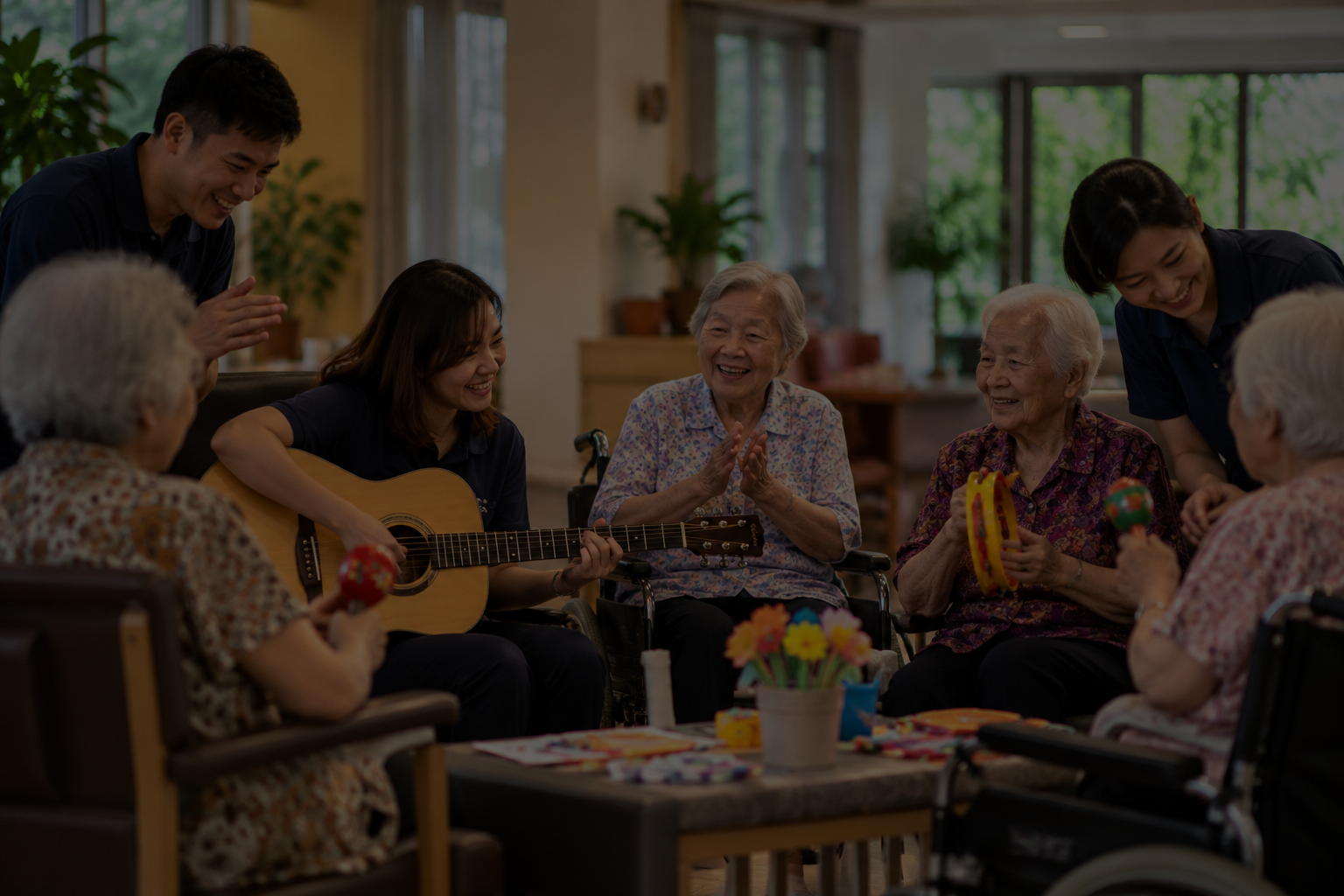
# \[CM\] \[JHA\] \[E1\] \[C2\] Understanding Your Organisation: Jamiyah Home for the Aged
[](https://cta-redirect.hubspot.com/cta/redirect/3893111/bdc00ed8-f19a-4103-a408-1d726db0e452)
This chapter builds that picture for JHA. It draws on public information about the home and on the regulatory framework that applies to it. Where JHA's own records are needed to complete a detail, such as the number of residents or the staffing pattern, this chapter says so rather than guessing. Those gaps are useful: they are the first items on JHA's crisis management to-do list.
[](https://cta-redirect.hubspot.com/cta/redirect/3893111/93e4d869-8de4-4ffd-8aad-33538c5ce0ee)
[Dr Goh Moh Heng](https://blog.bcm-institute.org/cm-v2/author/dr-goh-moh-heng) Nov 11, 2026
A crisis plan is only as good as the picture of the organisation behind it. Before JHA decides how to respond to a crisis, it must be clear about what it exists to do, whom it serves, who depends on it, what it relies upon and what it cannot afford to lose. ISO 22361 treats this as the foundation of crisis management: understanding the organisation's context, objectives, stakeholders, and the environment in which it operates.
[](https://cta-redirect.hubspot.com/cta/redirect/3893111/bdc00ed8-f19a-4103-a408-1d726db0e452)
## [](https://cta-redirect.hubspot.com/cta/redirect/3893111/40cdcb39-a53f-4f89-9e19-8f0495bb7e3d)
[](https://cta-redirect.hubspot.com/cta/redirect/3893111/27fc8f4c-0771-49e6-8c22-3f35174ec61a)This chapter builds that picture for JHA. It draws on public information about the home and on the regulatory framework that applies to it. Where JHA's own records are needed to complete a detail, such as the number of residents or the staffing pattern, this chapter says so rather than guessing. Those gaps are useful: they are the first items on JHA's crisis management to-do list.
## Why understanding comes first
A common mistake is to begin with the plan template and fill in the boxes. The result looks complete but rests on assumptions nobody has checked. For example, a plan might say "the Superintendent will lead the crisis response" without asking what happens when the Superintendent is on leave, or whether the Superintendent has the authority to spend money without approval at three in the morning.
Understanding the organisation first brings several benefits:
- It shows what must be protected, and therefore where preparation effort should go.
- It reveals who needs to be involved, informed or reassured during a crisis.
- It exposes hidden dependencies, such as a single supplier or a single key person.
- It ensures the crisis plan reflects how JHA actually works, not how a generic home might work.
- It gives the Board a factual basis for setting goals, which is the subject of the next chapter.
## JHA at a glance
The following facts come from JHA's public website and Jamiyah Singapore's published material.
- **Name:** Jamiyah Home for the Aged, also known as Darul Takrim.
- **Type of organisation:** A welfare home for elderly, frail and destitute persons, gazetted by MSF.
- **Managing agent:** Jamiyah Singapore (the Muslim Missionary Society Singapore), appointed by the then Ministry of Community Development.
- **Location:** 1 Tampines Avenue 3, Singapore 529707.
- **History:** Established in 1996. Operations began at Still Road on 15 December 1996, and the home moved to its present premises on 17 December 1997.
- **Operating pattern:** The home operates 24 hours a day. The office is open from 9 am to 6 pm, and visitors are asked to write to the Superintendent before visiting.
- **Wider family:** Jamiyah Singapore also runs Darul Syifaa' (the Jamiyah Nursing Home), Darul Islah (the Jamiyah Halfway House), community services and education centres.
The website does not state the home's bed capacity, funding model, or staffing numbers. JHA should record these in its own profile, because they shape almost every later decision. A crisis that affects a home of sixty residents is very different from one affecting a home of two hundred, and the staffing and evacuation arithmetic changes accordingly.
## Purpose, mandate and legal status
JHA's purpose, in plain terms, is to provide shelter and care for elderly people who have no adequate means of support and often no family able to look after them. That purpose carries both moral and legal weight.
The legal framework has changed recently. The Social Residential Homes Act 2025 came into operation on 1 July 2026. It sets a common regulatory framework for social residential homes, aims to harmonise care standards, strengthens safeguards for residents and provides a more comprehensive enforcement framework. According to MSF, it replaces the Homes for the Aged Act and the relevant provisions of the Destitute Persons Act, so JHA should confirm with MSF and Jamiyah Singapore which instruments now govern its operations in each respect. A residential facility that houses elderly persons aged 60 and above or destitute persons, and is not a healthcare premise, generally needs a licence. Operating without a required licence is an offence.
Operators must comply with the Act, its subsidiary legislation and the Code of Practice. MSF describes five domains in the first edition of the Code: management of the home, physical management of premises and facilities, case management, resident management and incident management. Each has a crisis dimension:
- **Management** includes governance and oversight. A Board that has never discussed crisis management will struggle to show it oversees risk.
- **Physical management** includes building safety, fire safety, and emergency systems.
- **Case management** concerns each resident's needs, records and care plans, which must remain accessible during a disruption.
- **Resident management** concerns day-to-day care, dignity and safeguarding.
- **Incident management** concerns how incidents are identified, escalated, reported and learned from. It is the domain closest to crisis management.
The Act also includes enforcement powers, including step-in arrangements. In plain terms, a regulator can take action where it believes a home is not meeting its obligations. A badly handled crisis can therefore trigger a regulatory response on top of the original problem.
## How JHA is governed and run
The public information about JHA's governance is limited: Jamiyah Singapore is the managing agent, and a Superintendent is responsible for the home. The detailed structure is for JHA to document. A useful way to do this is to answer five questions in writing.
1. **Who holds ultimate responsibility?** This is usually the Board or governing council of Jamiyah Singapore, acting through a committee that oversees its homes.
2. **Who runs the home day-to-day?** The Superintendent, supported by senior staff such as nursing, care, administration and facilities leads.
3. **Who has authority to spend money, change operations or speak publicly in an emergency?** These authorities should be written down, including who deputises.
4. **What does the managing agent provide to JHA?** Shared services such as finance, human resources, communications, information technology and procurement may sit at Jamiyah Singapore level. A crisis that disrupts these shared services affects JHA even if nothing happens at Tampines.
5. **What must be reported upward, to whom and by when?** This covers the managing agent, MSF and, where relevant, other agencies.
The Code of Governance for Charities and IPCs (2023) is relevant here. It is principles-based and applied on a "comply or explain" basis, and it expects boards to take responsibility for risk. A written account of who decides what in a crisis is one of the simplest ways to show that the Board takes that responsibility seriously.
## The people JHA serves
The residents are the reason JHA exists, and they define what "critical" means. Typically, residents of a home like JHA are elderly, frail and without strong family support. Many will have one or more of the following needs:
- help with eating, bathing, dressing, toileting or moving about;
- regular medication and monitoring of chronic conditions;
- support for memory loss, confusion or mental health conditions;
- mobility aids, wheelchairs or special beds;
- particular dietary, cultural or religious practices, including prayer, fasting and end-of-life customs; and
- companionship, dignity and a sense of belonging.
A crisis plan must be built around these realities. For instance, a plan that says "evacuate all residents to the assembly point" is not a plan until it says how residents who cannot walk will be moved, who will move them and how long it will take. Chapter 7 returns to this when it considers who should serve on the crisis management team.
The residents' circumstances also raise the stakes of communication. Because many residents have few relatives, the home often stands in for family. When something goes wrong, JHA may be the only party looking out for a resident's interests, which is why the home must be careful, transparent, and well documented in everything it does.
## Interested parties
ISO 22361 asks organisations to identify the people and organisations that have an interest in, or can be affected by, a crisis. Crisis management calls these interested parties or stakeholders. The table below gives a starting list for JHA. JHA should add to it.
| **Interested party** | **What they need from JHA in a crisis** | **What they can contribute** |
| --- | --- | --- |
| **Residents** | **Safety, care, calm information in plain language** | **Cooperation, early signs of problems** |
| **Relatives and friends** | **Prompt, honest updates; reassurance** | **Support for residents; local knowledge** |
| **Staff and volunteers** | **Clear instructions, safety, support, fair treatment** | **Frontline observation; skill; continuity** |
| **Jamiyah Singapore management** | **Early notice; clear requests for help** | **Shared services; funds; senior decision makers** |
| **MSF** | **Timely, accurate reporting; evidence of sound management** | **Guidance; regulatory direction; coordination** |
| **MOH and public health bodies** | **Prompt notification of infectious disease risks** | **Technical advice; infection control support** |
| **Commissioner of Charities** | **Assurance of sound governance** | **Governance guidance** |
| **Healthcare providers and emergency services** | **Clear, accurate handover of residents** | **Emergency care; ambulance; hospital beds** |
| **Suppliers and contractors** | **Clear orders; payment** | **Food, medicine, equipment, repairs** |
| **Donors and supporters** | **Honest information; confidence** | **Funding; goodwill; volunteers** |
| **Media and the public** | **Facts, quickly** | **Reach; public trust, or its loss** |
| **Neighbours and the Tampines community** | **Courtesy, safety, information** | **Local support in an emergency** |
Most of these parties will not appear in a crisis plan unless someone thinks about them first. A common failure is to prepare carefully for residents and staff but forget families, who often phone first and phone repeatedly.
## What cannot be allowed to stop
Business continuity management speaks of "critical activities": the things an organisation must keep doing, or restore quickly, to avoid unacceptable harm. At a business, these are usually sales, production and payments. At JHA they are different. A first draft for JHA to refine might include:
- 24-hour supervision and safety of residents;
- medication administration and monitoring of health conditions;
- meals and hydration, including special diets;
- personal care, hygiene and continence care;
- safe accommodation with working lighting, water, ventilation and cooling;
- infection prevention and control;
- emergency response, including fire safety and the ability to call for help;
- resident records and case information;
- spiritual, emotional and social support; and
- accurate communication with families and authorities.
Supporting these are administrative functions that are easy to overlook until they stop: payroll, procurement, donation processing and information technology. A crisis that prevents staff from being paid, for example, can become a staffing crisis within days.
Chapter 4 explains how business continuity management and crisis management divide this ground. For now it is enough to note that the first job of understanding the organisation is to be honest about which activities truly cannot stop.
## Dependencies and single points of failure
No home runs alone. A useful exercise is to ask of each critical activity: what does this depend on, and what happens if that fails? For JHA, the answers are likely to include:
- **People:** Care staff, nurses, kitchen staff, cleaners, security and the Superintendent. If a few key people were absent, who could cover, and are they trained?
- **Premises:** The building at Tampines, its lifts, fire systems, generator (if any), water tanks, and air conditioning or ventilation.
- **Utilities:** Electricity, water, gas and telecommunications.
- **Supplies:** Food, medicine, medical consumables, incontinence products, cleaning materials and protective equipment.
- **Services:** Outsourced catering, laundry, pest control, transport, waste removal and medical visits.
- **Information and technology:** Resident records, medication charts, communication systems, email, and any nurse-call or monitoring systems.
- **Money:** Government funding, support from Jamiyah Singapore and public donations. A shortfall in any of these can threaten operations, a point returned to under the crisis scenario "lack of funds" in Chapter 5.
- **Relationships:** Partner hospitals, clinics, doctors and the community.
A single point of failure is a dependency with no backup. A single supplier of a critical medicine, a single person who knows the passwords, or a single contact number for the managing agent are all examples. Finding these before a crisis is far cheaper than finding them during one.
## The internal and external context
ISO 22361 encourages organisations to look at both their internal and external context. A short, honest assessment for JHA might look like this.
**Internal strengths** may include nearly three decades of operating experience, the backing of a larger organisation with a long record in community work, and committed staff. **Internal vulnerabilities** may include an ageing building, dependence on a small number of senior people, reliance on donations, difficulty recruiting care staff and the high needs of residents.
**External opportunities** include the new regulatory framework, which sets the same expectations for all homes and may make it easier to benefit from MSF support, including the transition funding MSF has announced for homes moving to the new licensing framework. **External pressures** include rising expectations of care, an ageing population, tighter workforce supply, public scrutiny of residential care and the speed at which stories spread on social media.
This assessment is not meant to be perfect. It is meant to be written down, discussed and revised at least once a year.
## What to do next
This chapter ends with a practical task. JHA should prepare a two-page organisation profile and have the Superintendent and a Board representative review it together. It should contain:
1. a one-paragraph statement of JHA's purpose;
2. a summary of the licensing, regulatory and governance obligations that apply;
3. a simple diagram of governance and reporting lines, with names and alternates;
4. the stakeholder table above, completed with contact details held securely;
5. the list of critical activities, with a first note on what each depends upon; and
6. a list of questions that nobody could answer.
That last item is often the most valuable. A question that nobody could answer is a gap, and a gap is exactly what crisis management exists to close.
The next chapter uses this profile to set JHA's crisis management goals.
## **Comments**

---

---

---

---


All rights reserved. Copyright 2026
```json
{
"@context" : "https://schema.org",
"@type" : "BlogPosting",
"author" : {
"@type" : "Person",
"name" : "Dr Goh Moh Heng",
"url" : "https://blog.bcm-institute.org/cm-v2/author/dr-goh-moh-heng"
},
"dateModified" : "2026-11-11T08:47:26.670Z",
"datePublished" : "2026-11-11T08:47:26.000Z",
"headline" : "[CM] [JHA] [E1] [C2] Understanding Your Organisation: Jamiyah Home for the Aged",
"mainEntityOfPage" : {
"@id" : "https://blog.bcm-institute.org/cm-v2/understanding-your-organisation-jamiyah-home-for-the-aged",
"@type" : "WebPage"
},
"publisher" : {
"@type" : "Organization",
"logo" : {
"@type" : "ImageObject",
"url" : "https://blog.bcm-institute.org/hubfs/BCMI%20Logo.png"
},
"name" : "BCMI Pte Ltd"
}
}
```