---
title: "[CM] [JHA] [E3] [PB] [2] [C2] Before Crisis Steps: Crisis Management Playbook to Manage Lone Wolf / Intruder Attack for Jamiyah Home for the Aged"
description: "Before crisis steps for an intruder attack at Jamiyah Home for the Aged: team, activation, controls, communications, exercises, readiness and an action list."
---
.
[](http://www.bcm-institute.org/)
- [Home](https://www.bcm-institute.org/)
- [About Us](https://www.bcm-institute.org/about-us-3/)
- [A President’s Perspective](https://www.bcm-institute.org/about-us/a-presidents-perspective/)
- [Our History](https://www.bcm-institute.org/about-us/our-history/)
- [Our Advisory Council](https://www.bcm-institute.org/about-us/our-advisory-council/)
- [Customers’ Testimonials](https://www.bcm-institute.org/about-us/customers-testimonials/)
- [Credential Verification](https://www.bcm-institute.org/about-us/credential-verification/)
- [Courses](https://blog.bcm-institute.org/blog/course-fees-for-blended-learning-courses-master-catalog)
- [ISO 22301 Business Continuity Management System Audit](https://blog.bcm-institute.org/audit/business-continuity-management-audit-courses)
- [ISO 22301 Business Continuity Management](https://blog.bcm-institute.org/bcm/business-continuity-management-courses)
- [Crisis Communication](https://blog.bcm-institute.org/crisis-communication/crisis-communication-courses)
- [Crisis Management](https://blog.bcm-institute.org/en/crisis-management/courses)
- [IT Disaster Recovery](https://blog.bcm-institute.org/it-disaster-recovery/courses)
- [Operational Resilience](https://blog.bcm-institute.org/operational-resilience/courses)
- [Operational Resilience Audit](https://blog.bcm-institute.org/operational-resilience-audit/courses)
- [Certification](https://blog.bcm-institute.org/certification/types-of-certifications-offered)
- [ISO 22301 BCMS Audit Certification](https://blog.bcm-institute.org/certification/business-continuity-management-audit-certification)
- [ISO22301 Business Continuity Management Certification](https://blog.bcm-institute.org/bcm/business-continuity-management-certification)
- [Crisis Communication Certification](https://blog.bcm-institute.org/crisis-communication/crisis-communication-certification)
- [Crisis Management Certification](https://blog.bcm-institute.org/en/crisis-management/crisis-management-certification)
- [IT Disaster Recovery Planning Certification](https://blog.bcm-institute.org/it-disaster-recovery/it-disaster-recovery-certification)
- [Operational Resilience Certification](https://blog.bcm-institute.org/operational-resilience/operational-resilience-certification)
- [Operational Resilience Audit Certification](https://blog.bcm-institute.org/operational-resilience-audit)
- [Seminars](https://blog.bcm-institute.org/meet-the-expert/mte-webinar-mainpage)
- [Store](https://www.bcm-institute.org/store-2/)
- [Contact Us](http://www.bcm-institute.org/about-us/contact-us/)
-
-
###### Crisis Management in Action: A Practical Implementation Guide for Jamiyah Home for the Aged
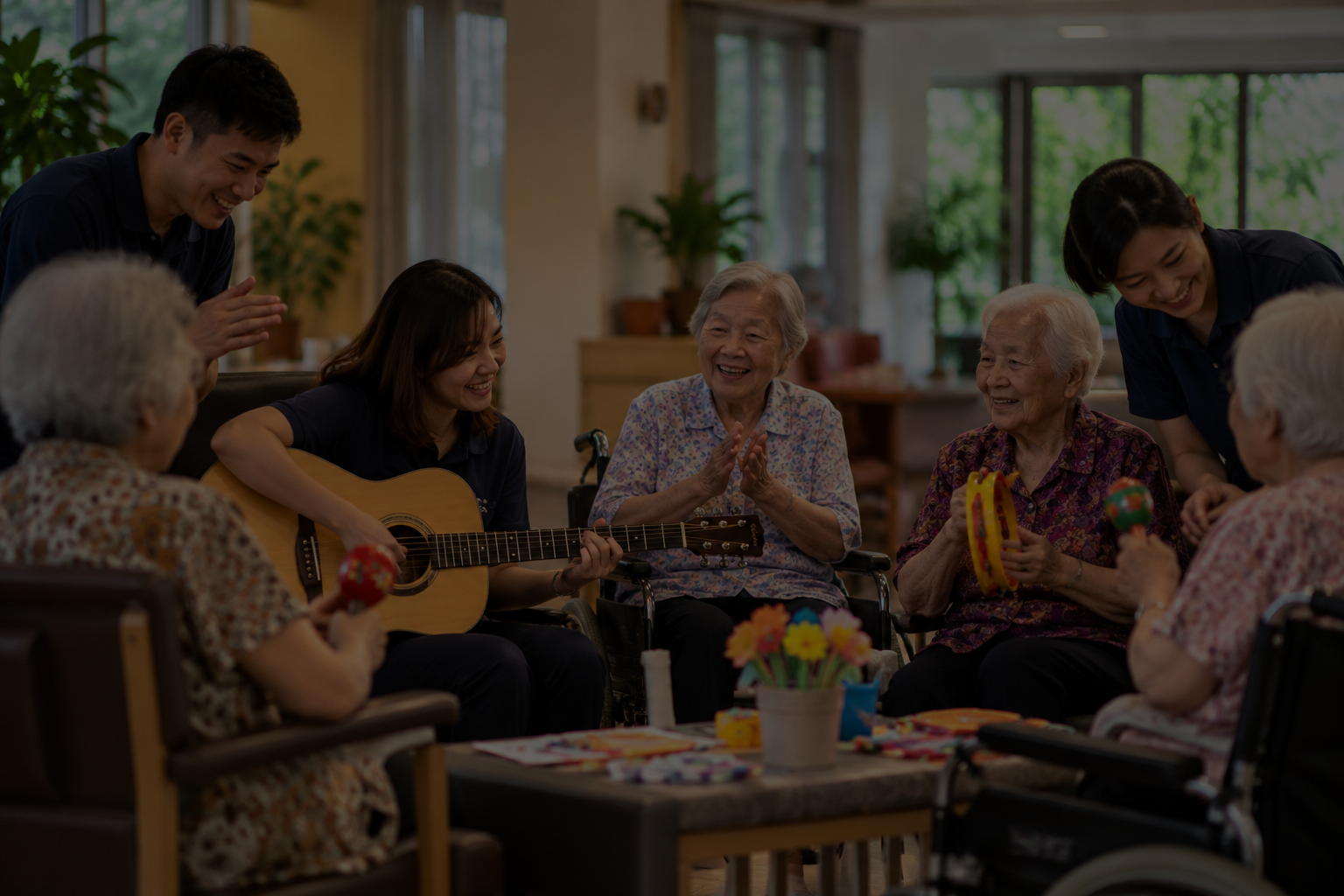
# \[CM\] \[JHA\] \[E3\] \[PB\] \[2\] \[C2\] Before Crisis Steps: Crisis Management Playbook to Manage Lone Wolf / Intruder Attack for Jamiyah Home for the Aged
*[](https://cta-redirect.hubspot.com/cta/redirect/3893111/bdc00ed8-f19a-4103-a408-1d726db0e452)*
This chapter gives the Before Crisis steps. It profiles the scenario, sets up the Crisis Management Team (CMT), defines when the playbook is activated, lists prevention and detection controls, prepares communications, describes the resources and command centre, sets out the training and exercise programme, and provides a readiness checklist. It closes with the action list of 13 actions. Chapter 3 then explains every action in detail. All roles, thresholds, time targets, and contacts in this chapter are illustrative and must be validated by JHA before the playbook is adopted.
[](https://cta-redirect.hubspot.com/cta/redirect/3893111/93e4d869-8de4-4ffd-8aad-33538c5ce0ee)
[Dr Goh Moh Heng](https://blog.bcm-institute.org/cm-v2/author/dr-goh-moh-heng) Nov 13, 2026
## Introduction
The best time to handle an intruder attack at Jamiyah Home for the Aged (JHA) is before it happens. The steps taken in calm conditions decide how quickly and safely the Home reacts when a person with harmful intent appears.
*[](https://cta-redirect.hubspot.com/cta/redirect/3893111/bdc00ed8-f19a-4103-a408-1d726db0e452)*
[](https://cta-redirect.hubspot.com/cta/redirect/3893111/1bf08c12-b11b-44cc-a7a5-3bd25c740d4c)
[](https://cta-redirect.hubspot.com/cta/redirect/3893111/89e6016a-3637-4825-b045-5f8073b76819)
## Scenario risk and impact profile
The scenario is a lone wolf or intruder attack. A lone wolf acts alone, may be unknown to the Home and may give little warning. The intruder may be a stranger, a former employee, a relative of a resident or a person in distress. Chapter 1 sets out four motivations: a violent cause, a mental episode, demands arising from perceived unfair treatment and revenge for a perceived dismissal or persecution.
The likely impacts are physical harm or death, severe fear and distress among residents who are frail or live with dementia, trauma among staff, disruption to care, damage to the Home's reputation and regulatory scrutiny. Because the effect on residents may last long after the incident, the Home treats this as a high-impact scenario even though it is of low likelihood.
The risk assessment in action B-03 will rate the likelihood of each pathway. Until it is completed, the Home plans for the most serious case: an armed or violent person inside the building, at night, with few staff on duty.
## Governance and CMT set-up
The CMT is the standing group that commands the response. It has 10 roles, listed in Table CMP-B1. Each role has a primary and an alternate who are named, trained and reachable. The Superintendent normally leads the CMT, and the Managing Agent, Jamiyah Singapore, approves the playbook and receives reports.
**Table CMP-B1: CMT roles, responsibilities and alternates (illustrative)**
| **Role** | **Responsibilities** | **Alternate** |
| --- | --- | --- |
| **Crisis Management Team Leader** | **Commands the response, activates the CMT, makes final decisions and is the single voice to the Managing Agent and Ministry of Social and Family Development (MSF).** | **Deputy Crisis Management Team Leader** |
| **Deputy Crisis Management Team Leader** | **Takes over command when the Leader is unavailable, runs the command centre and owns plan maintenance.** | **Senior Nurse on duty** |
| **Crisis Coordinator** | **Runs the secretariat: decision log, situation reports, liaison with Singapore Police Force (SPF) and Singapore Civil Defence Force (SCDF), drills and the lessons register.** | **Administrative Executive** |
| **Security and Safety Lead** | **Owns alarms, access control, staff conduct during an intrusion and the security review after it.** | **Facilities Supervisor** |
| **Resident Care Lead** | **Protects residents: shelter and lockdown zones, first aid, headcounts, medication continuity and family contact on care matters.** | **Senior Nurse on duty** |
| **Communications Lead** | **Owns messages to staff, families, the Managing Agent, the public and the media, and monitors social media.** | **Administrative Executive** |
| **Legal and Compliance Lead** | **Owns regulatory reporting to MSF, personal data duties, evidence preservation and legal advice.** | **Managing Agent legal adviser** |
| **HR and Staff Welfare Lead** | **Owns staff screening, grievance and exit handling, staff welfare, counselling access and return to work.** | **Deputy Crisis Management Team Leader** |
| **Facilities and IT Lead** | **Owns the building, doors, closed-circuit television (CCTV), public address and communications systems, and safe restoration of the premises.** | **Security and Safety Lead** |
| **Finance and Administration Lead** | **Owns emergency funds, insurance, claims, procurement and cost records.** | **Administrative Executive** |
Each role also has a short job card describing the first five things to do when the CMT is activated. The Crisis Coordinator keeps the cards with the playbook and reviews them after every drill.
## Activation triggers and escalation
The playbook is activated by any of the 3 severity levels in Chapter 1. Any staff member may raise the alarm and call 999 at any level, without approval. The Crisis Management Team Leader decides when to activate the full CMT and may do so in a Level 2 or Level 3 situation, or in response to any credible threat, even if no intruder is yet inside.
- **Escalate** when a weapon is seen, a person is hurt, a threat is made against a named person, or the intruder does not respond to calm requests to leave.
- **Hold at the current level** when the person has left, the Police have confirmed there is no threat, and a sweep of the premises is complete.
- **De-escalate** only on the Crisis Management Team Leader's decision, recorded in the decision log.
After-hours, the senior staff member on duty acts as the Crisis Management Team Leader until the Leader or the Deputy arrives.
## Prevention and detection controls
The controls below are assumptions to be validated against the site. They aim to deter an attacker, delay entry, give early warning and help staff respond, without making the Home feel like a fortress.
- Controlled entry with signed-in, badged visitors and locked secondary entrances.
- Closed-circuit television (CCTV) covering entrances and approaches, with an agreed retention period.
- Discreet alarm points and a quiet code word known to all staff.
- Lighting of entrances and paths, and clear sightlines from the front desk.
- Lockable shelter rooms away from entrances for residents and staff.
- A confidential channel for staff to report threats or worrying behaviour.
- Fair, documented handling of complaints, disciplinary action and exits.
Controls that affect residents' daily life, such as lockable doors, must be introduced with care and in line with the rules on restraint and the Home's Codes of Practice.
## Communication preparation
Pre-approved messages allow the Home to communicate within minutes. The Communications Lead prepares them for each severity level and each audience, and the Crisis Management Team Leader approves them in advance. Table CMP-B2 shows who owns each audience and how to reach them.
**Table CMP-B2: Stakeholder map for the intruder attack scenario**
| Stakeholder | Message owner | Channel and style |
| --- | --- | --- |
| **Residents** | **Resident Care Lead** | **Calm, simple, face-to-face, repeated; no alarming detail** |
| **Families and next of kin** | **Resident Care Lead** | **Phone call by a named nurse, then updates through the Communications Lead** |
| **Staff, volunteers and visitors on site** | **Crisis Management Team Leader** | **Agreed code word, in-person instructions, then staff messaging group** |
| **Singapore Police Force (SPF) and Singapore Civil Defence Force (SCDF)** | **Crisis Coordinator** | **999 call, then a single liaison person** |
| **Ministry of Social and Family Development (MSF)** | **Legal and Compliance Lead** | **Phone call from the Crisis Management Team Leader, then written report** |
| **Managing Agent leadership (Jamiyah Singapore)** | **Crisis Management Team Leader** | **Phone call, then situation reports** |
| **Personal Data Protection Commission (PDPC)** | **Legal and Compliance Lead** | **Online notification if a data breach is notifiable** |
| **Media and the public** | **Communications Lead** | **Approved holding statement; one spokesperson** |
| **Neighbouring community and partners** | **Communications Lead** | **Short factual notice after the Police agree** |
| **Insurers and counselling providers** | **Finance and Administration Lead** | **Notice and referral by phone and email** |
The holding statements are short templates with placeholders. Examples (to be validated by JHA):
- **Staff:** 'Code word. An incident is under way. Go to your shelter zone. Do not approach the person. The Police have been called.'
- **Families:** 'An incident is under way at the Home. The Police are in attendance, and residents are being protected. We will call you again at \[time\].'
- **Media:** 'The Home is dealing with an incident and is working with the Police. Residents' safety is our first priority. We will give a further update at \[time\].'
The statements never name victims, reveal where residents are sheltering or speculate about the person's motive.
## Resources and command centre
The CMT needs a place to meet and the tools to work. The primary command centre is a lockable room away from the entrance, with a copy of the playbook, floor plans, key lists, the contact tree, spare phones and chargers, a decision log, first aid supplies and a whiteboard. An alternate command centre, or a remote option using a conference line, is chosen for use when the building is unsafe.
The Facilities and IT Lead keeps the command centre equipment tested. The Finance and Administration Lead keeps the emergency spending authority and insurance details to hand.
## Training and exercise programme
Skills fade without practice. Table CMP-B3 sets out an illustrative programme that combines learning, discussion and rehearsal. Exercises are designed in consultation with the Police and never involve unannounced realistic scenarios that could frighten residents or neighbours.
**Table CMP-B3: Training and exercise programme (illustrative)**
| **Type** | **Frequency** | **Participants** | **Purpose** |
| --- | --- | --- | --- |
| **Induction briefing** | **On joining; refreshed yearly** | **All staff and volunteers** | **Code word, Run, Hide, Tell and do-not-confront rules** |
| **Shift walk-through** | **Twice a year per shift** | **Shift teams including nights** | **Practise shelter zones and quiet moves with residents** |
| **Table-top exercise** | **Twice a year** | **CMT and alternates** | **Test decisions, roles and communications** |
| **Communications drill** | **Yearly** | **Communications Lead, spokesperson** | **Test messages and approvals** |
| **Police-agreed live drill** | **Yearly or as the Police advise** | **CMT, selected staff** | **Test the interface with first responders** |
## Readiness checklist
The Crisis Coordinator uses the checklist below each quarter and reports gaps to the Crisis Management Team Leader.
**Table CMP-B4: Readiness checklist**
| **Item** | **Evidence** | **Owner** |
| --- | --- | --- |
| **Playbook approved and current** | **Signed approval and version number** | **Crisis Management Team Leader** |
| **CMT roster and alternates named** | **Roster with tested phone numbers** | **Deputy Crisis Management Team Leader** |
| **Alarm and code word tested** | **Monthly test record** | **Facilities and IT Lead** |
| **Shelter zones and resident plans current** | **Zone map and resident movement plans** | **Resident Care Lead** |
| **CCTV working and retained** | **Recorder check and retention setting** | **Facilities and IT Lead** |
| **External contacts verified** | **Directory checked in last 6 months** | **Crisis Coordinator** |
| **Holding statements approved** | **Signed statements on file** | **Communications Lead** |
| **Reporting checklist current** | **MSF and PDPC steps reviewed** | **Legal and Compliance Lead** |
| **Staff trained and drilled** | **Attendance and exercise records** | **Crisis Coordinator** |
## Before Crisis action list
The list below has 13 actions. Each has an owner from the CMT, a time target and an output that can be checked. Chapter 3 explains each action in turn.
**Table CMP-B5: Before Crisis action list**
| **ID** | **Action** | **Owner** | **Time target** | **Output** |
| --- | --- | --- | --- | --- |
| **B-01** | **Approve the playbook and confirm governance** | **Crisis Management Team Leader** | **Within 30 days of adoption** | **Signed approval and a version-controlled playbook** |
| **B-02** | **Appoint and train the Crisis Management Team** | **Deputy Crisis Management Team Leader** | **Within 60 days of approval** | **Named roster with alternates and contact tree** |
| **B-03** | **Assess intruder risk and vulnerabilities** | **Security and Safety Lead** | **Within 90 days, then yearly** | **Risk register and site vulnerability report** |
| **B-04** | **Strengthen access control and visitor management** | **Facilities and IT Lead** | **Within 120 days of risk assessment** | **Access control procedure and visitor log** |
| **B-05** | **Install alert and communication means** | **Facilities and IT Lead** | **Within 120 days of risk assessment** | **Tested alarm, code word and phone tree** |
| **B-06** | **Define shelter and lockdown zones and resident plans** | **Resident Care Lead** | **Within 120 days of risk assessment** | **Zone map and individual resident movement plans** |
| **B-07** | **Prepare staff response protocols** | **Security and Safety Lead** | **Within 150 days of risk assessment** | **One-page protocols and staff pocket cards** |
| **B-08** | **Establish links with external partners** | **Crisis Coordinator** | **Within 90 days, then yearly** | **Partner contact directory and shared site pack** |
| **B-09** | **Prepare communications** | **Communications Lead** | **Within 90 days of approval** | **Holding statements, scripts and approved spokespersons** |
| **B-10** | **Prepare legal, compliance and data readiness** | **Legal and Compliance Lead** | **Within 90 days of approval** | **Reporting checklist and evidence preservation procedure** |
| **B-11** | **Build early warning and staff wellbeing safeguards** | **HR and Staff Welfare Lead** | **Within 120 days of approval** | **Grievance, exit and concern-reporting procedures** |
| **B-12** | **Secure budget, insurance and recovery resources** | **Finance and Administration Lead** | **Within 150 days of approval** | **Funded plan, insurance review and emergency purchase approval** |
| **B-13** | **Train, drill and test, then review readiness** | **Crisis Coordinator** | **Drills twice a year; readiness review yearly** | **Exercise reports and readiness checklist** |
## [](https://cta-redirect.hubspot.com/cta/redirect/3893111/cef2aa74-66d4-4c52-9382-0626b894e2f3)
## Conclusion
Preparation turns a frightening possibility into a managed risk. With the CMT in place, controls tested, messages ready, and staff practised, JHA can respond to an intruder with calm, speed, and care for those who need it most.
Chapter 3 now breaks the 13 actions in this list into purpose, steps and common mistakes, so that each owner knows exactly what is expected of them.
To build these skills for your own organisation, explore the programmes at [https://blog.bcm-institute.org/certification](https://blog.bcm-institute.org/certification).
## **Comments**

---

---

---

---


All rights reserved. Copyright 2026
```json
{
"@context" : "https://schema.org",
"@type" : "BlogPosting",
"author" : {
"@type" : "Person",
"name" : "Dr Goh Moh Heng",
"url" : "https://blog.bcm-institute.org/cm-v2/author/dr-goh-moh-heng"
},
"dateModified" : "2026-11-13T01:43:18.159Z",
"datePublished" : "2026-11-13T01:43:18.000Z",
"headline" : "[CM] [JHA] [E3] [PB] [2] [C2] Before Crisis Steps: Crisis Management Playbook to Manage Lone Wolf / Intruder Attack for Jamiyah Home for the Aged",
"mainEntityOfPage" : {
"@id" : "https://blog.bcm-institute.org/cm-v2/cm-jha-e3-pb-2-c2-before-crisis-steps-crisis-management-playbook-to-manage-lone-wolf-/-intruder-attack-for-jamiyah-home-for-the-aged",
"@type" : "WebPage"
},
"publisher" : {
"@type" : "Organization",
"logo" : {
"@type" : "ImageObject",
"url" : "https://blog.bcm-institute.org/hubfs/BCMI%20Logo.png"
},
"name" : "BCMI Pte Ltd"
}
}
```