---
title: [BCM] [TE] [Haze] Design Profile for Severe Haze Scenario
description: [BCM] [TE] [Haze] Design Profile for Severe Haze Scenario
image: https://blog.bcm-institute.org/hubfs/Haze%20Morepost/IC_Haze_Level%201_BCP%20for%20Haze%20Scenario.png
---
[](http://www.bcm-institute.org/)
- [Home](https://www.bcm-institute.org/)
- [About Us](https://www.bcm-institute.org/about-us-3/)
- [A President’s Perspective](https://www.bcm-institute.org/about-us/a-presidents-perspective/)
- [Our History](https://www.bcm-institute.org/about-us/our-history/)
- [Our Advisory Council](https://www.bcm-institute.org/about-us/our-advisory-council/)
- [Customers’ Testimonials](https://www.bcm-institute.org/about-us/customers-testimonials/)
- [Credential Verification](https://www.bcm-institute.org/about-us/credential-verification/)
- [Courses](https://blog.bcm-institute.org/blog/course-fees-for-blended-learning-courses-master-catalog)
- [ISO 22301 Business Continuity Management System Audit](https://blog.bcm-institute.org/audit/business-continuity-management-audit-courses)
- [ISO 22301 Business Continuity Management](https://blog.bcm-institute.org/bcm/business-continuity-management-courses)
- [Crisis Communication](https://blog.bcm-institute.org/crisis-communication/crisis-communication-courses)
- [Crisis Management](https://blog.bcm-institute.org/en/crisis-management/courses)
- [IT Disaster Recovery](https://blog.bcm-institute.org/it-disaster-recovery/courses)
- [Operational Resilience](https://blog.bcm-institute.org/operational-resilience/courses)
- [Operational Resilience Audit](https://blog.bcm-institute.org/operational-resilience-audit/courses)
- [Certification](https://blog.bcm-institute.org/certification/types-of-certifications-offered)
- [ISO 22301 BCMS Audit Certification](https://blog.bcm-institute.org/certification/business-continuity-management-audit-certification)
- [ISO22301 Business Continuity Management Certification](https://blog.bcm-institute.org/bcm/business-continuity-management-certification)
- [Crisis Communication Certification](https://blog.bcm-institute.org/crisis-communication/crisis-communication-certification)
- [Crisis Management Certification](https://blog.bcm-institute.org/en/crisis-management/crisis-management-certification)
- [IT Disaster Recovery Planning Certification](https://blog.bcm-institute.org/it-disaster-recovery/it-disaster-recovery-certification)
- [Operational Resilience Certification](https://blog.bcm-institute.org/operational-resilience/operational-resilience-certification)
- [Operational Resilience Audit Certification](https://blog.bcm-institute.org/operational-resilience-audit)
- [Seminars](https://blog.bcm-institute.org/meet-the-expert/mte-webinar-mainpage)
- [Store](https://www.bcm-institute.org/store-2/)
- [Contact Us](http://www.bcm-institute.org/about-us/contact-us/)
-
-
##### Business Continuity Management: Testing and Exercising
# \[BCM\] \[TE\] \[Haze\] Design Profile for Severe Haze Scenario
[](https://cta-redirect.hubspot.com/cta/redirect/3893111/05ab08af-9acb-430c-8a4d-030a6a0e0fe2)
[](https://cta-redirect.hubspot.com/cta/redirect/3893111/06c64f67-1942-40d3-ba24-20b1267e12a9)This profile follows the fields in BCM Institute’s Design Profile (Master) and incorporates the haze-planning article’s emphasis on staff safety, critical business functions, communication, resources, external dependencies and recovery.
It assumes a Singapore organisation with an office, customer-facing and outdoor activities.
### [](https://cta-redirect.hubspot.com/cta/redirect/3893111/524571c5-9b2d-49b0-87de-051375bff2c3)
[Moh Heng Goh](https://blog.bcm-institute.org/bcm/author/moh-heng-goh) Oct 25, 2026
###### Business Continuity Management Certified Planner-Specialist-Expert
### ****
### **Design Profile for Walk-through (Tabletop) Exercise for Exercise HAZE SHIELD**
**Scenario: Severe Haze Crisis Attributed to a Super El Niño and the Indian Ocean Dipole and smoke from Indonesia**
### [](https://cta-redirect.hubspot.com/cta/redirect/3893111/9bb48b4d-4035-4aff-bfdd-b88a76b3982a)
### **Completed Design Profile:** Walkthrough Test Template
#### **Exercise HAZE SHIELD — Sustaining Critical Operations During Severe Haze**
[](https://cta-redirect.hubspot.com/cta/redirect/3893111/541a834a-4ffa-4c4f-8b85-02b865db8da8)This profile follows the fields in BCM Institute’s **Design Profile (Master)** and incorporates the haze-planning article’s emphasis on staff safety, critical functions, communication, resources, external dependencies and recovery.
It assumes a Singapore organisation with office, customer-facing and outdoor activities. [blog.bcm-institute.org](https://blog.bcm-institute.org/bcm/design-profile-master?utm_source=chatgpt.com)
**Background as at xx October 2026:** Singapore’s October haze provides the exercise context. NEA’s 14 October advisory reported smoke drifting from Kalimantan and forecast unhealthy to very unhealthy conditions.
Its latest advisory, issued on 23 October, forecasts PSI of **90–140, moderate to unhealthy, for xx October**. The exercise therefore simulates a renewed deterioration into severe haze; the higher readings below are fictional exercise inputs, not current measurements. [nea.gov.sg](https://www.nea.gov.sg/media/news/advisories/index/haze-situation-update-14-october-2026?utm_source=chatgpt.com)
#### **Design Profile**
#### **Exercise information**
| Design-profile field | Completed profile |
| --- | --- |
| **Name of exercise** | **Exercise HAZE SHIELD: Severe Haze Business Continuity Tabletop Exercise** |
| **Objective** | Assess whether the organisation can protect people, activate its haze arrangements, sustain prioritised critical business functions and restore operations during a prolonged haze episode. Validate decision authority, escalation, minimum staffing, workplace arrangements, supplier contingencies and stakeholder communication. |
| **Type of exercise** | Facilitated, discussion-based tabletop exercise with progressive scenario injects, simulated management decisions and recorded responses. |
| **Scope and scale** | Organisation-wide exercise covering Singapore premises, remote workers, outdoor personnel, contractors and critical suppliers. Simulated incident duration: seven days, covering preparedness, response, sustained operations and restoration. |
| **Active involvement** | Crisis Management Team, BCM Coordinator, business-function recovery leaders, HR, Workplace Safety and Health (WSH), Facilities, IT, Procurement, Customer Service and Corporate Communications assess injects and produce decisions and action plans. |
| **Passive involvement** | Senior management, internal audit, and selected departmental representatives observe. The control team represents non-participating customers, suppliers, authorities and media. |
| **Degree of involvement** | Strategic and operational decision-making. Participants use existing plans and identify the people, resources and approvals required to implement their decisions. No live evacuation, production interruption or external notification is required. |
| **Components/ elements — Plans** | Haze response procedures; crisis escalation and activation arrangements; business continuity plans; business impact analysis; staff communication procedures; remote-working arrangements; supplier contingencies; recovery and return-to-normal procedures. |
| **Components/ elements — People** | Leadership and deputies; accountability for monitoring and activation; staff welfare; arrangements for vulnerable employees; essential on-site roles; cross-trained substitutes; contractor coordination; shift relief and fatigue management. |
| **Components/ elements — Place** | Offices, customer service areas, loading bays and outdoor work areas; protected indoor workspaces; ventilation and filtration arrangements; remote-working locations; suitability of alternate premises exposed to the same regional haze. |
| **Components/ elements — Resources** | Minimum staffing; remote access and IT capacity; communication channels; suitable respiratory protection where assessed necessary; air-cleaning equipment and replacement filters; essential supplies; transport; emergency purchasing authority. |
| **Success criteria** | Within the agreed exercise response windows: **(1)** identify the authorised incident leader and deputy within 10 minutes of the activation inject; **(2)** record an activation decision and rationale within 15 minutes; **(3)** propose protective arrangements for every identified exposed or vulnerable staff group within 20 minutes; **(4)** issue a simulated approved staff advisory within 30 minutes; **(5)** demonstrate a feasible continuity arrangement for each selected critical function within its approved recovery time objective and minimum service requirement; **(6)** address each critical supplier failure with an owner and contingency; **(7)** define stand-down and restoration criteria. These are proposed exercise targets, not regulatory deadlines. |
| **Essential pre-conditions** | Sponsor approves objectives, scope and evaluation criteria. Participants have current plans, contact lists, business impact analysis, staffing requirements and supplier information. WSH/HR confirm applicable haze guidance. Controllers prepare injects and evaluation forms. Sanitise exercise information where necessary. |
| **Participants — Internal** | Executive sponsor; Crisis Management Team leader and deputy; BCM Coordinator; business-function heads; HR; WSH; Facilities; IT; Procurement; Communications; Customer Service; Finance; evaluators and recorders. |
| **Participants — External** | Selected landlord/building manager, facilities contractor, logistics provider, critical supplier and occupational health adviser, where invited. Controllers represent authorities, emergency services, customers, and the media. |
#### **Conduct of Exercise**
| Design-profile field | Completed profile |
| --- | --- |
| **Date** | Proposed: **X November 2026**, subject to the organisation’s scheduling arrangements. Refresh the factual haze background immediately before delivery. |
| **Start time** | 9:00 a.m., Singapore time. |
| **End time** | 12:30 p.m., Singapore time. |
| **Duration** | 3 hours 30 minutes: briefing 20 minutes; preparedness 25 minutes; escalation 35 minutes; break 10 minutes; sustained operations 45 minutes; restoration 30 minutes; hot debrief 45 minutes. |
| **Location** | Indoor meeting room with suitable air quality and video-conferencing facilities. Conduct fully online if prevailing conditions make attendance unsuitable. |
| **Frequency — Mandatory** | Include in the organisation’s approved exercise programme where required by its own policies or applicable obligations. This profile does not assume a universal mandatory frequency. |
| **Frequency — Desirable** | Conduct before the anticipated haze-risk period and repeat after significant changes to premises, staffing, critical suppliers or continuity arrangements. Retest material gaps after corrective action. |
| **Notice/ warning requirement** | Give participants two weeks’ notice of scope, attendance and preparation requirements. Keep detailed injects confidential. Mark exercise communications **“EXERCISE ONLY”** and explain how a real incident will interrupt or terminate the session. |
| **Briefing of participants** | Explain objectives, roles, exercise clock, assumptions, available plans and evaluation method. Require each response to identify the decision, authority, owner, completion time, resources and supporting evidence. Record unavailable capabilities as gaps. |
| **Scenario** | Following Singapore’s October 2026 haze episode, a temporary improvement is followed by renewed smoke intrusion. Simulated 24-hour PSI rises from 150 to 230, then 320 over successive days. Staff availability falls, indoor air quality becomes a concern, essential deliveries are delayed, and customer demand continues. Management must sustain critical functions safely for seven days while managing uncertain forecasts and recovery. |
| **Write test plan** | BCM Coordinator prepares the exercise plan, participant brief, scenario narrative, master inject schedule, controller instructions, evaluation checklist, decision log, communication templates and debrief forms. Sponsor approves the package before delivery. |
| **Budget for the exercise** | Illustrative direct-cost ceiling: **S$2,000**, excluding staff time. Allocate S$600 for preparation/materials, S$400 for meeting or conferencing arrangements, S$600 for facilitation/documentation support and S$400 contingency. Existing internal resources may reduce expenditure. |
| **Execution/ monitoring — Controllers** | Lead facilitator controls pace and discussion. Scenario controller releases injects and represents external parties. Evaluators assess objectives and evidence. Recorder captures decisions and unresolved issues. WSH adviser reviews proposed protective actions. Sponsor may pause or stop the exercise for a real incident. |
The exercise should require participants to distinguish **1-hour PM2.5 readings for immediate outdoor-activity decisions** from the **PSI forecast and associated health advisories for planning ahead**.
Workplace decisions must also consider exposure, work intensity and individual vulnerability using applicable MOM guidance. [nea.gov.sg](https://www.nea.gov.sg/media/news/advisories/index/haze-situation-update-14-october-2026?utm_source=chatgpt.com)
#### **Scenario Progression and Discussion Injects**
All figures, operational failures and messages in this table are **simulated**. Reference to T24: Exercise Incident Sheet (Master) in Assignment.
| Stage/ exercise time | Scenario inject | Required decisions and evidence |
| --- | --- | --- |
| **1. Preparedness — 9:20–9:45** | **Day 0:** Following temporary improvement, the simulated next-day PSI forecast is 150–200. Outdoor activities, deliveries and customer appointments remain scheduled. | Assign monitoring responsibility and update frequency. Review exposed roles and vulnerable staff arrangements. Check filtration, supplies, remote access and critical supplier readiness. Record readiness gaps and preventive actions. |
| **2. Activation — 9:45–10:05** | **Day 1, 8:00 a.m.:** Simulated 24-hour PSI reaches 230. A separate 1-hour PM2.5 reading of 180 µg/m³ is provided. Employees ask whether to report for work; an outdoor contractor intends to continue normal duties. | Interpret the indicators separately. Decide whether to activate haze and continuity arrangements. Identify who can restrict work, approve remote working and authorise expenditure. Produce an initial situation report and staff advisory. |
| **3. People and premises — 10:05–10:20** | Staff report eye irritation and respiratory discomfort. Absence reaches 20%. Facilities reports reduced filtration performance in one occupied area. | Determine immediate welfare and medical escalation arrangements. Assess workspace suitability and options for reassignment or relocation. Confirm minimum staffing for essential on-site functions and contractor controls. Document decisions and owners. |
| **Break — 10:20–10:30** | Controllers consolidate outstanding decisions. | Evaluators identify matters requiring clarification in the next stage. |
| **4. Sustained disruption — 10:30–10:55** | **Day 2:** Simulated PSI reaches 320. Staff unavailability reaches 35%. A critical supplier delays delivery by 48 hours; replacement filters are scarce. | Prioritise critical functions against approved service requirements. Decide which work to defer. Assess inventory endurance, substitutes, alternate suppliers, staff rotation and emergency procurement. Explain why any alternate site would remain suitable during regional haze. |
| **5. Capacity and communication — 10:55–11:15** | Remote access supports only 60% of planned concurrent users. Customer backlogs rise. A social media post alleges that employees are being required to work in unsafe conditions. | Prioritise remote access, shifts and approved workarounds. Prepare customer updates and a holding statement based on verified facts. Assign investigation and approval responsibilities. Produce a 72-hour continuity resource forecast and escalation decisions. |
| **6. Restoration — 11:15–11:45** | **Days 5–7:** Simulated readings improve, but further haze remains possible. Staff are fatigued, backlogs persist, and filtration maintenance is incomplete. | Set phased return criteria, premises checks and staffing arrangements. Plan backlog clearance, replenishment and contractor coordination. Identify who authorises stand-down, what monitoring continues and what would trigger reactivation. |
#### **Documentation and Post-Exercise Actions**
| Design-profile field | Completed profile |
| --- | --- |
| **Exercise report — Auditable documentation** | Retain the approved profile and exercise plan, attendance, plan versions used, injects, situation reports, decision logs, simulated messages, evaluator records and action register. Record exercise timings separately from simulated incident timings. |
| **Exercise report — Events and degree of success** | For each objective, record the inject, expected response, observed decision, elapsed exercise time, evidence and result. Rate performance as Achieved, **Partially achieved** or **Not achieved**, with reasons. Separate demonstrated capability from unverified assumptions. |
| **Review/ measure — Post-mortem meeting** | Conduct the immediate hot debrief from 11:45 a.m. to 12:30 p.m. Hold a structured review within five working days to examine activation, worker protection, continuity capacity, dependencies, communication and restoration decisions. |
| **Post-exercise action plan** | Issue a draft report within ten working days. Record each finding, operational consequence, root cause, corrective action, accountable owner, priority, due date and evidence required for closure. |
| **Documentation linked to maintenance/ reporting** | Link actions to the relevant haze procedure, continuity plan, risk assessment, supplier arrangement, training programme or resource request. Escalate unresolved resource and risk decisions to the sponsor. |
| **Tracking/ maintenance/ follow-up** | BCM Coordinator reviews progress monthly. Owners submit completion evidence; evaluators verify effectiveness before closure. Retest significant activation, staffing, premises or supplier gaps within an agreed period, provisionally 60–90 days. Amend controlled plans and brief affected personnel. |
A tabletop can establish whether decisions and arrangements are credible.
**Remote-access capacity, filtration performance, supplier availability, and protective-equipment readiness require supporting checks or practical tests before they are treated as verified capabilities.**
[](https://cta-redirect.hubspot.com/cta/redirect/3893111/af76bb57-f906-4422-8548-3912930c76a7)
##### Supplementary Blogs to Elaborate Haze-Specific Details
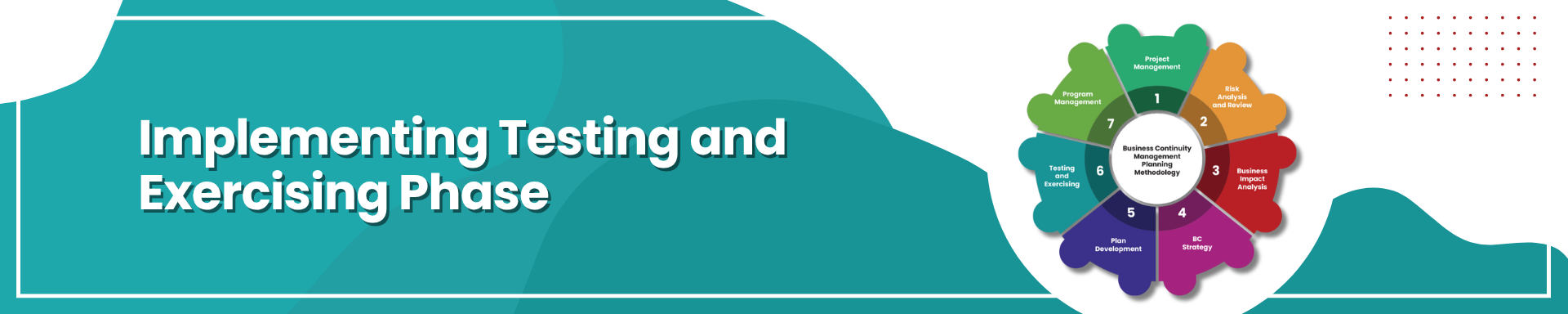
Refer to the table of contents above. The additional blogs highlighted in green elaborate on the selected section. Click the icon below to access the additional readings for the specific section.
| **Project Management** | **Risk Analysis and Review** | **Plan Development** |
| --- | --- | --- |
| **\[PM\] Objective and Scope of Plan** | **\[RAR\] Haze Scenario Overview** | **\[PD\] Preparedness Measures** |
| **1.1 to 1.2** | **2.1** | **5.1 to 5.7** |
| [](https://cta-redirect.hubspot.com/cta/redirect/3893111/0eb034c7-06f9-4b4b-ac59-fec25e9076a7) | [](https://cta-redirect.hubspot.com/cta/redirect/3893111/8d3547cc-2df8-4c3b-81d3-960903949866) | [](https://cta-redirect.hubspot.com/cta/redirect/3893111/cd16befa-57bd-421f-af46-ab0321d39715) |
| **Plan Development** | | |
| **\[PD\] Incident Response and Recovery** | | **Back to Table of Contents** |
| **5.8 to 5.13** | | |
| [](https://cta-redirect.hubspot.com/cta/redirect/3893111/66ae5249-38a3-4d58-8e87-8f85fd009b27) | | [](https://cta-redirect.hubspot.com/cta/redirect/3893111/921dd6f9-b572-4855-b4da-eb001048c258) |
#### Learn more about BCM-5000 \[B-5\] and BCM-
#### More Information About Business Continuity Management Courses
To learn more about the course and schedule, click the buttons below for the BCM-300 Business Continuity Management Implementer \[BCM-3\] and the BCM-5000 Business Continuity Management Expert Implementer \[BCM-5\].
| [](https://cta-redirect.hubspot.com/cta/redirect/3893111/f3922b80-e96a-46d6-8993-dc150a5de2d5) | [](https://cta-redirect.hubspot.com/cta/redirect/3893111/9ff8a3dc-e39a-465b-929f-72e232cdd5fb) | [](https://cta-redirect.hubspot.com/cta/redirect/3893111/ac6cf073-4cdd-4541-91ed-889f731d5076) |
| --- | --- | --- |
| [](https://cta-redirect.hubspot.com/cta/redirect/3893111/21525c10-4003-4934-95fc-fe218174bc5b) | [](https://cta-redirect.hubspot.com/cta/redirect/3893111/46460171-c91a-4936-9bb2-8dc5928a0e02) | [](https://cta-redirect.hubspot.com/cta/redirect/3893111/1cb17ac7-50b2-4f88-bc4b-c7444e4b57b5) |
| [](https://cta-redirect.hubspot.com/cta/redirect/3893111/b3824ba1-7aa1-4eb6-bef8-94f57121c5ae) | Please feel free to send us a note if you have any questions. [](https://cta-redirect.hubspot.com/cta/redirect/3893111/3c53daeb-2836-4843-b0e0-645baee2ab9e) | [](https://cta-redirect.hubspot.com/cta/redirect/3893111/9c199ae8-c470-4bb7-9612-73c7a084e94c) |
| [](https://cta-redirect.hubspot.com/cta/redirect/3893111/8999211a-2c51-4be7-bf49-c393f6c67974) | [](https://cta-redirect.hubspot.com/cta/redirect/3893111/5c1aa95d-f6dd-4067-a95c-5cc0c32d7ed8) | [](https://cta-redirect.hubspot.com/cta/redirect/3893111/086ab3b9-4d66-4a95-b2f7-1148e9803a9c) |
#### **Comments**
### More Posts
[](https://cta-redirect.hubspot.com/cta/redirect/3893111/839787f4-a4fd-456f-accf-54c947026558)

All rights reserved. Copyright 2026