---
title: "[BCM] [EGH] [E3] [BCS] [T3] CBF [1] Emergency Department Services"
description: EGH minimum staff, seats, devices and equipment to run recovery for 12 emergency department Sub-CBFs in CBF-1 at their MBCO, under ISO 22301 and ISO 22313.
---
.
[](http://www.bcm-institute.org/)
- [Home](https://www.bcm-institute.org/)
- [About Us](https://www.bcm-institute.org/about-us-3/)
- [A President’s Perspective](https://www.bcm-institute.org/about-us/a-presidents-perspective/)
- [Our History](https://www.bcm-institute.org/about-us/our-history/)
- [Our Advisory Council](https://www.bcm-institute.org/about-us/our-advisory-council/)
- [Customers’ Testimonials](https://www.bcm-institute.org/about-us/customers-testimonials/)
- [Credential Verification](https://www.bcm-institute.org/about-us/credential-verification/)
- [Courses](https://blog.bcm-institute.org/blog/course-fees-for-blended-learning-courses-master-catalog)
- [ISO 22301 Business Continuity Management System Audit](https://blog.bcm-institute.org/audit/business-continuity-management-audit-courses)
- [ISO 22301 Business Continuity Management](https://blog.bcm-institute.org/bcm/business-continuity-management-courses)
- [Crisis Communication](https://blog.bcm-institute.org/crisis-communication/crisis-communication-courses)
- [Crisis Management](https://blog.bcm-institute.org/en/crisis-management/courses)
- [IT Disaster Recovery](https://blog.bcm-institute.org/it-disaster-recovery/courses)
- [Operational Resilience](https://blog.bcm-institute.org/operational-resilience/courses)
- [Operational Resilience Audit](https://blog.bcm-institute.org/operational-resilience-audit/courses)
- [Certification](https://blog.bcm-institute.org/certification/types-of-certifications-offered)
- [ISO 22301 BCMS Audit Certification](https://blog.bcm-institute.org/certification/business-continuity-management-audit-certification)
- [ISO22301 Business Continuity Management Certification](https://blog.bcm-institute.org/bcm/business-continuity-management-certification)
- [Crisis Communication Certification](https://blog.bcm-institute.org/crisis-communication/crisis-communication-certification)
- [Crisis Management Certification](https://blog.bcm-institute.org/en/crisis-management/crisis-management-certification)
- [IT Disaster Recovery Planning Certification](https://blog.bcm-institute.org/it-disaster-recovery/it-disaster-recovery-certification)
- [Operational Resilience Certification](https://blog.bcm-institute.org/operational-resilience/operational-resilience-certification)
- [Operational Resilience Audit Certification](https://blog.bcm-institute.org/operational-resilience-audit)
- [Seminars](https://blog.bcm-institute.org/meet-the-expert/mte-webinar-mainpage)
- [Store](https://www.bcm-institute.org/store-2/)
- [Contact Us](http://www.bcm-institute.org/about-us/contact-us/)
-
-
###### Keeping Care Running: Managing and Implementing Business Continuity Management at Eastern General Hospital

# \[BCM\] \[EGH\] \[E3\] \[BCS\] \[T3\] CBF \[1\] Emergency Department Services
[](https://cta-redirect.hubspot.com/cta/redirect/3893111/dfa53785-5be1-4117-a1bc-43e40cdb42e8)
Chapter 9 chose a recovery strategy and location for each Sub-Critical Business Function (Sub-CBF) of CBF-1 Emergency Department Services at Eastern General Hospital (EGH). This chapter states the minimum people, seats, telephones, computers and other resources that each strategy needs to meet its minimum business continuity objective (MBCO).
### [](https://cta-redirect.hubspot.com/cta/redirect/3893111/8969ce47-38c2-4b89-88da-727979f12c39)
[Moh Heng Goh](https://blog.bcm-institute.org/bcm-v2/author/moh-heng-goh) Nov 18, 2026
## [](https://cta-redirect.hubspot.com/cta/redirect/3893111/c5748bd7-2a18-4a78-8cc9-7dcc65204af9)
### [](https://cta-redirect.hubspot.com/cta/redirect/3893111/2473a6fd-c3f8-42a1-9622-442761ec98fe)[](https://cta-redirect.hubspot.com/cta/redirect/3893111/8969ce47-38c2-4b89-88da-727979f12c39)
## Introduction
Chapter 9 chose a recovery strategy and location for each Sub-Critical Business Function (Sub-CBF) of CBF-1 Emergency Department Services at Eastern General Hospital (EGH). This chapter states the minimum people, seats, telephones, computers and other resources that each strategy needs to meet its minimum business continuity objective (MBCO).
Identifying minimum recovery resources supports Business Continuity Planning (BCP) because a strategy without resources is only an intention. The business impact analysis (BIA) says what must be restored, the strategy says how, and the resource plan says with what. Only the minimum is listed, because a disruption leaves little to spare and every extra seat or staff member is taken from somewhere else. Optimising limited resources means giving them first to the Sub-CBFs with the strictest objectives.
Figures are staffing levels per shift unless stated otherwise, and shared seats and devices are assumed wherever safe. All quantities are indicative planning assumptions for EGH to validate, and none is a regulatory requirement or a statement about the real design of the hospital.
## How the Minimums Were Derived
1. **Start from the MBCO:** take the service level that Chapter 3 requires, such as a staffed resuscitation bay or triage within 10 minutes (indicative).
2. **Apply the strategy:** use the recovery location and method from Chapter 9, for example paper triage at the entrance or an alternate treatment area.
3. **Count the people:** include the supervisory and checking roles that the safety floor requires, such as a second checker for medicines.
4. **Share what is safe to share:** assume shared seats, telephones and computers except where a role needs its own device at the bedside.
5. **List only essentials:** add equipment and consumables that the MBCO cannot be met without.
#### [](https://cta-redirect.hubspot.com/cta/redirect/3893111/7456e7dd-9e1f-4c07-a6f9-a39e58f74746)
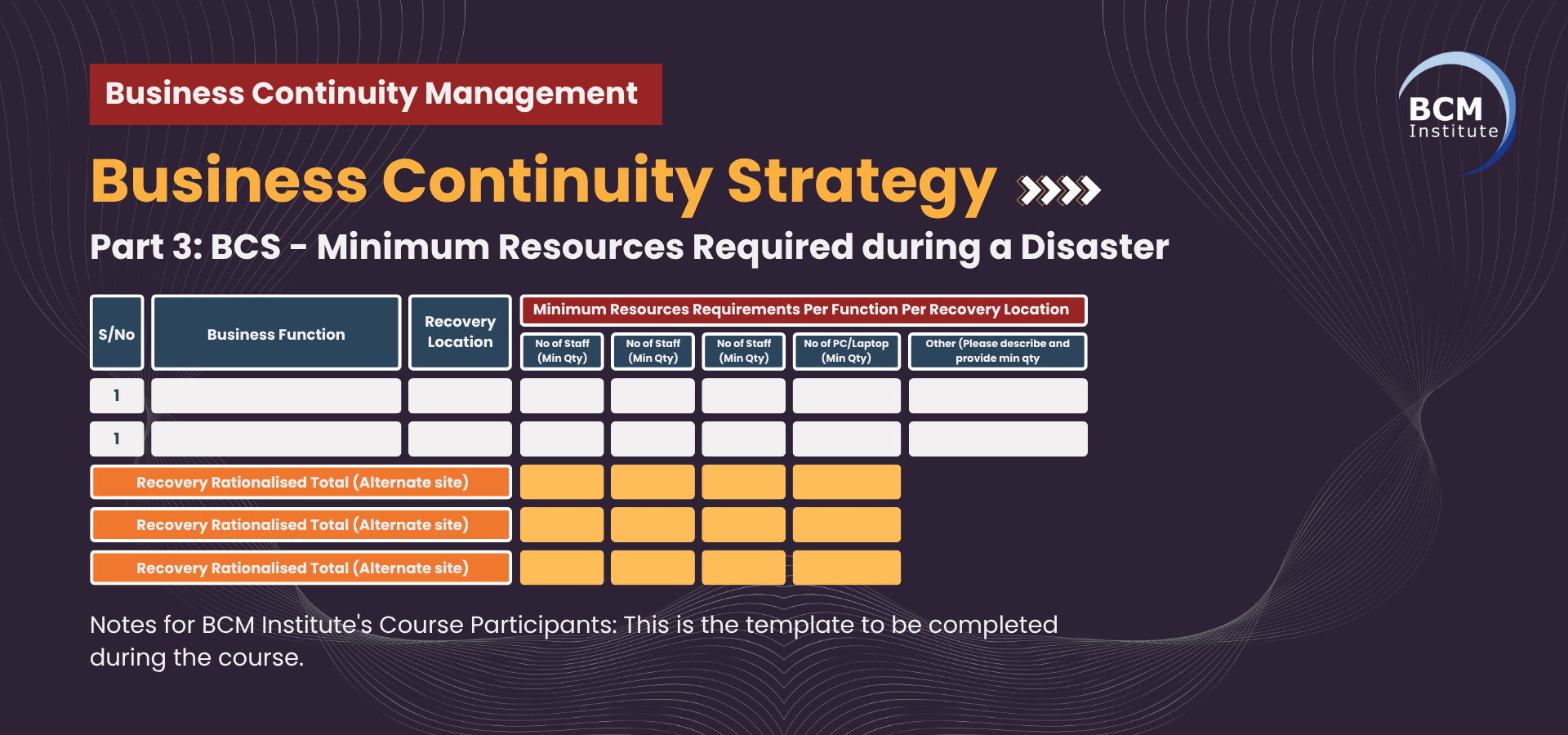
**Table 11: Minimum Resources Required during a Disaster for CBF-1 Emergency Department Services**
| **Sub-CBF Code** | **Sub-Critical Business Function** | **Recovery Location** | **Minimum Resource Requirements per Function per Recovery Location** | **Number of Staff (Minimum)** | **Number of Seats (Minimum)** | **Number of Telephones (Minimum)** | **Number of PCs/Laptops (Minimum)** | **Other Resources (Description and Minimum Quantity)** |
| --- | --- | --- | --- | --- | --- | --- | --- | --- |
| **CBF-1.1** | **Ambulance Arrival and Pre-hospital Handover** | **Primary Emergency Department** | **Two nurses and one doctor on call for the bay, radios, a handover book and a phone line. A clear bay and a stretcher are needed.** | **3** | **2** | **2** | **1** | **2 portable radios; 1 handover log book; 2 stretchers** |
| **CBF-1.2** | **Triage and Registration** | **Primary Emergency Department** | **Triage nurses at the entrance, a registration clerk, identity bands, thermometers and blood pressure monitors.** | **4** | **3** | **2** | **3** | **3 band printers; 2 barcode scanners; 4 vital sign monitors** |
| **CBF-1.3** | **Resuscitation and Life-Saving Intervention** | **Primary Emergency Department (resuscitation bay)** | **A senior doctor, a second doctor, three nurses and one technician, with one fully equipped resuscitation bay.** | **6** | **2** | **2** | **2** | **1 defibrillator; 1 ventilator; 1 airway trolley; 1 emergency drug box; 1 portable monitor** |
| **CBF-1.4** | **Emergency Assessment and Treatment** | **Alternate treatment area within the hospital if the main area is lost** | **Doctors and nurses for the high and medium priority areas, with beds, monitors and access to the record.** | **10** | **6** | **4** | **6** | **6 portable monitors; 2 point-of-care testing devices; 1 procedure trolley** |
| **CBF-1.5** | **Emergency Diagnostic Requesting and Results Review** | **Primary Emergency Department** | **A clerk and a nurse to raise and track requests, and a runner on call for samples and images.** | **3** | **2** | **2** | **2** | **2 label printers; 1 transport trolley; 1 runner on call** |
| **CBF-1.6** | **Emergency Medication Administration** | **Primary Emergency Department** | **A nurse, a second checker and a pharmacist for time-critical medicines, with emergency stock and charts.** | **3** | **2** | **1** | **2** | **2 barcode scanners; 4 infusion pumps; 1 controlled drug cabinet** |
| **CBF-1.7** | **Infection Screening and Isolation** | **Alternate treatment area within the hospital with isolation capability** | **A nurse, a cleaner trained for isolation rooms and an infection prevention adviser, with one isolation space.** | **3** | **1** | **1** | **1** | **1 isolation room; 50 sets protective equipment; 1 portable air filtration unit** |
| **CBF-1.8** | **Emergency Observation and Short-Stay Care** | **Alternate treatment area within the hospital** | **Nurses to monitor patients at the set interval, with a doctor available for review.** | **6** | **3** | **2** | **3** | **8 portable monitors; 8 paper observation charts per shift** |
| **CBF-1.9** | **Patient Disposition, Transfer and Family Communication** | **Primary Emergency Department** | **Nurses and a patient flow coordinator to arrange beds, transfers and family updates.** | **3** | **3** | **3** | **3** | **1 manual bed list; 2 transport trolleys; 1 referral form pack** |
| **CBF-1.10** | **Surge and Mass Casualty Response** | **Hospital command centre** | **A commander, a deputy, a nurse coordinator, a logistics lead and a scribe, with radios and call-out lists.** | **5** | **4** | **6** | **3** | **1 mass casualty kit; 100 triage tags; 2 whiteboards; 2 radios** |
| **CBF-1.11** | **Patient Identification and Clinical Documentation** | **Primary Emergency Department** | **Two clerks trained in temporary identity and downtime recording, with kits.** | **2** | **2** | **1** | **2** | **50 identity bands; 1 band printer; 1 downtime paper form pack** |
| **CBF-1.12** | **Emergency Staff Deployment and Shift Handover** | **Primary Emergency Department and remote working** | **A nurse in charge and a roster coordinator, with printed contact lists and a handover template.** | **2** | **2** | **3** | **2** | **1 printed call-in list; 1 secure messaging group; 12 handover forms** |
| **Total** | **All 12 Sub-CBFs (indicative, not all needed at once)** | | | **50** | **32** | **29** | **30** | |
The totals are 50 staff, 32 seats, 29 telephones and 30 computers. The largest staffing need is for Emergency Assessment and Treatment (10 staff). Because Sub-CBFs share space, the real requirement in an incident would be lower than the sum. All figures are illustrative.
## Using the Numbers
The totals are best read as a menu, not a shopping list. In a short, local disruption such as a power fault in one bay, only a few rows apply. In a major incident such as a flood or a long network failure, most rows apply at once, and the sum becomes a test of whether the hospital can staff the department from its own workforce.
Three uses follow. First, the call-in list should be sized to the largest realistic combination, not the average. Second, stocks of paper forms, bands, batteries and protective equipment should be set from the quantities in the table. Third, the quantities give the exercise team a clear pass mark: if a drill needs more seats or staff than the table allows, either the plan or the table must change.
#### [](https://cta-redirect.hubspot.com/cta/redirect/3893111/6cebfa28-ed8a-49d6-8978-797c3a577f9e)
A minimum resource plan makes Business Continuity Planning concrete. It tells the hospital how many people to call in, how much space to open, and which equipment to stock, before an incident instead of during one. It also shows where resources are tight: the largest needs come from the processes at the bedside, which cannot share seats or work from home.
Resource optimisation matters during a disruption because staff and space are limited. By stating the minimum, the plan lets leaders decide which activities to pause so that safety-critical Sub-CBFs are fully staffed. It also links the MBCO, the strategy, the location and the resources into one chain: change one, and the others must be checked.
Documenting these figures helps EGH prepare for, respond to and recover from incidents, in line with ISO 22301, ISO 22313 and the Singapore Government's business continuity management guidance. The numbers should be validated with the clinical and nursing leads, and tested in an exercise that asks whether the department can in fact run each Sub-CBF with only the resources listed.
**Continue reading:** Chapter 11, *Business Continuity Recovery Procedure for CBF-1*, brings the analysis together in a step-by-step recovery procedure for before, during and after a disruption.
[](https://cta-redirect.hubspot.com/cta/redirect/3893111/dfa53785-5be1-4117-a1bc-43e40cdb42e8)
| **eBook 3: Starting Your BCM Implementation** | | | | | | |
| --- | --- | --- | --- | --- | --- | --- |
| **MBCO** | **P&S** | **RAR T1** | **RAR T2** | **RAR T3** | **BCS T1** | **CBF** |
| [](https://cta-redirect.hubspot.com/cta/redirect/3893111/ea740ff8-0ea0-42c1-9f11-c24b8cd087a3) | [](https://cta-redirect.hubspot.com/cta/redirect/3893111/9104f712-e344-470e-b809-048054cfad24) | [](https://cta-redirect.hubspot.com/cta/redirect/3893111/fd22acee-e88b-4762-a90b-b6d289932a34) | [](https://cta-redirect.hubspot.com/cta/redirect/3893111/2235e2bd-1f0b-4111-9a41-270facd16917) | [](https://cta-redirect.hubspot.com/cta/redirect/3893111/63305687-a213-481b-ac6b-e0734a26b5b4) | [](https://cta-redirect.hubspot.com/cta/redirect/3893111/0a841fb1-e607-4172-ac9b-3de7f1de2978) | [](https://cta-redirect.hubspot.com/cta/redirect/3893111/cb4749ae-a696-4d2c-b505-28e05a8f4091) |
| **CBF-1 Emergency Department Services** | | | | | | |
| **DP** | **BIAQ P1** | **BIAQ P2** | **BIAQ P3** | **BIAQ P4** | **BIAQ P5** | **BIAQ P6** |
| [](https://cta-redirect.hubspot.com/cta/redirect/3893111/b89e5054-cf71-456e-b996-89da5973a55d) | [](https://cta-redirect.hubspot.com/cta/redirect/3893111/7550701a-f590-4ad0-8d3a-8cc50936525b) | [](https://cta-redirect.hubspot.com/cta/redirect/3893111/273cb818-0eb2-49df-b102-6f4ef4804ba1) | [](https://cta-redirect.hubspot.com/cta/redirect/3893111/c04c91f1-307a-47f5-a95d-5dc15f6d0ed4) | [](https://cta-redirect.hubspot.com/cta/redirect/3893111/e2fd4705-2cd7-4607-98a2-66476557b5fd) | [](https://cta-redirect.hubspot.com/cta/redirect/3893111/71a03cb6-3afb-4a79-b8c1-0de352046ceb) | [](https://cta-redirect.hubspot.com/cta/redirect/3893111/4b2de4a4-0f67-4cd4-9b47-3d59daedf32d) |
| | | **BCS T2** | **BCS T3** | **PD** | | |
| | | [](https://cta-redirect.hubspot.com/cta/redirect/3893111/9b0acf47-9cc8-4695-82e5-84ddcdfd980e) | [](https://cta-redirect.hubspot.com/cta/redirect/3893111/b275e253-db79-4f6c-a536-6dd24d0c073b) | [](https://cta-redirect.hubspot.com/cta/redirect/3893111/570141dc-2948-45fb-a58c-54f279601234) | | |
---
## **Comments**

---

---

---

---


All rights reserved. Copyright 2026
```json
{
"@context" : "https://schema.org",
"@type" : "BlogPosting",
"author" : {
"@type" : "Person",
"name" : "Moh Heng Goh",
"url" : "https://blog.bcm-institute.org/bcm-v2/author/moh-heng-goh"
},
"dateModified" : "2026-11-18T09:22:11.571Z",
"datePublished" : "2026-11-18T09:22:11.000Z",
"headline" : "[BCM] [EGH] [E3] [BCS] [T3] CBF [1] Emergency Department Services",
"mainEntityOfPage" : {
"@id" : "https://blog.bcm-institute.org/bcm-v2/chapter-9-minimum-resources-required-during-a-disaster-for-cbf-1",
"@type" : "WebPage"
},
"publisher" : {
"@type" : "Organization",
"logo" : {
"@type" : "ImageObject",
"url" : "https://blog.bcm-institute.org/hubfs/BCMI%20Logo.png"
},
"name" : "BCMI Pte Ltd"
}
}
```