---
title: "[BCM] [EGH] [E3] [BIA] [P5] CBF [1] Emergency Obstetric Services"
description: EGH internal and external dependencies behind 12 emergency department Sub-CBFs in CBF-1, with upstream, downstream and mutual direction, for ISO 22301 planning.
---
.
[](http://www.bcm-institute.org/)
- [Home](https://www.bcm-institute.org/)
- [About Us](https://www.bcm-institute.org/about-us-3/)
- [A President’s Perspective](https://www.bcm-institute.org/about-us/a-presidents-perspective/)
- [Our History](https://www.bcm-institute.org/about-us/our-history/)
- [Our Advisory Council](https://www.bcm-institute.org/about-us/our-advisory-council/)
- [Customers’ Testimonials](https://www.bcm-institute.org/about-us/customers-testimonials/)
- [Credential Verification](https://www.bcm-institute.org/about-us/credential-verification/)
- [Courses](https://blog.bcm-institute.org/blog/course-fees-for-blended-learning-courses-master-catalog)
- [ISO 22301 Business Continuity Management System Audit](https://blog.bcm-institute.org/audit/business-continuity-management-audit-courses)
- [ISO 22301 Business Continuity Management](https://blog.bcm-institute.org/bcm/business-continuity-management-courses)
- [Crisis Communication](https://blog.bcm-institute.org/crisis-communication/crisis-communication-courses)
- [Crisis Management](https://blog.bcm-institute.org/en/crisis-management/courses)
- [IT Disaster Recovery](https://blog.bcm-institute.org/it-disaster-recovery/courses)
- [Operational Resilience](https://blog.bcm-institute.org/operational-resilience/courses)
- [Operational Resilience Audit](https://blog.bcm-institute.org/operational-resilience-audit/courses)
- [Certification](https://blog.bcm-institute.org/certification/types-of-certifications-offered)
- [ISO 22301 BCMS Audit Certification](https://blog.bcm-institute.org/certification/business-continuity-management-audit-certification)
- [ISO22301 Business Continuity Management Certification](https://blog.bcm-institute.org/bcm/business-continuity-management-certification)
- [Crisis Communication Certification](https://blog.bcm-institute.org/crisis-communication/crisis-communication-certification)
- [Crisis Management Certification](https://blog.bcm-institute.org/en/crisis-management/crisis-management-certification)
- [IT Disaster Recovery Planning Certification](https://blog.bcm-institute.org/it-disaster-recovery/it-disaster-recovery-certification)
- [Operational Resilience Certification](https://blog.bcm-institute.org/operational-resilience/operational-resilience-certification)
- [Operational Resilience Audit Certification](https://blog.bcm-institute.org/operational-resilience-audit)
- [Seminars](https://blog.bcm-institute.org/meet-the-expert/mte-webinar-mainpage)
- [Store](https://www.bcm-institute.org/store-2/)
- [Contact Us](http://www.bcm-institute.org/about-us/contact-us/)
-
-
###### Keeping Care Running: Managing and Implementing Business Continuity Management at Eastern General Hospital

# \[BCM\] \[EGH\] \[E3\] \[BIA\] \[P5\] CBF \[1\] Emergency Obstetric Services
[](https://cta-redirect.hubspot.com/cta/redirect/3893111/dfa53785-5be1-4117-a1bc-43e40cdb42e8)
Chapter 6 listed the systems and equipment that each Sub-Critical Business Function (Sub-CBF) of CBF-1 Emergency Department Services at Eastern General Hospital (EGH) needs. Systems are only one kind of dependency. Every Sub-CBF also relies on other teams, other functions and outside organisations. This chapter maps the main dependency for each one.
[](https://cta-redirect.hubspot.com/cta/redirect/3893111/c7d00b8b-77c0-43ee-a2cf-76ea43b26fe8)

[Moh Heng Goh](https://blog.bcm-institute.org/bcm-v2/author/moh-heng-goh) Nov 18, 2026
## [](https://cta-redirect.hubspot.com/cta/redirect/3893111/c5748bd7-2a18-4a78-8cc9-7dcc65204af9)
## [](https://cta-redirect.hubspot.com/cta/redirect/3893111/1ff9c1d3-8fe0-4fff-905c-389cea69b26e)[](https://cta-redirect.hubspot.com/cta/redirect/3893111/c7d00b8b-77c0-43ee-a2cf-76ea43b26fe8)Introduction
Chapter 6 listed the systems and equipment that each Sub-Critical Business Function (Sub-CBF) of CBF-1 Emergency Department Services at Eastern General Hospital (EGH) needs. Systems are only one kind of dependency. Every Sub-CBF also relies on other teams, other functions and outside organisations. This chapter maps the main dependency for each one.
Dependency mapping matters in the business impact analysis (BIA) because disruptions often start outside the process that suffers from them. A pharmacy shortage stops medicine administration, a lift fault slows transfers, and a telecommunications outage stops ambulance alerts. If these links are not written down, nobody owns them and nobody plans for them.
Both internal and external dependencies matter. Internal ones are under the control of the hospital, so they can be agreed and rehearsed. External ones are not, so they need contracts, service levels and alternatives. Three directions are used. **Upstream** dependencies provide resources, information or approvals needed before the Sub-CBF can work. **Downstream** dependencies need the output of the Sub-CBF. **Mutual** dependencies run both ways, so each party relies on the other.
Understanding these links supports business continuity planning, third-party risk management and operational resilience. The partners named below are assumptions, based on the hospital's catalogue of 25 Critical Business Functions and on the role of an acute hospital in Singapore. They are not statements about real contracts.
#### [](https://cta-redirect.hubspot.com/cta/redirect/3893111/ed6152ff-4926-4fae-bd6b-ba572bcc781b)
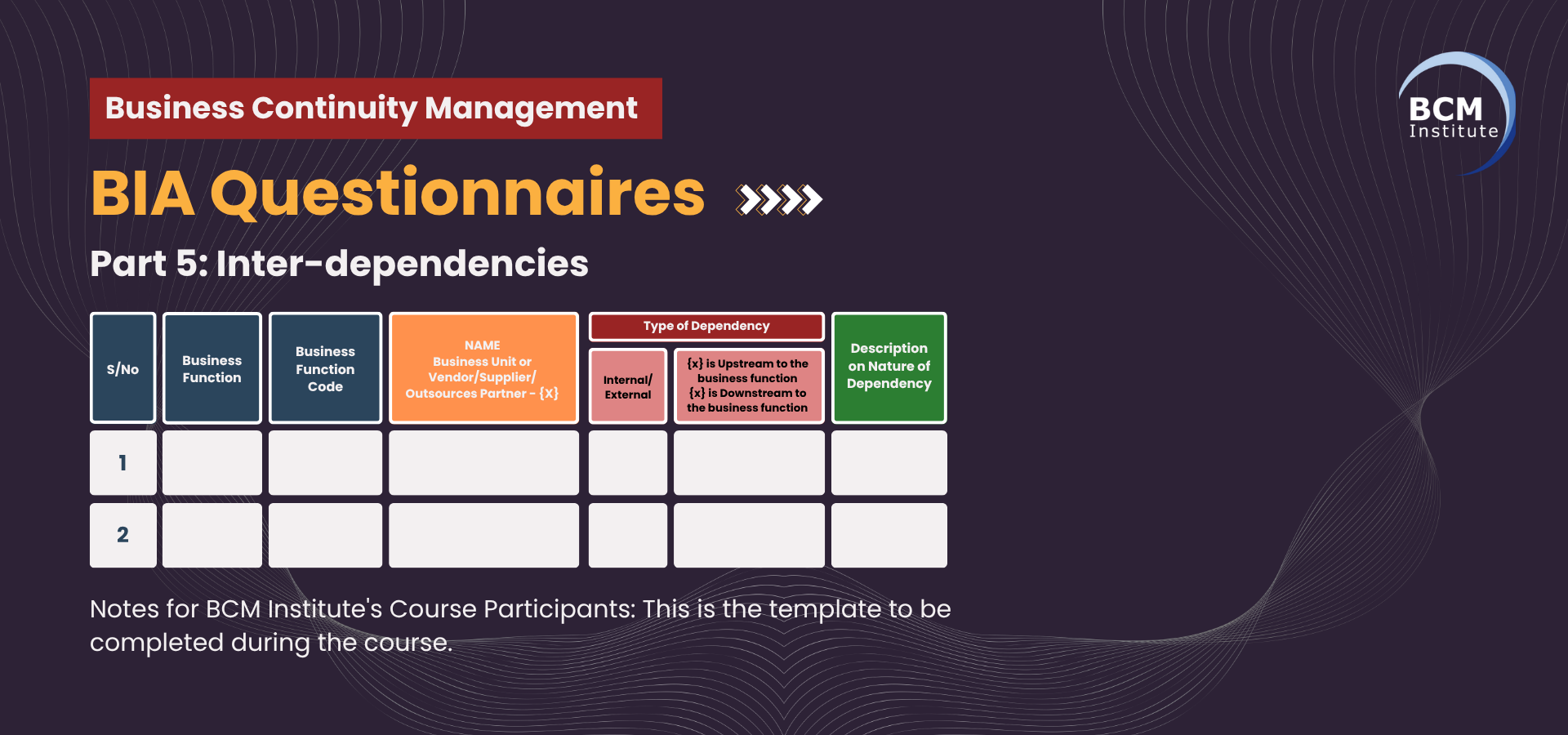
**Table 8: Inter-dependencies for CBF-1 Emergency Department Services**
| **Sub-CBF Code** | **Sub-Critical Business Function** | **Business Unit / Vendor / Supplier / Outsourcing Partner** | **Internal Dependency** | **External Dependency** | **Dependency Direction (Upstream / Downstream / Mutual)** | **Description of the Nature of Dependency** |
| --- | --- | --- | --- | --- | --- | --- |
| **CBF-1.1** | **Ambulance Arrival and Pre-hospital Handover** | **Emergency ambulance service and private ambulance operators** | **No** | **Yes** | **Upstream** | **Crews send alerts and bring patients, and the department returns crews to service after handover. If alerts fail, patients arrive without preparation and the bay jams.** |
| **CBF-1.2** | **Triage and Registration** | **Identity verification and insurer eligibility services (assumed)** | **No** | **Yes** | **Upstream** | **Registration checks identity and payer details against external services. If they are down, staff register on paper and defer eligibility checks without delaying triage.** |
| **CBF-1.3** | **Resuscitation and Life-Saving Intervention** | **Critical Care (CBF-02)** | **Yes** | **No** | **Downstream** | **Stabilised patients move to critical care beds. If no bed is free, resuscitated patients remain in the department and block the next critical arrival.** |
| **CBF-1.4** | **Emergency Assessment and Treatment** | **Specialist consultation teams in inpatient and outpatient services (CBF-04 and CBF-06)** | **Yes** | **No** | **Upstream** | **Emergency doctors seek specialist opinions to decide treatment and admission. If specialists are slow or unavailable, decisions are delayed and patients stay longer.** |
| **CBF-1.5** | **Emergency Diagnostic Requesting and Results Review** | **Diagnostic imaging and laboratory services (CBF-08 and CBF-09)** | **Yes** | **No** | **Mutual** | **The department sends requests and samples, and the services return results. Each depends on timely, correctly labelled information from the other, and any break delays diagnosis.** |
| **CBF-1.6** | **Emergency Medication Administration** | **Pharmacy and medication management (CBF-10)** | **Yes** | **No** | **Upstream** | **Pharmacy supplies stock, refills cabinets and advises on difficult prescriptions. If supply stops, emergency drugs and antibiotics run short within hours.** |
| **CBF-1.7** | **Infection Screening and Isolation** | **Infection prevention, control and environmental hygiene (CBF-13)** | **Yes** | **No** | **Mutual** | **The department flags suspected cases and the infection prevention team gives isolation guidance and tracks contacts. Without each other, isolation decisions and outbreak reporting are late.** |
| **CBF-1.8** | **Emergency Observation and Short-Stay Care** | **Facilities engineering, power and medical gases (CBF-12)** | **Yes** | **No** | **Upstream** | **Observation areas rely on power, medical gases, air handling and nurse call. If building systems fail, monitoring and oxygen supply are threatened.** |
| **CBF-1.9** | **Patient Disposition, Transfer and Family Communication** | **Discharge planning and community care coordination (CBF-21)** | **Yes** | **No** | **Downstream** | **The department passes admission, transfer and discharge decisions to the patient flow team, which finds beds and community care. If it cannot, patients wait in emergency spaces.** |
| **CBF-1.10** | **Surge and Mass Casualty Response** | **Ministry of Health and other public healthcare institutions (assumed)** | **No** | **Yes** | **Mutual** | **Surge response depends on alerts, diversion agreements and shared capacity across the healthcare system. Late exchange of information leaves the department overloaded while others have space.** |
| **CBF-1.11** | **Patient Identification and Clinical Documentation** | **Electronic medical records and clinical systems (CBF-15)** | **Yes** | **No** | **Upstream** | **The medical record, master patient index and band printing are run by the digital team. If they fail, identity and documentation fall back to paper with a higher risk of errors.** |
| **CBF-1.12** | **Emergency Staff Deployment and Shift Handover** | **Manpower deployment and staff welfare (CBF-23)** | **Yes** | **No** | **Upstream** | **Central workforce teams approve overtime, provide cover staff and support wellbeing. If they cannot, the department cannot fill gaps or keep staff safe in a long disruption.** |
Of the 12 primary dependencies, nine are internal and three are external. Seven are upstream, two are downstream and three are mutual. Only the main dependency for each Sub-CBF is shown, and the full dependency register should list more.
## Managing the Dependencies
Mapping is only the first step. Each dependency needs an owner, an agreed response and a way to detect failure. Four actions apply to nearly every row.
1. **Agree recovery times:** internal functions such as pharmacy and diagnostics should confirm that their own recovery times support the RTOs in Chapter 5.
2. **Write down the fallback:** each row should have a stated alternative, such as a manual bed list or radio link, that the department can use for the first hours.
3. **Share contact details:** a named contact and a 24-hour number for each partner should be held in the department and in the command centre.
4. **Exercise the link:** at least once a year, a scenario should remove one dependency and test whether the Sub-CBF holds its minimum objective.
A dependency register that grows with the hospital is more useful than a perfect one on opening day. New partners, contracts and systems should be added as they are agreed, and the table in this chapter should be reviewed whenever one of them changes.
Some dependencies matter more than their place in the table suggests. For example, the link to the wider healthcare system sits against only one Sub-CBF, but in a mass casualty event it affects every patient, because diversion and transfer decisions depend on it.
#### [](https://cta-redirect.hubspot.com/cta/redirect/3893111/117996e6-4a68-4449-880f-d8a48ff3071d)
Dependency mapping supports the BIA by showing what each Sub-CBF needs from others and what others need from it. Most dependencies in this table are internal, which is good news because the hospital can agree recovery times with its own functions before it opens. The external ones, with the ambulance service, identity and insurer services, and the wider healthcare system, need more care because the hospital cannot control them.
Understanding both kinds improves recovery planning. Internal dependencies can be written into service level agreements between functions. External dependencies should be written into contracts or memoranda, with agreed notice of failure and an alternative route. Third-party dependencies belong in Business Continuity Plans because a plan that ignores them will fail at the first call for help.
The same information supports supplier resilience, operational resilience and enterprise risk management, because it shows where a single point of failure could affect several Sub-CBFs. During a major disruption it helps management decide which dependencies to restore first. EGH should validate each partner and direction with the function leaders concerned.
**Continue reading:** Chapter 8, *Vital Records for CBF-1*, identifies the vital records each Sub-CBF needs, where they are kept and who looks after them.
[](https://cta-redirect.hubspot.com/cta/redirect/3893111/dfa53785-5be1-4117-a1bc-43e40cdb42e8)
| **eBook 3: Starting Your BCM Implementation** | | | | | | |
| --- | --- | --- | --- | --- | --- | --- |
| **MBCO** | **P&S** | **RAR T1** | **RAR T2** | **RAR T3** | **BCS T1** | **CBF** |
| [](https://cta-redirect.hubspot.com/cta/redirect/3893111/ea740ff8-0ea0-42c1-9f11-c24b8cd087a3) | [](https://cta-redirect.hubspot.com/cta/redirect/3893111/9104f712-e344-470e-b809-048054cfad24) | [](https://cta-redirect.hubspot.com/cta/redirect/3893111/fd22acee-e88b-4762-a90b-b6d289932a34) | [](https://cta-redirect.hubspot.com/cta/redirect/3893111/2235e2bd-1f0b-4111-9a41-270facd16917) | [](https://cta-redirect.hubspot.com/cta/redirect/3893111/63305687-a213-481b-ac6b-e0734a26b5b4) | [](https://cta-redirect.hubspot.com/cta/redirect/3893111/0a841fb1-e607-4172-ac9b-3de7f1de2978) | [](https://cta-redirect.hubspot.com/cta/redirect/3893111/cb4749ae-a696-4d2c-b505-28e05a8f4091) |
| **CBF-1 Emergency Department Services** | | | | | | |
| **DP** | **BIAQ P1** | **BIAQ P2** | **BIAQ P3** | **BIAQ P4** | **BIAQ P5** | **BIAQ P6** |
| [](https://cta-redirect.hubspot.com/cta/redirect/3893111/b89e5054-cf71-456e-b996-89da5973a55d) | [](https://cta-redirect.hubspot.com/cta/redirect/3893111/7550701a-f590-4ad0-8d3a-8cc50936525b) | [](https://cta-redirect.hubspot.com/cta/redirect/3893111/273cb818-0eb2-49df-b102-6f4ef4804ba1) | [](https://cta-redirect.hubspot.com/cta/redirect/3893111/c04c91f1-307a-47f5-a95d-5dc15f6d0ed4) | [](https://cta-redirect.hubspot.com/cta/redirect/3893111/e2fd4705-2cd7-4607-98a2-66476557b5fd) | [](https://cta-redirect.hubspot.com/cta/redirect/3893111/71a03cb6-3afb-4a79-b8c1-0de352046ceb) | [](https://cta-redirect.hubspot.com/cta/redirect/3893111/4b2de4a4-0f67-4cd4-9b47-3d59daedf32d) |
| | | **BCS T2** | **BCS T3** | **PD** | | |
| | | [](https://cta-redirect.hubspot.com/cta/redirect/3893111/9b0acf47-9cc8-4695-82e5-84ddcdfd980e) | [](https://cta-redirect.hubspot.com/cta/redirect/3893111/b275e253-db79-4f6c-a536-6dd24d0c073b) | [](https://cta-redirect.hubspot.com/cta/redirect/3893111/570141dc-2948-45fb-a58c-54f279601234) | | |
---
## **Comments**

---

---

---

---


All rights reserved. Copyright 2026
```json
{
"@context" : "https://schema.org",
"@type" : "BlogPosting",
"author" : {
"@type" : "Person",
"name" : "Moh Heng Goh",
"url" : "https://blog.bcm-institute.org/bcm-v2/author/moh-heng-goh"
},
"dateModified" : "2026-11-18T08:52:43.082Z",
"datePublished" : "2026-11-18T08:52:26.000Z",
"headline" : "[BCM] [EGH] [E3] [BIA] [P5] CBF [1] Emergency Obstetric Services",
"mainEntityOfPage" : {
"@id" : "https://blog.bcm-institute.org/bcm-v2/chapter-6-inter-dependencies-for-cbf-1",
"@type" : "WebPage"
},
"publisher" : {
"@type" : "Organization",
"logo" : {
"@type" : "ImageObject",
"url" : "https://blog.bcm-institute.org/hubfs/BCMI%20Logo.png"
},
"name" : "BCMI Pte Ltd"
}
}
```