---
title: "[BCM] [EGH] [E3] [BIA] [P4] CBF [1] Emergency Department Services"
description: EGH IT systems, RPOs, system RTOs and special equipment behind 12 emergency department Sub-CBFs in CBF-1, set to support business RTOs under ISO 22301.
---
.
[](http://www.bcm-institute.org/)
- [Home](https://www.bcm-institute.org/)
- [About Us](https://www.bcm-institute.org/about-us-3/)
- [A President’s Perspective](https://www.bcm-institute.org/about-us/a-presidents-perspective/)
- [Our History](https://www.bcm-institute.org/about-us/our-history/)
- [Our Advisory Council](https://www.bcm-institute.org/about-us/our-advisory-council/)
- [Customers’ Testimonials](https://www.bcm-institute.org/about-us/customers-testimonials/)
- [Credential Verification](https://www.bcm-institute.org/about-us/credential-verification/)
- [Courses](https://blog.bcm-institute.org/blog/course-fees-for-blended-learning-courses-master-catalog)
- [ISO 22301 Business Continuity Management System Audit](https://blog.bcm-institute.org/audit/business-continuity-management-audit-courses)
- [ISO 22301 Business Continuity Management](https://blog.bcm-institute.org/bcm/business-continuity-management-courses)
- [Crisis Communication](https://blog.bcm-institute.org/crisis-communication/crisis-communication-courses)
- [Crisis Management](https://blog.bcm-institute.org/en/crisis-management/courses)
- [IT Disaster Recovery](https://blog.bcm-institute.org/it-disaster-recovery/courses)
- [Operational Resilience](https://blog.bcm-institute.org/operational-resilience/courses)
- [Operational Resilience Audit](https://blog.bcm-institute.org/operational-resilience-audit/courses)
- [Certification](https://blog.bcm-institute.org/certification/types-of-certifications-offered)
- [ISO 22301 BCMS Audit Certification](https://blog.bcm-institute.org/certification/business-continuity-management-audit-certification)
- [ISO22301 Business Continuity Management Certification](https://blog.bcm-institute.org/bcm/business-continuity-management-certification)
- [Crisis Communication Certification](https://blog.bcm-institute.org/crisis-communication/crisis-communication-certification)
- [Crisis Management Certification](https://blog.bcm-institute.org/en/crisis-management/crisis-management-certification)
- [IT Disaster Recovery Planning Certification](https://blog.bcm-institute.org/it-disaster-recovery/it-disaster-recovery-certification)
- [Operational Resilience Certification](https://blog.bcm-institute.org/operational-resilience/operational-resilience-certification)
- [Operational Resilience Audit Certification](https://blog.bcm-institute.org/operational-resilience-audit)
- [Seminars](https://blog.bcm-institute.org/meet-the-expert/mte-webinar-mainpage)
- [Store](https://www.bcm-institute.org/store-2/)
- [Contact Us](http://www.bcm-institute.org/about-us/contact-us/)
-
-
###### Keeping Care Running: Managing and Implementing Business Continuity Management at Eastern General Hospital

# \[BCM\] \[EGH\] \[E3\] \[BIA\] \[P4\] CBF \[1\] Emergency Department Services
[](https://cta-redirect.hubspot.com/cta/redirect/3893111/dfa53785-5be1-4117-a1bc-43e40cdb42e8)
Chapter 5 set a business recovery time objective (RTO) for each Sub-Critical Business Function (Sub-CBF) of CBF-1 Emergency Department Services at Eastern General Hospital (EGH). Business processes can only meet those targets if the systems, applications and equipment behind them are restored in time. This chapter identifies those dependencies and sets recovery point and system recovery targets that support the business RTOs.
### [](https://cta-redirect.hubspot.com/cta/redirect/3893111/e60ed308-5615-4727-b6c2-5fb4eed933d7)
[Moh Heng Goh](https://blog.bcm-institute.org/bcm-v2/author/moh-heng-goh) Nov 18, 2026
## [](https://cta-redirect.hubspot.com/cta/redirect/3893111/c5748bd7-2a18-4a78-8cc9-7dcc65204af9)
## [](https://cta-redirect.hubspot.com/cta/redirect/3893111/58912f86-0de7-4b16-bcf9-99bdedd6b04d)
## [](https://cta-redirect.hubspot.com/cta/redirect/3893111/e60ed308-5615-4727-b6c2-5fb4eed933d7)Introduction
Chapter 5 set a business recovery time objective (RTO) for each Sub-Critical Business Function (Sub-CBF) of CBF-1 Emergency Department Services at Eastern General Hospital (EGH). Business processes can only meet those targets if the systems, applications and equipment behind them are restored in time. This chapter identifies those dependencies and sets recovery point and system recovery targets that support the business RTOs.
Identifying information technology (IT) dependencies during the business impact analysis (BIA) shows which systems matter most and how quickly they must return. The website of EGH states that the hospital will be "digitally enabled from the start", which makes the point sharper: many processes in the emergency department will assume that systems are available, and staff may have less practice with paper methods than staff in an older hospital.
Business continuity planning (BCP) decides how the process carries on, and IT disaster recovery (ITDR) decides how the system comes back. The two must fit together. The **recovery point objective (RPO)** is the amount of data the process can afford to lose, measured as time before the failure. The **system recovery time objective (system RTO)** is the target time to restore the system. Each system RTO must be equal to or shorter than the business RTO it supports. Specialised equipment is listed as well, because a restored system is of little use if the scanner, printer or monitor it needs is not working.
Systems are named by category only. They are assumptions, because EGH has not published its systems list, and the hospital should replace them with its own names.
## Systems and Applications Table
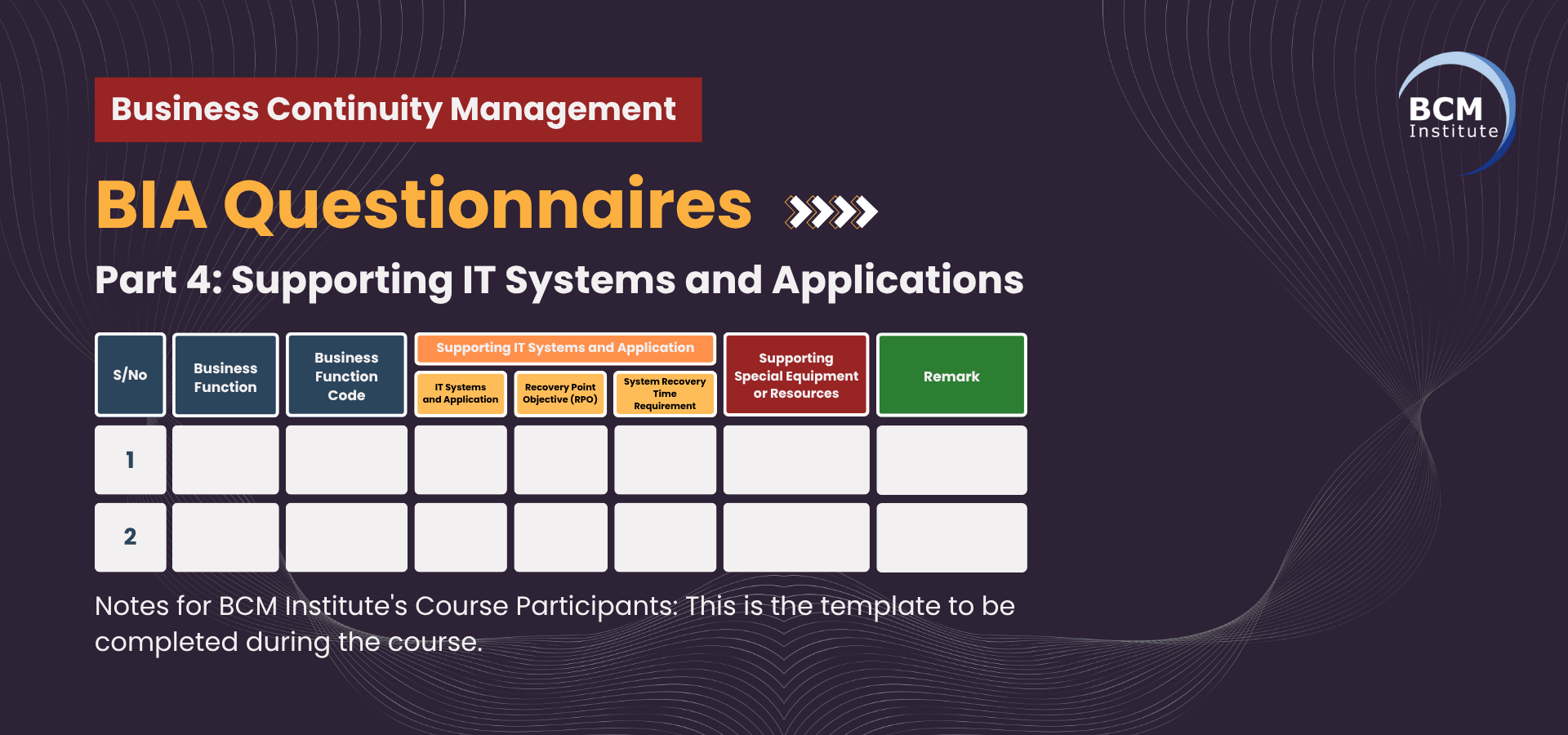
**Table 7: Supporting IT Systems and Applications for CBF-1 Emergency Department Services**
| Sub-CBF Code | Sub-Critical Business Function | Supporting IT Systems and Applications | Recovery Point Objective (RPO) | System Recovery Time Objective (System RTO) | Supporting Special Equipment / Resources | Remarks |
| --- | --- | --- | --- | --- | --- | --- |
| **CBF-1.1** | **Ambulance Arrival and Pre-hospital Handover** | **Ambulance alert line and telephone link; emergency department tracking board** | **Real-time** | **15 minutes** | **Dedicated alert telephone, two portable radios, backup power for the bay** | **The alert line is the first sign of a critical arrival. Voice links and radios work without the network, so the paper handover book is the fallback.** |
| **CBF-1.2** | **Triage and Registration** | **Patient registration and master patient index; triage module of the emergency department information system; queue display** | **Less than 15 minutes** | **15 minutes** | **Identity band printers, barcode scanners, tablets for triage, paper triage forms** | **Registration must restart first, because every other system uses the identity it creates. Paper forms and pre-numbered bands cover short outages.** |
| **CBF-1.3** | **Resuscitation and Life-Saving Intervention** | **Bedside monitoring network and alarms; resuscitation record module** | **Real-time** | **5 minutes** | **Defibrillators, ventilators, airway trolley, emergency drug box, emergency power circuit** | **Monitors and defibrillators run on batteries and do not depend on the network. The record can be kept on paper, but the alarm function must not fail.** |
| **CBF-1.4** | **Emergency Assessment and Treatment** | **Emergency department information system; electronic medical record; order entry** | **Less than 15 minutes** | **1 hour** | **Workstations on wheels, point-of-care testing devices, secure Wi-Fi, read-only copy of recent records** | **A read-only downtime view of current patients lets doctors see allergies and results. Replication to the disaster recovery site must meet the RPO.** |
| **CBF-1.5** | **Emergency Diagnostic Requesting and Results Review** | **Order entry; laboratory information system; radiology information system and image archive; critical result alerting** | **Less than 15 minutes** | **2 hours** | **Label printers, sample transport service, direct links to scanners, porter call system** | **These systems belong to the diagnostic services in another CBF. Their recovery times must be agreed so that critical results reach the department.** |
| **CBF-1.6** | **Emergency Medication Administration** | **Electronic prescribing and medication administration record; automated dispensing cabinets; pharmacy system** | **Less than 15 minutes** | **1 hour** | **Barcode scanners, smart infusion pumps, controlled drug cabinet with manual override** | **Cabinets need a manual override and a paper record for downtime. Allergy data must be available offline, and any gap is reconciled after restoration.** |
| **CBF-1.7** | **Infection Screening and Isolation** | **Infection surveillance and alert module; isolation and bed status board; infection flags in the medical record** | **1 hour** | **4 hours** | **Isolation room monitors, portable air filtration units, stocks of protective equipment** | **Isolation status can be tracked on a whiteboard for short outages. Alerts to the infection prevention team must reach them through telephone if systems fail.** |
| **CBF-1.8** | **Emergency Observation and Short-Stay Care** | **Vital signs monitoring and early warning score module; electronic observation chart** | **Less than 15 minutes** | **4 hours** | **Portable monitors, telemetry units, wireless alarm pagers, paper observation charts** | **Standalone monitors keep working when the network fails. Paper charts carry the early warning score, and entries are transcribed after restoration.** |
| **CBF-1.9** | **Patient Disposition, Transfer and Family Communication** | **Bed management system; transfer and referral system; electronic discharge summary; family messaging** | **1 hour** | **4 hours** | **Secure telephones, patient transport tracking, ambulance booking link** | **A manual bed list kept by the patient flow team can replace the system for a day. Referral to other hospitals must continue by telephone.** |
| **CBF-1.10** | **Surge and Mass Casualty Response** | **Hospital command and incident management system; mass notification and staff call-in; tracking board** | **Less than 15 minutes** | **1 hour** | **Backup radios, mass notification service, portable triage boards, surge stock lists** | **Call-in must work if the main network fails, so a second channel is needed. Printed contact lists and radios are the fallback.** |
| **CBF-1.11** | **Patient Identification and Clinical Documentation** | **Electronic medical record; master patient index; identity band printing; document scanning** | **Less than 15 minutes** | **2 hours** | **Band printers, scanners, downtime kits with paper forms and pre-numbered identity bands** | **The record is the most widely shared system in the department. Failover testing should cover merging temporary and permanent identities after an outage.** |
| **CBF-1.12** | **Emergency Staff Deployment and Shift Handover** | **Roster and workforce management system; staff call-in and messaging; handover module** | **4 hours** | **1 hour** | **Secure messaging devices, printed contact lists, tablets for handover** | **A recent printed roster and contact list are kept in the department, so staff can be called in without the system. The RPO is relaxed because rosters change slowly.** |
All systems, RPOs and system RTOs are illustrative. Nine of the 12 Sub-CBFs need an RPO of 15 minutes or less, and seven need a system RTO of one hour or less.
## [](https://cta-redirect.hubspot.com/cta/redirect/3893111/9bde2d75-0c8e-4d9e-a8ca-e8d1655a082c)
Supporting IT systems enable the delivery of Critical Business Functions. In the emergency department, the electronic medical record, the registration index, the monitoring network and the medication record carry most of the weight, and a failure in any of them affects several Sub-CBFs at once. Identifying these dependencies during the BIA makes sure that recovery effort goes to the systems that matter most.
RPOs and system RTOs support ITDR planning by turning a vague wish for "quick recovery" into targets that can be designed, tested and costed. A real-time RPO needs replication, while a four-hour RPO may be met with periodic backup. Specialised equipment should be included in Business Continuity Plans because it often has a long lead time to replace, and because staff must know where spares are held.
Understanding technology dependencies strengthens resilience and supports recovery. The hospital should test failover at the system level and at the process level, and should check that paper fallbacks exist and are practised. EGH should confirm the real systems and recovery times with its digital team and with its suppliers.
**Continue reading:** Chapter 7, *Inter-dependencies for CBF-1*, maps the internal and external dependencies behind each Sub-CBF.
[](https://cta-redirect.hubspot.com/cta/redirect/3893111/dfa53785-5be1-4117-a1bc-43e40cdb42e8)
| **eBook 3: Starting Your BCM Implementation** | | | | | | |
| --- | --- | --- | --- | --- | --- | --- |
| **MBCO** | **P&S** | **RAR T1** | **RAR T2** | **RAR T3** | **BCS T1** | **CBF** |
| [](https://cta-redirect.hubspot.com/cta/redirect/3893111/ea740ff8-0ea0-42c1-9f11-c24b8cd087a3) | [](https://cta-redirect.hubspot.com/cta/redirect/3893111/9104f712-e344-470e-b809-048054cfad24) | [](https://cta-redirect.hubspot.com/cta/redirect/3893111/fd22acee-e88b-4762-a90b-b6d289932a34) | [](https://cta-redirect.hubspot.com/cta/redirect/3893111/2235e2bd-1f0b-4111-9a41-270facd16917) | [](https://cta-redirect.hubspot.com/cta/redirect/3893111/63305687-a213-481b-ac6b-e0734a26b5b4) | [](https://cta-redirect.hubspot.com/cta/redirect/3893111/0a841fb1-e607-4172-ac9b-3de7f1de2978) | [](https://cta-redirect.hubspot.com/cta/redirect/3893111/cb4749ae-a696-4d2c-b505-28e05a8f4091) |
| **CBF-1 Emergency Department Services** | | | | | | |
| **DP** | **BIAQ P1** | **BIAQ P2** | **BIAQ P3** | **BIAQ P4** | **BIAQ P5** | **BIAQ P6** |
| [](https://cta-redirect.hubspot.com/cta/redirect/3893111/b89e5054-cf71-456e-b996-89da5973a55d) | [](https://cta-redirect.hubspot.com/cta/redirect/3893111/7550701a-f590-4ad0-8d3a-8cc50936525b) | [](https://cta-redirect.hubspot.com/cta/redirect/3893111/273cb818-0eb2-49df-b102-6f4ef4804ba1) | [](https://cta-redirect.hubspot.com/cta/redirect/3893111/c04c91f1-307a-47f5-a95d-5dc15f6d0ed4) | [](https://cta-redirect.hubspot.com/cta/redirect/3893111/e2fd4705-2cd7-4607-98a2-66476557b5fd) | [](https://cta-redirect.hubspot.com/cta/redirect/3893111/71a03cb6-3afb-4a79-b8c1-0de352046ceb) | [](https://cta-redirect.hubspot.com/cta/redirect/3893111/4b2de4a4-0f67-4cd4-9b47-3d59daedf32d) |
| | | **BCS T2** | **BCS T3** | **PD** | | |
| | | [](https://cta-redirect.hubspot.com/cta/redirect/3893111/9b0acf47-9cc8-4695-82e5-84ddcdfd980e) | [](https://cta-redirect.hubspot.com/cta/redirect/3893111/b275e253-db79-4f6c-a536-6dd24d0c073b) | [](https://cta-redirect.hubspot.com/cta/redirect/3893111/570141dc-2948-45fb-a58c-54f279601234) | | |
---
## **Comments**

---

---

---

---


All rights reserved. Copyright 2026
```json
{
"@context" : "https://schema.org",
"@type" : "BlogPosting",
"author" : {
"@type" : "Person",
"name" : "Moh Heng Goh",
"url" : "https://blog.bcm-institute.org/bcm-v2/author/moh-heng-goh"
},
"dateModified" : "2026-11-18T08:30:33.690Z",
"datePublished" : "2026-11-18T08:30:33.000Z",
"headline" : "[BCM] [EGH] [E3] [BIA] [P4] CBF [1] Emergency Department Services",
"mainEntityOfPage" : {
"@id" : "https://blog.bcm-institute.org/bcm-v2/chapter-5-supporting-it-systems-and-applications-for-cbf-1",
"@type" : "WebPage"
},
"publisher" : {
"@type" : "Organization",
"logo" : {
"@type" : "ImageObject",
"url" : "https://blog.bcm-institute.org/hubfs/BCMI%20Logo.png"
},
"name" : "BCMI Pte Ltd"
}
}
```