---
title: "[BCM] [EGH] [E3] [BIA] [P3] [CBF] [2] Critical Care"
description: "EGH impact over time for CBF-2: scores from 4 hours to 60 days, with RTO, MTPD and vulnerable periods for 12 critical care Sub-CBFs under ISO 22301."
---
.
[](http://www.bcm-institute.org/)
- [Home](https://www.bcm-institute.org/)
- [About Us](https://www.bcm-institute.org/about-us-3/)
- [A President’s Perspective](https://www.bcm-institute.org/about-us/a-presidents-perspective/)
- [Our History](https://www.bcm-institute.org/about-us/our-history/)
- [Our Advisory Council](https://www.bcm-institute.org/about-us/our-advisory-council/)
- [Customers’ Testimonials](https://www.bcm-institute.org/about-us/customers-testimonials/)
- [Credential Verification](https://www.bcm-institute.org/about-us/credential-verification/)
- [Courses](https://blog.bcm-institute.org/blog/course-fees-for-blended-learning-courses-master-catalog)
- [ISO 22301 Business Continuity Management System Audit](https://blog.bcm-institute.org/audit/business-continuity-management-audit-courses)
- [ISO 22301 Business Continuity Management](https://blog.bcm-institute.org/bcm/business-continuity-management-courses)
- [Crisis Communication](https://blog.bcm-institute.org/crisis-communication/crisis-communication-courses)
- [Crisis Management](https://blog.bcm-institute.org/en/crisis-management/courses)
- [IT Disaster Recovery](https://blog.bcm-institute.org/it-disaster-recovery/courses)
- [Operational Resilience](https://blog.bcm-institute.org/operational-resilience/courses)
- [Operational Resilience Audit](https://blog.bcm-institute.org/operational-resilience-audit/courses)
- [Certification](https://blog.bcm-institute.org/certification/types-of-certifications-offered)
- [ISO 22301 BCMS Audit Certification](https://blog.bcm-institute.org/certification/business-continuity-management-audit-certification)
- [ISO22301 Business Continuity Management Certification](https://blog.bcm-institute.org/bcm/business-continuity-management-certification)
- [Crisis Communication Certification](https://blog.bcm-institute.org/crisis-communication/crisis-communication-certification)
- [Crisis Management Certification](https://blog.bcm-institute.org/en/crisis-management/crisis-management-certification)
- [IT Disaster Recovery Planning Certification](https://blog.bcm-institute.org/it-disaster-recovery/it-disaster-recovery-certification)
- [Operational Resilience Certification](https://blog.bcm-institute.org/operational-resilience/operational-resilience-certification)
- [Operational Resilience Audit Certification](https://blog.bcm-institute.org/operational-resilience-audit)
- [Seminars](https://blog.bcm-institute.org/meet-the-expert/mte-webinar-mainpage)
- [Store](https://www.bcm-institute.org/store-2/)
- [Contact Us](http://www.bcm-institute.org/about-us/contact-us/)
-
-
###### Keeping Care Running: Managing and Implementing Business Continuity Management at Eastern General Hospital

# \[BCM\] \[EGH\] \[E3\] \[BIA\] \[P3\] \[CBF\] \[2\] Critical Care
[](https://cta-redirect.hubspot.com/cta/redirect/3893111/dfa53785-5be1-4117-a1bc-43e40cdb42e8)
Chapter 3 estimated what is lost when each Sub-Critical Business Function (Sub-CBF) of CBF-2 Critical Care at Eastern General Hospital (EGH) is disrupted for a week. This chapter asks how that loss grows with time. It scores the impact of disruption at 12 intervals from 4 hours to 60 days, and from the scores it sets a recovery time objective (RTO), a maximum tolerable period of disruption (MTPD) and a vulnerable period for each Sub-CBF.
Impact grows as a disruption continues, because harm is cumulative. A delayed dialysis session is a small problem at four hours and a large one at three days. Analysing impact over time in the business impact analysis (BIA) shows when the harm becomes unacceptable, and that point decides how quickly recovery must start.
[](https://cta-redirect.hubspot.com/cta/redirect/3893111/bc131ed6-ca92-4253-8940-2f98dad34599)
[Moh Heng Goh](https://blog.bcm-institute.org/bcm-v2/author/moh-heng-goh) Nov 19, 2026
#### [](https://cta-redirect.hubspot.com/cta/redirect/3893111/c5748bd7-2a18-4a78-8cc9-7dcc65204af9)
## [](https://cta-redirect.hubspot.com/cta/redirect/3893111/326c85d5-f1af-4a99-9f0e-0072cfcad36a)
## [](https://cta-redirect.hubspot.com/cta/redirect/3893111/bc131ed6-ca92-4253-8940-2f98dad34599)
## Introduction
Chapter 3 estimated what is lost when each Sub-Critical Business Function (Sub-CBF) of CBF-2 Critical Care at Eastern General Hospital (EGH) is disrupted for a week. This chapter asks how that loss grows with time. It scores the impact of disruption at 12 intervals from 4 hours to 60 days, and from the scores it sets a recovery time objective (RTO), a maximum tolerable period of disruption (MTPD) and a vulnerable period for each Sub-CBF.
Impact grows as a disruption continues, because harm is cumulative. A delayed dialysis session is a small problem at four hours and a large one at three days. Analysing impact over time in the business impact analysis (BIA) shows when the harm becomes unacceptable, and that point decides how quickly recovery must start.
## How the Scores Were Set
Each Sub-CBF is scored from 1 to 5 at each interval for its highest-impact area (taken from Chapter 3). The scale is shown below.
| Score | Impact Level |
| --- | --- |
| 1 | Very Low |
| 2 | Low |
| 3 | Moderate |
| 4 | High |
| 5 | Very High |
The three outputs are defined as follows.
- **Recovery time objective (RTO):** the target time to restore the Sub-CBF to its MBCO, before impacts become unacceptable.
- **Maximum tolerable period of disruption (MTPD):** the longest time the Sub-CBF can be disrupted before the viability of CBF-2 is seriously threatened. It is always longer than the RTO.
- **Vulnerable period:** the time when disruption would cause the most harm, such as a seasonal peak or a shift handover.
The scores, RTOs and MTPDs are illustrative planning assumptions for EGH to validate. A score of 5 means that harm to patients is severe and may be irreversible.
## Impact Over Time Table
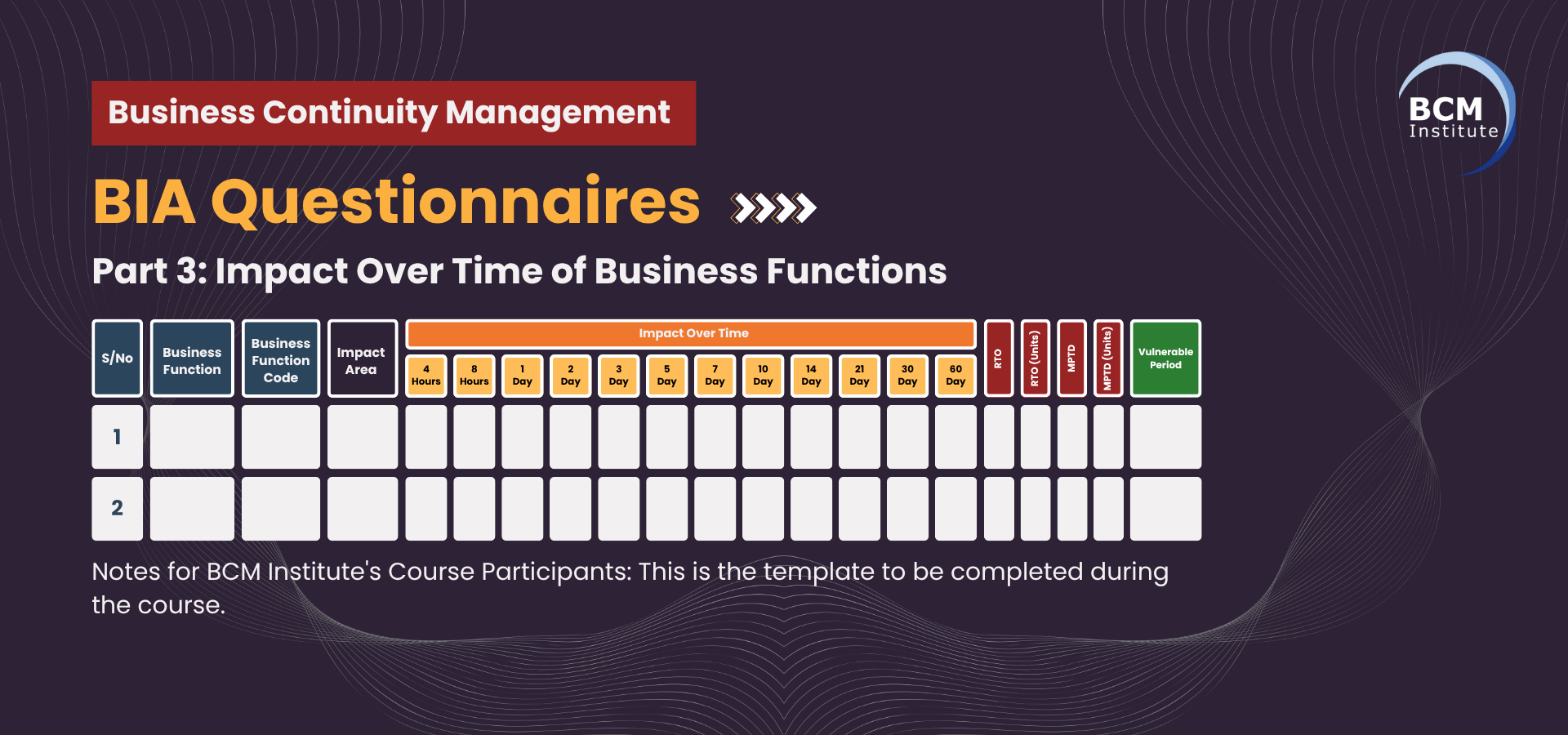
**Table 4: Impact Over Time of Business Functions for CBF-2 Critical Care (Intensive Care and High Dependency)**
| Sub-CBF Code | Sub-Critical Business Function | Highest-Impact Area | 4 Hours | 8 Hours | 1 Day | 2 Days | 3 Days | 5 Days | 7 Days | 10 Days | 14 Days | 21 Days | 30 Days | 60 Days | Recovery Time Objective (RTO) | Maximum Tolerable Period of Disruption (MTPD) | Vulnerable Period |
| --- | --- | --- | --- | --- | --- | --- | --- | --- | --- | --- | --- | --- | --- | --- | --- | --- | --- |
| **CBF-2.1** | **Critical Care Admission, Triage and Bed Allocation** | **Operational** | **3** | **4** | **4** | **5** | **5** | **5** | **5** | **5** | **5** | **5** | **5** | **5** | **2 hours** | **24 hours** | **Seasonal peaks in respiratory illness, and the first hours after a major surgical list or mass casualty event when demand for beds peaks.** |
| **CBF-2.2** | **Continuous Physiological Monitoring and Escalation** | **Patient safety** | **5** | **5** | **5** | **5** | **5** | **5** | **5** | **5** | **5** | **5** | **5** | **5** | **15 minutes** | **4 hours** | **Night shifts and handover periods, when fewer staff watch the central display.** |
| **CBF-2.3** | **Mechanical Ventilation and Airway Management** | **Patient safety** | **5** | **5** | **5** | **5** | **5** | **5** | **5** | **5** | **5** | **5** | **5** | **5** | **15 minutes** | **1 hour** | **Any time a patient is newly intubated or weaning, and during power transfers and planned maintenance of gas supplies.** |
| **CBF-2.4** | **Haemodynamic and Organ Support** | **Patient safety** | **5** | **5** | **5** | **5** | **5** | **5** | **5** | **5** | **5** | **5** | **5** | **5** | **30 minutes** | **4 hours** | **First 48 hours of septic or cardiogenic shock, when infusion needs are highest.** |
| **CBF-2.5** | **Renal Replacement Therapy** | **Financial** | **2** | **3** | **4** | **5** | **5** | **5** | **5** | **5** | **5** | **5** | **5** | **5** | **4 hours** | **48 hours** | **Days when several patients start dialysis together after major sepsis or surgery, and during consumables delivery gaps.** |
| **CBF-2.6** | **Critical Care Medication and Infusion Management** | **Patient safety** | **5** | **5** | **5** | **5** | **5** | **5** | **5** | **5** | **5** | **5** | **5** | **5** | **30 minutes** | **4 hours** | **Medication rounds and shift changes, and during pump software or drug library updates.** |
| **CBF-2.7** | **Bedside Nursing Care and Infection Prevention Bundles** | **Operational** | **3** | **4** | **5** | **5** | **5** | **5** | **5** | **5** | **5** | **5** | **5** | **5** | **1 hour** | **12 hours** | **Nights and weekends, when staffing ratios are tightest and infection prevention audits are fewest.** |
| **CBF-2.8** | **Critical Care Diagnostics and Results Review** | **Operational** | **2** | **3** | **4** | **5** | **5** | **5** | **5** | **5** | **5** | **5** | **5** | **5** | **2 hours** | **24 hours** | **Early morning, when ward rounds depend on overnight results, and during laboratory system downtime.** |
| **CBF-2.9** | **Critical Patient Transfer (Intrahospital and Interhospital)** | **Operational** | **3** | **4** | **4** | **5** | **5** | **5** | **5** | **5** | **5** | **5** | **5** | **5** | **2 hours** | **24 hours** | **Peak theatre and imaging hours, and when lifts or transport routes are under maintenance.** |
| **CBF-2.10** | **Family Communication, Consent and End-of-Life Support** | **Reputation** | **1** | **2** | **3** | **3** | **4** | **5** | **5** | **5** | **5** | **5** | **5** | **5** | **8 hours** | **72 hours** | **Periods of rapid deterioration and visiting hours, and when end-of-life decisions are due.** |
| **CBF-2.11** | **Patient Identification and Critical Care Documentation** | **Legal** | **2** | **3** | **4** | **4** | **5** | **5** | **5** | **5** | **5** | **5** | **5** | **5** | **4 hours** | **48 hours** | **Admission peaks and the hours around handover, when most entries are made.** |
| **CBF-2.12** | **Critical Care Staff Deployment, Surge and Escalation** | **Human resources** | **4** | **4** | **5** | **5** | **5** | **5** | **5** | **5** | **5** | **5** | **5** | **5** | **1 hour** | **12 hours** | **Public holidays, school-holiday leave periods and surge days when absences are highest.** |
## Reading the Results
Four Sub-CBFs reach a score of 5 at the first interval: Continuous Physiological Monitoring and Escalation, Mechanical Ventilation and Airway Management, Haemodynamic and Organ Support, and Critical Care Medication and Infusion Management. These carry the shortest RTOs, from 15 to 30 minutes, because a gap puts a life at risk at once. Staff Deployment starts at 4 and reaches 5 within a day, because under-staffing weakens every other process.
At the other end, Family Communication, Consent and End-of-Life Support starts at 1 and takes five days to reach 5. Its RTO is 8 hours and its MTPD 72 hours, though the effect on trust and the law is real and should not be underestimated. Between these extremes, Renal Replacement Therapy and Critical Care Diagnostics begin low and rise as treatment is delayed.
## Conclusion
Impact-over-time analysis supports the BIA by replacing a single judgement about “criticality” with a curve for each process. It shows which processes need protection first and when a delay changes from tolerable to dangerous.
The results set recovery priorities in a clear order: monitoring, ventilation, haemodynamic support and infusions first, then staffing and bundles, then diagnostics, transfers, dialysis and admissions, then records and family communication. The RTO and MTPD guide strategy: a 15-minute RTO cannot be met by a repair, so it needs equipment at the bed, while an 8-hour RTO can be met by a manual process.
Vulnerable periods influence contingency planning and resource allocation. If the winter respiratory season or night shifts are the most dangerous times, extra staff, stock and exercises should be concentrated there. Together, these results give EGH a credible, evidence-based foundation for its Business Continuity Plans.
**Continue reading:** Chapter 5, *Supporting IT Systems and Applications for CBF-2*, identifies the systems, recovery point objectives and special equipment that each Sub-CBF depends on.
---
## **Comments**

---

---

---

---


All rights reserved. Copyright 2026
```json
{
"@context" : "https://schema.org",
"@type" : "BlogPosting",
"author" : {
"@type" : "Person",
"name" : "Moh Heng Goh",
"url" : "https://blog.bcm-institute.org/bcm-v2/author/moh-heng-goh"
},
"dateModified" : "2026-11-19T05:00:24.738Z",
"datePublished" : "2026-11-19T04:51:22.000Z",
"headline" : "[BCM] [EGH] [E3] [BIA] [P3] [CBF] [2] Critical Care",
"mainEntityOfPage" : {
"@id" : "https://blog.bcm-institute.org/bcm-v2/chapter-4-impact-over-time-of-business-functions-for-cbf-2",
"@type" : "WebPage"
},
"publisher" : {
"@type" : "Organization",
"logo" : {
"@type" : "ImageObject",
"url" : "https://blog.bcm-institute.org/hubfs/BCMI%20Logo.png"
},
"name" : "BCMI Pte Ltd"
}
}
```