---
title: xxx [BCM] [JHA] [E2] [C1] Business Continuity Management Planning Methodology for Jamiyah Home for the Aged
description: JHA's seven-phase ISO 22301 BCM planning methodology, from project set-up to programme management, with its duty-of-care thread for MSF licensing.
---
.
[](http://www.bcm-institute.org/)
- [Home](https://www.bcm-institute.org/)
- [About Us](https://www.bcm-institute.org/about-us-3/)
- [A President’s Perspective](https://www.bcm-institute.org/about-us/a-presidents-perspective/)
- [Our History](https://www.bcm-institute.org/about-us/our-history/)
- [Our Advisory Council](https://www.bcm-institute.org/about-us/our-advisory-council/)
- [Customers’ Testimonials](https://www.bcm-institute.org/about-us/customers-testimonials/)
- [Credential Verification](https://www.bcm-institute.org/about-us/credential-verification/)
- [Courses](https://blog.bcm-institute.org/blog/course-fees-for-blended-learning-courses-master-catalog)
- [ISO 22301 Business Continuity Management System Audit](https://blog.bcm-institute.org/audit/business-continuity-management-audit-courses)
- [ISO 22301 Business Continuity Management](https://blog.bcm-institute.org/bcm/business-continuity-management-courses)
- [Crisis Communication](https://blog.bcm-institute.org/crisis-communication/crisis-communication-courses)
- [Crisis Management](https://blog.bcm-institute.org/en/crisis-management/courses)
- [IT Disaster Recovery](https://blog.bcm-institute.org/it-disaster-recovery/courses)
- [Operational Resilience](https://blog.bcm-institute.org/operational-resilience/courses)
- [Operational Resilience Audit](https://blog.bcm-institute.org/operational-resilience-audit/courses)
- [Certification](https://blog.bcm-institute.org/certification/types-of-certifications-offered)
- [ISO 22301 BCMS Audit Certification](https://blog.bcm-institute.org/certification/business-continuity-management-audit-certification)
- [ISO22301 Business Continuity Management Certification](https://blog.bcm-institute.org/bcm/business-continuity-management-certification)
- [Crisis Communication Certification](https://blog.bcm-institute.org/crisis-communication/crisis-communication-certification)
- [Crisis Management Certification](https://blog.bcm-institute.org/en/crisis-management/crisis-management-certification)
- [IT Disaster Recovery Planning Certification](https://blog.bcm-institute.org/it-disaster-recovery/it-disaster-recovery-certification)
- [Operational Resilience Certification](https://blog.bcm-institute.org/operational-resilience/operational-resilience-certification)
- [Operational Resilience Audit Certification](https://blog.bcm-institute.org/operational-resilience-audit)
- [Seminars](https://blog.bcm-institute.org/meet-the-expert/mte-webinar-mainpage)
- [Store](https://www.bcm-institute.org/store-2/)
- [Contact Us](http://www.bcm-institute.org/about-us/contact-us/)
-
-
###### Sustaining Community Services: Implementing BCM at Jamiyah Home for the Aged
# xxx \[BCM\] \[JHA\] \[E2\] \[C1\] Business Continuity Management Planning Methodology for Jamiyah Home for the Aged
[](https://cta-redirect.hubspot.com/cta/redirect/3893111/1ce18ee1-97ef-4ed4-b16b-5d6ab24cec19)
This is the first chapter of *Implementing Business Continuity Management for Jamiyah Home for the Aged*, the second of three eBooks in the series *Building Resilient Operations: Implementing Business Continuity Management at JHA*. The first eBook examined JHA as an organisation; this one sets out a method for planning a business continuity programme that meets the planning requirements of ISO 22301, the international standard for business continuity management systems; the third turns the method into working documents.
According to its [About Us page](https://jha.jamiyah.org.sg/about-us/), JHA was established in 1996 by the then Ministry of Community Development as an eldercare and destitute welfare facility, with the Muslim Missionary Society Singapore appointed as Managing Agent. It began operations at Still Road in December 1996, moved to 1 Tampines Avenue 3 in December 1997, and was officially opened in January 1998. The Home operates 24 hours a day, while its office keeps normal working hours. Its stated mission is to provide a home for the homeless aged, and its vision speaks of two outcomes: community reintegration for residents who can be discharged, and maintained functionality and well-being for those who need long-term care.
Those facts shape the methodology. A home that never closes cannot schedule its recovery for a quiet weekend, frail residents without family support have few fallback options, and a single site offers no second building to move into. The seven phases below are generic to good BCM practice, but JHA must apply them with these realities in mind.
[](https://cta-redirect.hubspot.com/cta/redirect/3893111/f3c50f04-ebe4-4e72-a7cf-10ee0040d496)
[Dr Goh Moh Heng](https://blog.bcm-institute.org/bcm-v2/author/dr-goh-moh-heng) Nov 3, 2026
### **Business Continuity Management Planning Methodology for Jamiyah Home for the Aged**
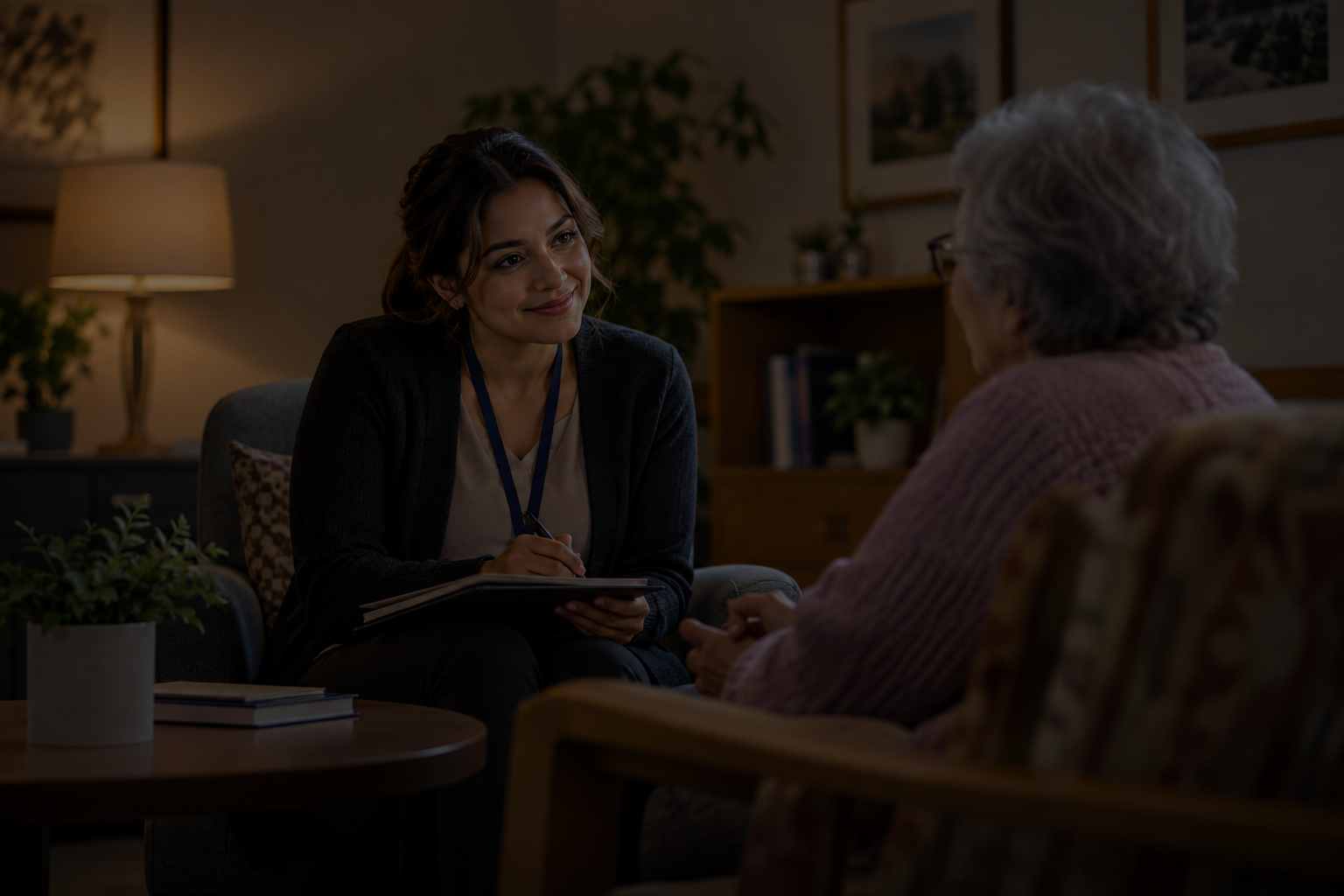
Jamiyah Home for the Aged (JHA), also known as Darul Takrim, shelters and cares for residents who are largely elderly, frail, and destitute, around the clock, on a single site in Tampines.
For a home like this, a disruption is never just an operational inconvenience.
A power failure, an outbreak or a sudden loss of staff falls directly on people who often have little or no family to turn to.
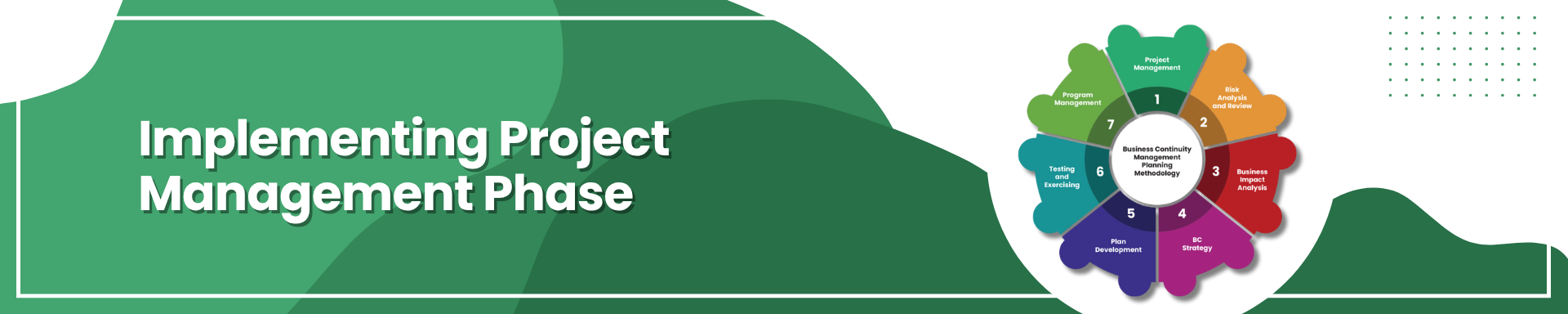
This chapter introduces the seven-phase business continuity management (BCM) planning methodology that the rest of this eBook follows, and shows how one requirement particular to JHA runs through every phase.
[](https://cta-redirect.hubspot.com/cta/redirect/3893111/fbeb1a05-a26a-4e83-bdf5-200a565fd721)
## [](https://cta-redirect.hubspot.com/cta/redirect/3893111/1ce18ee1-97ef-4ed4-b16b-5d6ab24cec19)
## [](https://cta-redirect.hubspot.com/cta/redirect/3893111/f3c50f04-ebe4-4e72-a7cf-10ee0040d496)
## Introduction
[](https://cta-redirect.hubspot.com/cta/redirect/3893111/cce78c6f-0c36-465f-967f-88cdb4ae7fee)This is the first chapter of *Implementing Business Continuity Management for Jamiyah Home for the Aged*, the second of three eBooks in the series *Building Resilient Operations: Implementing Business Continuity Management at JHA*. The first eBook examined JHA as an organisation; this one sets out a method for planning a business continuity programme that meets the planning requirements of ISO 22301, the international standard for business continuity management systems; the third turns the method into working documents.
According to its [About Us page](https://jha.jamiyah.org.sg/about-us/), JHA was established in 1996 by the then Ministry of Community Development as an eldercare and destitute welfare facility, with the Muslim Missionary Society Singapore appointed as Managing Agent. It began operations at Still Road in December 1996, moved to 1 Tampines Avenue 3 in December 1997, and was officially opened in January 1998. The Home operates 24 hours a day, while its office keeps normal working hours. Its stated mission is to provide a home for the homeless aged, and its vision speaks of two outcomes: community reintegration for residents who can be discharged, and maintained functionality and well-being for those who need long-term care.
Those facts shape the methodology. A home that never closes cannot schedule its recovery for a quiet weekend, frail residents without family support have few fallback options, and a single site offers no second building to move into. The seven phases below are generic to good BCM practice, but JHA must apply them with these realities in mind.
## The Requirement That Runs Through Every Phase
From 1 July 2026, social residential homes in Singapore that care for elderly or destitute persons and are not healthcare premises are licensed under the Social Residential Homes Act 2025 (SRHA), administered by the Ministry of Social and Family Development (MSF). The Code of Practice for Social Residential Homes, issued under the Act, sets out minimum requirements that licensees must meet. Several of those requirements bear directly on business continuity. The Code expects incident management policies to cover business continuity plans that are regularly updated; it requires business continuity procedures to be reviewed at least once a year; it requires serious incidents to be reported to MSF within 24 hours; and, under its emergency preparedness section, it requires homes to adhere to any BCM advisories and guidelines that MSF issues.
The requirement particular to JHA, therefore, is this: **an uninterrupted duty of care to frail, largely destitute residents, delivered under a licence that expects BCM to be in place, kept current and demonstrable to MSF.** JHA cannot rely on eventual recovery. Supervision, medication, meals and safe premises must continue through the disruption itself, and the Home must be able to show the regulator how it planned for that, how it tested the plan and what it learned. This requirement appears in each phase below as a short "JHA thread" so that readers can trace it from the first project meeting to the annual management review. Whether JHA is licensed in the welfare home category, and which MSF BCM advisories apply to it, should be confirmed with MSF \[verify\].
## The Seven Phases at a Glance
### 1. Project Management (PM)
Project Management sets up the BCM effort as a defined project with a sponsor, scope, objectives, team, timeline and budget. It agrees which parts of JHA are in scope, who will make decisions and how progress will be reported. It hands to the next phase an approved project charter, a team that knows its responsibilities and a timetable for the analysis work.
*JHA thread:* the charter states that the BCM programme must satisfy the Code of Practice for Social Residential Homes as well as ISO 22301, so regulatory evidence is planned from the start rather than assembled later.
### 2. Risk Analysis and Review (RAR)
Risk Analysis and Review identifies the threats that could disrupt JHA, assesses their likelihood and impact, records the controls already in place and agrees what further mitigation is needed. It produces a risk register, coded R1 to R10 in this eBook, which tells later phases which scenarios to plan for.
*JHA thread:* threats are judged by their effect on residents first, such as an infectious disease outbreak in shared living spaces or a fire at night when residents are asleep and staffing is thinner.
### 3. Business Impact Analysis (BIA)
The Business Impact Analysis looks at JHA's activities rather than its threats. It asks what happens, hour by hour and day by day, if each critical business function (CBF) stops, and from that sets the maximum tolerable period of disruption (MTPD), the recovery time objective (RTO), the minimum business continuity objective (MBCO) and the dependencies each function needs. It hands to the strategy phase a ranked list of functions, coded CBF-01 to CBF-12, with recovery targets.
*JHA thread:* the minimum level of service for supervision is anchored to what the licence requires, such as adequate staffing to supervise residents at all times, not to what is convenient.
### 4. Business Continuity Strategy (BCS)
The Business Continuity Strategy phase selects practical ways to protect each critical function and to restore it within its RTO. Strategies are grouped by the resource they depend on, such as people, premises, supplies, information, or partners, and are tested for cost and practicality before approval. The output is a set of approved strategies with owners and budgets.
*JHA thread:* any strategy that moves residents or changes how care is delivered, such as temporary relocation, is checked against the licence conditions and discussed with MSF where needed.
### 5. Plan Development (PD)
Plan Development turns approved strategies into written business continuity plans. A plan template and recovery organisation are designed, plan writers are guided through a workshop, and the head of the business unit validates each plan. The output is a set of plans that staff can actually use at three in the morning.
*JHA thread:* plans include the steps and templates for notifying MSF and submitting the 24-hour incident report, so regulatory reporting does not depend on one person remembering what to do.
### 6. Testing and Exercising (TE)
Testing and Exercising checks that the plans work and that people know their roles. It starts with simple tests, such as call notifications and walkthroughs, and progresses to integrated, simulation and live exercises as confidence grows. Each exercise produces findings that are fed back into the plans.
*JHA thread:* exercises are scheduled alongside the regular fire drills that the Code of Practice already requires at varied timings, and their records form part of the evidence for MSF.
### 7. Program Management (PgM)
Program Management keeps BCM alive after the project ends. It covers ownership, scheduled reviews, change triggers, training and awareness, performance measures, audit and management review. Its output is not a document but a habit: a programme calendar that the Home follows year after year.
*JHA thread:* the annual review of business continuity procedures that the Code of Practice requires becomes a fixed item in the programme calendar, with sign-off recorded.
## How the Phases Connect
The phases form a sequence and a cycle. In the sequence, each phase depends on the one before. A strategy chosen without a BIA may protect the wrong function; a plan written without a strategy is a list of wishes; an exercise run on an unwritten plan tests improvisation rather than preparation. In the cycle, Program Management loops back to the start: changes in residents' needs, staffing, premises or regulation trigger a fresh look at risks and impacts, and the plans are updated accordingly.
Risk Analysis and Review and the Business Impact Analysis often run in overlapping workshops because the same people hold the knowledge for both. For example, JHA might ask care supervisors in the morning what could go wrong at night, and in the afternoon how long night supervision could be reduced before residents come to harm, while keeping the risk register and the impact table as separate outputs.
## What Each Phase Hands to the Next
A simple test of whether the methodology is working is whether each phase produces something the next phase can use without rework. For JHA, the hand-offs might look like this. Project Management hands a charter, a responsibility matrix and a timetable to the risk team. Risk Analysis and Review hands a scored register of ten risks, with existing controls, to the BIA team. The BIA hands twelve functions, with tiers, recovery targets, and dependencies, to the strategy team. Strategy hands six approved strategy groups, each linked to the risks they address, to the plan writers. Plan Development hands validated plans to the exercise coordinator. Testing and Exercising hands findings and corrective actions to the programme owner. Program Management then hands an updated risk and impact picture back to the start of the cycle.
Each hand-off is also a decision point, such as the sponsor approving strategies and their cost before writing plans. These approvals create a record that the Home's governing body was involved, which supports both charity governance and regulatory confidence.
## Applying the Methodology at JHA
For a home of JHA's scale, apply the methodology in proportion, without a large team or specialist software. For example, JHA might appoint the Superintendent as organisation BCM coordinator, with a senior care supervisor, the kitchen lead, and an administration officer as business unit BCM coordinators, and add a short evening session to capture the night shift's view.
[](https://cta-redirect.hubspot.com/cta/redirect/3893111/64d16cdc-b532-47f6-af61-7b33f5b500a3)
## Summary Table
| **Phase** | **Main purpose** | **Key output handed on** | **JHA thread** |
| --- | --- | --- | --- |
| **Project Management (PM)** | **Set up BCM as a governed project** | **Charter, responsibility matrix, timetable** | **Code of Practice compliance written into scope** |
| **Risk Analysis and Review (RAR)** | **Identify, assess and treat threats** | **Risk register R1 to R10** | **Threats judged by effect on residents first** |
| **Business Impact Analysis (BIA)** | **Measure impact of losing each function over time** | **CBF-01 to CBF-12 with tiers, RTO, MTPD, dependencies** | **Minimum service anchored to supervision requirements** |
| **Business Continuity Strategy (BCS)** | **Choose practical recovery options** | **Six approved strategy groups** | **Strategies checked against licence conditions** |
| **Plan Development (PD)** | **Write and validate usable plans** | **Validated business continuity plans** | **MSF notification steps built into every plan** |
| **Testing and Exercising (TE)** | **Prove plans and build confidence** | **Exercise reports and corrective actions** | **Exercises aligned with required fire drills** |
| **Program Management (PgM)** | **Keep BCM current and embedded** | **Programme calendar, reviews, audit results** | **Annual review of business continuity procedures** |
## Conclusion
The seven-phase methodology gives JHA a clear path from intention to a working, tested and maintained business continuity programme. Running through all seven is the requirement that defines JHA's situation: a continuous duty of care to vulnerable residents under a licence that expects BCM to be demonstrable. The chapters that follow take each phase in turn.
## Sources
- [Jamiyah Home for the Aged, About Us](https://jha.jamiyah.org.sg/about-us/)
- [Ministry of Social and Family Development, About the Social Residential Homes Act](https://www.msf.gov.sg/what-we-do/srha/about-srha)
- [Ministry of Social and Family Development, Regulatory Requirements under SRHA](https://www.msf.gov.sg/what-we-do/srha/regulatory-requirements)
- [Code of Practice for Social Residential Homes (First Edition)](https://www.msf.gov.sg/api/media/93ce9c5e-b2dd-4916-9b65-97484987f21a.pdf)
**Continue reading:** Chapter 2, *Project Management Phase for Business Continuity Management Planning Methodology for Jamiyah Home for the Aged*, explains how JHA can set up its BCM project with a sponsor, steering committee, team and plan of work.
---
## **Comments**

---

---

---

---


All rights reserved. Copyright 2026
```json
{
"@context" : "https://schema.org",
"@type" : "BlogPosting",
"author" : {
"@type" : "Person",
"name" : "Dr Goh Moh Heng",
"url" : "https://blog.bcm-institute.org/bcm-v2/author/dr-goh-moh-heng"
},
"dateModified" : "2026-11-03T07:34:40.215Z",
"datePublished" : "2026-11-03T07:34:40.000Z",
"headline" : "xxx [BCM] [JHA] [E2] [C1] Business Continuity Management Planning Methodology for Jamiyah Home for the Aged",
"mainEntityOfPage" : {
"@id" : "https://blog.bcm-institute.org/bcm-v2/bcm-jha-e2-c1-business-continuity-management-planning-methodology-for-jamiyah-home-for-the-aged-1",
"@type" : "WebPage"
},
"publisher" : {
"@type" : "Organization",
"logo" : {
"@type" : "ImageObject",
"url" : "https://blog.bcm-institute.org/hubfs/BCMI%20Logo.png"
},
"name" : "BCMI Pte Ltd"
}
}
```